By Richard Burke, Director, OWC
In
this part of the world, as it no doubt does elsewhere, the natural order does
its best to ensure survival of the various species. You will have noticed the
changing of Oldman River colours from deep green awhile ago to muddy brown now.
It may lighten a bit for a short time, depending on the weather. But, you can
be certain there won’t be many days between now and early July, if things go as
they often do, when the river will be considered anything but off.
Off
is a term used by anglers to describe water that’s not really fishable, except
for the very dedicated. But, that combined with some fishing regulations help
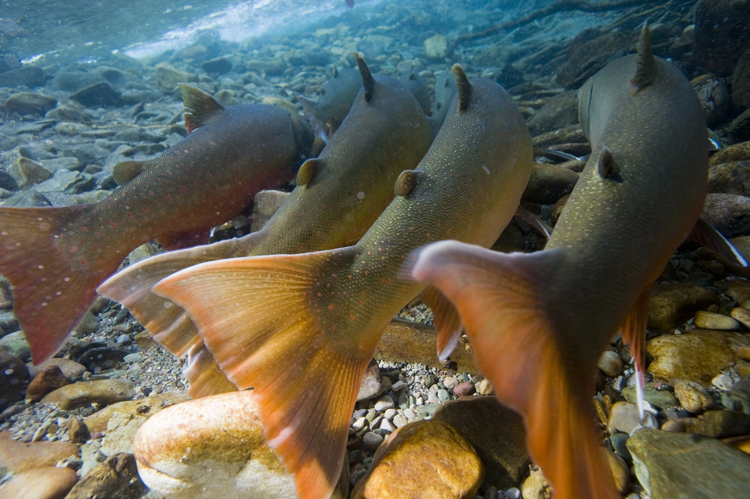
minimize interference with fish spawning. Rainbow and Westslope Cutthroat
Trout, for example. spawn this time of year -– generally May to July. They find
gravelled-bottomed stretches of streams. Females swish their tails to clear a
bed where they can drop their eggs for the males to fertilize. On days when the
water’s clear and low, you can see the redds (Editor's note: "redds" are "fish nests") – they appear as cleaned gravel
and are areas to be avoided by wading fishers.
But,
that tends to be moot anyway, because few anglers want to wade in muddy water
caused by spring runoff, which generally runs from early to mid-May in the
Oldman drainage, and usually ends in early July. That’s when lakes are good
places to take your pontoon boat and drop a nymph or water boatman for stocked
rainbows. (Just don’t find yourself at the east end of the lake when a west
wind is blowing and all you have is a paddle!)
Last
year, runoff dragged on a little longer and this year, well, who knows: the
snowpack that feeds the runoff is higher than normal – from 121 percent of average at South Racehorse
Creek in the Upper Oldman to 229 percent at Lee Creek, a main St. Mary River
tributary. The averages vary from 21 to 45 years, depending on how long
recording stations have been active.
Of
course, man’s engineering efforts, particularly damming rivers, most notably
the Oldman, St. Mary and Waterton, can affect fish spawning downstream of the
structures. Incubating eggs need a minimum flow, so dam operators have been
asked to try to maintain that for the sake of spawning, as only one of their
roles when they release water. They also need to maintain the integrity of the
dam itself during times of high runoff as well as to maintain levels in the
reservoirs to release later when it’s needed for irrigation. Other organisms,
such as cottonwood trees native to our river valleys, also require a constant
water flow later in the year to assure their survival.
In
the headwaters, the OWC’s Headwaters Action Plan has as one of its objectives
completing a fine scale cumulative effects assessment of fish populations and
habitat streams. The Partnership Advisory Network participants that helped
craft the HAP generally accepted the findings of the Alberta Westslope Trout
Recovery Plan which, among other conclusions noted, as an example, the effect
of sediment from runoff along logging roads on cutthroat and bull trout
spawning areas. The next step is to determine what can be done about it to
protect redds.
So,
in the grand design, it should all work together, sometimes with man’s help and
sometimes to encourage man to tread more softly on a delicate ecosystem.
(Editor's note: We are hoping to have a productive dialogue with ATV fans - "All-terrain vehicles/quadders"- this weekend, out in the Crowsnest Pass at the RV and OUtdoor Show. We would like to encourage these enthusiasts to be aware of who they are driving over when they cross stream beds - and encourage other practices that are safe for all beings. The sediment that is churned up adds to the problems Richard describes above, in addition to a host of other environmental challenges.)
 |
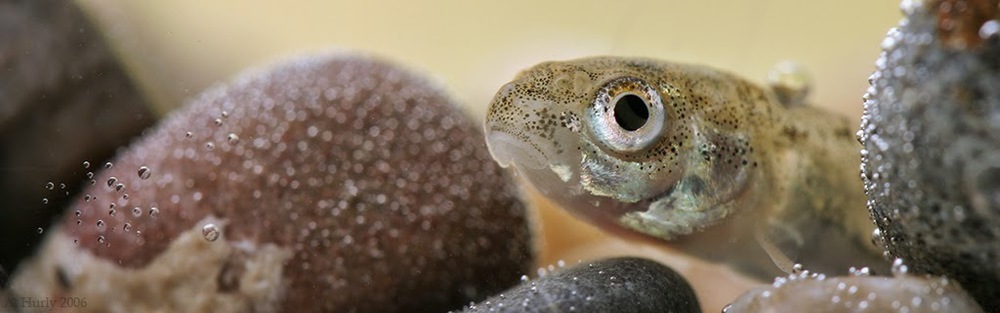
| Photo courtesy Andy Hurly, Director, OWC |








 Friday, June 20