Banner photo by Markus Spiske. Blog by Watershed Stewardship Assistant Chantel Youmans.
This blog series is part of OWC’s Connecting People, Solutions, and Innovations project. In these blogs, you’ll hear directly from agricultural producers and managers in southern Alberta who are working to solve challenges in innovative ways.
With its open fields and tractors galore, Farming Smarter might look similar to the many agricultural operations dotted around Lethbridge, but hiding inside its nondescript buildings are some far-from-ordinary equipment and tools, each with its own specialized job. We’re here today to hear from Lewis Baarda, the on-farm research authority and Field-Tested Manager at Farming Smarter, about their work in crop innovations. He leads us into a meeting room in the facility, where white boards are covered with enough numbers and crop details to make you dizzy. It’s easy to imagine summer students bustling around the building, excitedly sampling and measuring to their hearts’ content. This is obviously a place where new ideas are in full supply.
A research facility like this has to blend a million different disciplines to stay functional. It has to be an office space, a think tank, a laboratory, a functional farm, and more. This also means staffing the right folks for the job, including the most charming site supervisors you could ask for: farm cats. A sweater left on the table, full of cat hair and serving as a makeshift bed, tells me these little kitties are treasured coworkers — despite occasionally napping on the job. Several of them curl up to listen to us chat about agricultural research; revisiting our conversation weeks later, the occasional soft ‘meow’ or purr in the audio file made for a pleasant surprise. For the full effect, find your own furry companion to accompany you as you sit back and enjoy this interview.
This conversation has been edited for length and clarity.
Can you introduce yourself and what you do?
My name is Lewis Baarda, and I work for Farming Smarter. I manage a research program here that focuses on innovation in crop production.
Speaking of here, can you tell us about where we are?
Right now we're sitting in our main shop at the Farming Smarter research site in Lethbridge. We have about 200 acres of land in the area that we use for our crop trials. We've got all sorts of equipment and tools and space for just about any kind of crop research you can think of.
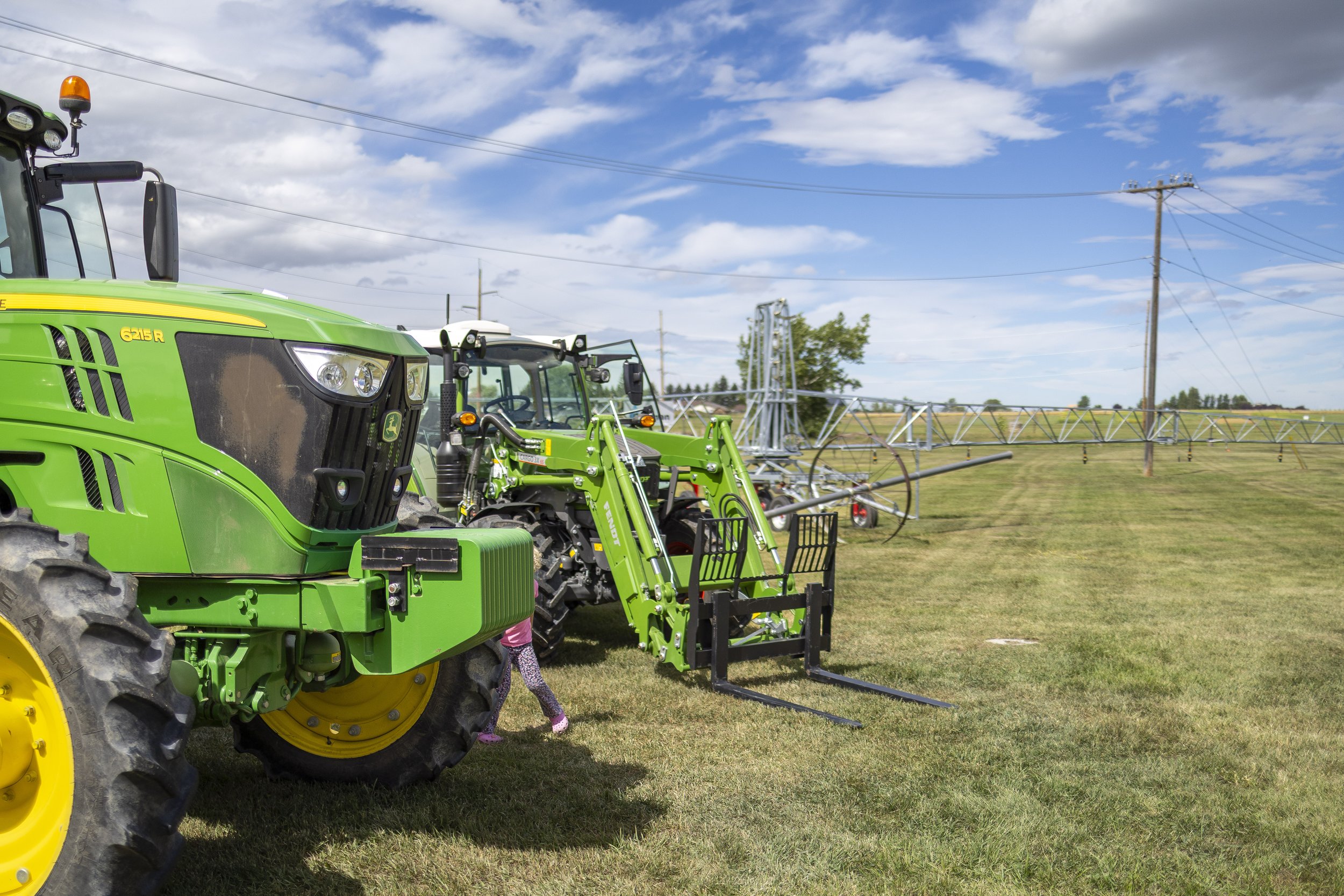
Just a snippet of the arsenal at Farming Smarter. Can you spot the little researcher hiding in the equipment? Photo by Jon Martin.
What kind of challenges are you currently facing day-to-day?
I think one of our big challenges is doing the right research. We have to appeal to funders and convince them of the value of the projects that we'd like to be doing, but we also have to choose projects that are going to be meaningful and impactful for the farmers that we work with. So, finding that balance — what's the right project, how to communicate it, how to meet everybody's needs, and doing it in a timely manner with a good budget — that's a challenge. That's a big part of what makes the straw that stirs the drink, so to speak.
What's something new you’re doing that you're excited about?
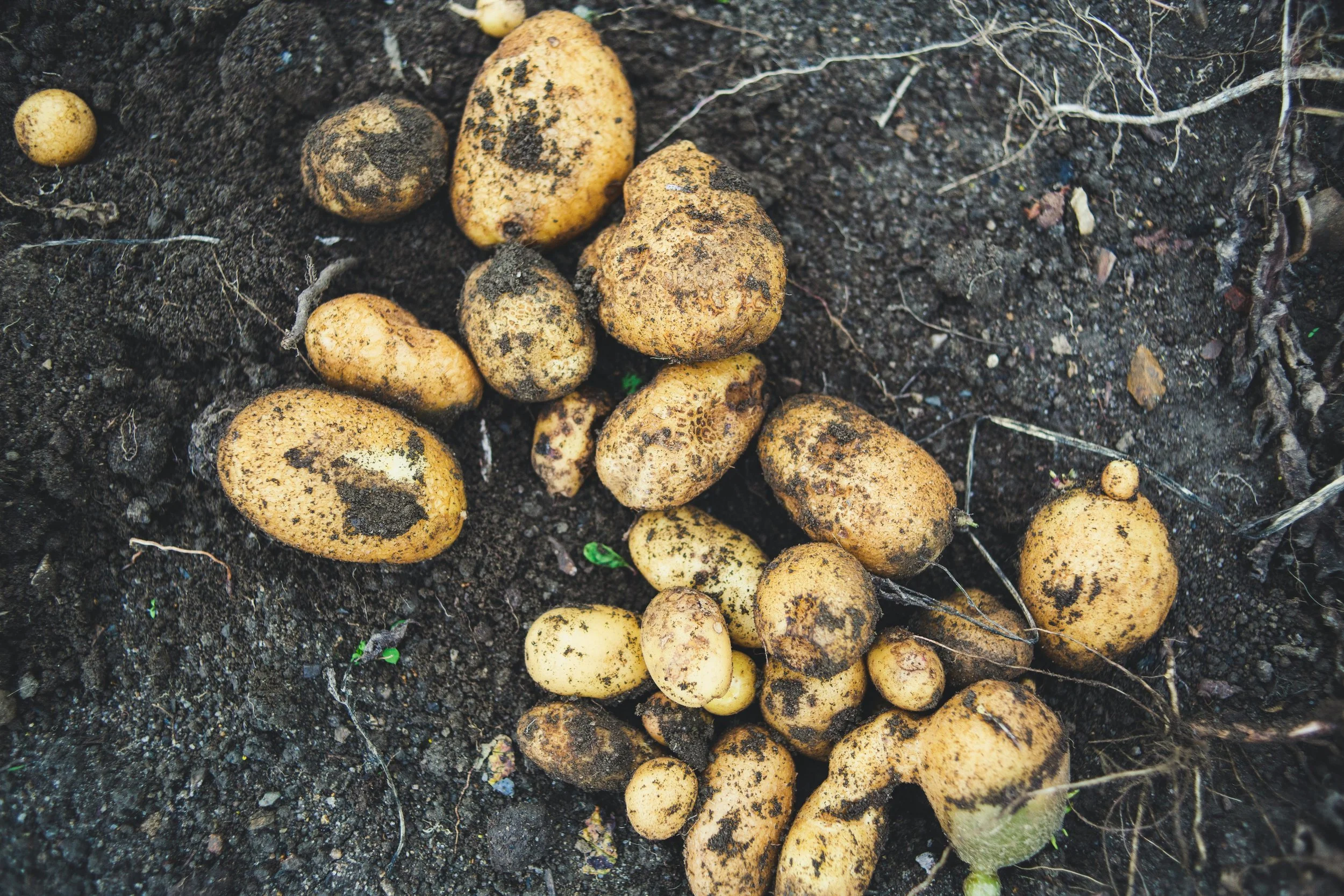
One thing would be we're doing some work in specialty crops, which is something we haven't done in the past. We just wrapped up our second season of working with potatoes. It's a high-value specialty crop that has a big footprint here in southern Alberta. And, in my opinion, there's space for more research and more work to make sure we stay at the forefront of being the best potato producers in the country.
Is there anything you’re doing that isn’t being widely adopted by your peers?
“We’re trying to take the pressure off those farmers who are willing to shoulder the risk of new technologies by testing them in a contained, lower-risk environment.”
Well, that's the nature of being a research group: most of what we're doing are things that people haven't really seen. We think of the ’Crossing the Chasm’ approach, where you've got your bleeding-edge people who are trying something new. They're taking all the risk, learning as they go, making mistakes, and then five years down the road, once they’ve figured it out, everybody else is doing it. We’re trying to take the pressure off those farmers who are willing to shoulder the risk of new technologies by testing them in a contained, lower-risk environment, collecting all the data we can. Then we can go to the industry and say, “Hey, we've tested this. We know what works and what doesn’t. It still has to be adapted for your own context, but we've taken the edge off innovation.” We grease the wheels for innovation by facilitating innovation, and a lot of what we do are things that maybe only a few people are doing or thinking about. We're trying to find the winners among those concepts and push that into the industry.
How did this idea of taking the edge off innovation, so to speak, come about?
We've tried different ways of doing things, and we're very well connected, which gives us a lot of opportunity to test things out. We're connected with the industry, the producers, and we're connected with the Agriculture and Agri-Food Canada research station up the road. I think that knowing who everybody is, what their roles are and what everybody needs, that helps position us really nicely so we're consistently choosing the best projects. That connection is really what facilitates innovation for us, because everybody has input and guidance into what we do, and we know what we’re doing is going to make a difference to the farmers we work with.
What kind of impact or difference do you think your practices are making?
Honestly, I think it's huge. It's very, very difficult for us to concretely say, “What is the impact of research?” There are a lot of different metrics you could use to say we boosted yields by this much, did ‘this’ by that much. All this preamble is to say that it's really hard to directly measure the impact because we see it in many different ways. But we know farmers and growers keep coming back to us. They keep asking us, “What are you doing next? What's going on?” We get phone calls about our projects all the time. We know people are dialled in and that people are adopting some of the technologies that we've studied and proven the value of. The fact that we continue to work and continue to be sought after for our experience and knowledge tells me that we're making an impact. We keep getting support and interest in what we do, which I think is a really good sign.
Have there been any unexpected positive or negative consequences because of these concepts or ideals?
Some of what I do involves visiting farms and working with farmers, and you see them using technology that we studied three or four years ago. So that's really rewarding to see. It's not entirely unexpected, but you just kind of think, “Wow, we played a role in making that happen.”
On the negative side, research is tough! Everything you study isn't going to be a winner, and part of what we end up doing is separating the wheat from the chaff, so to speak. We do study things that don't turn out, and you could see that as a negative, but it also gives us the capacity to go to growers and to the industry and say to them, “We've tried this technology or this product. We don't think it's going to be a real winner, so here's something else that might make a bigger impact on your farm.” Research isn't a straight line; it's a meandering river, and you have your highs and lows, but overall our trajectory is upward.
Can you think of a scenario where you think these concepts could be more widely adapted in agriculture?
In agriculture we tend to be a bit isolated from each other, and we sort of partition the industry into all these different blocks. You've got the canola growers who have their commission and they do things their way, and the potato growers have their own thing, so they don’t always intersect. There's a ton of opportunity for ‘cross-pollination,’ to work together instead. Ideas that work in one sector of agriculture can be adapted and applied in others. I think there's a ton of space for more exchange and sharing of ideas in a really meaningful way.
What problem would make the biggest impact for you if it was solved today?
That's a tough one, there's just so much. Thinking in the context of innovation here at Farming Smarter, one of our bigger challenges is funding. We have to appeal to the funders, we have to find the support for the work we do, and sometimes growers aren't interested in some of the ideas we have because it's too far ahead for them. Sometimes funders aren't interested because the idea or technology doesn't appeal to everybody, but it may appeal to what happens here in southern Alberta. If our funding challenges were solved, that would make life easier, big time.
Another challenge would be just having a stronger overall community. Farming Smarter is working to build a community of progressive-minded individuals, companies, farms, etc., that are trying to promote innovation and new ideas. If we had a community with that mindset around us — people who could champion our ideas, support the organization in different ways, and come to us with ideas — that would facilitate getting projects off the ground quicker, finishing faster, and getting them to the farm faster.
What makes you hopeful about the future of agriculture?
What doesn't, really? I mean, there's piles of opportunity. We've had summer students come through and see firsthand what it looks like to be in agriculture, and some of them have even changed their degrees after a summer with us. Sometimes people don't realize how much there is to agriculture. It's not just the stereotypical American Gothic image of weathered farmers, pitchfork in hand in front of a barn. We need chemists, we need geographers, we need conservation people. We need people to market and provide financial expertise. There's just so much.
Agriculture and research are big businesses, and they’re always growing. Farmers by nature are innovative. They're always pushing the envelope in terms of what new crops can we grow and how we can improve production while protecting our soil, or reducing our water use and chemical inputs. It's really a frontier, and there's a pile of opportunity.
Like all OWC’s blogs, this post was written by a real live human, without the use of generative AI.
Connecting People, Solutions, and Innovations is made possible thanks to funding from the Sustainable Canadian Agricultural Partnership.