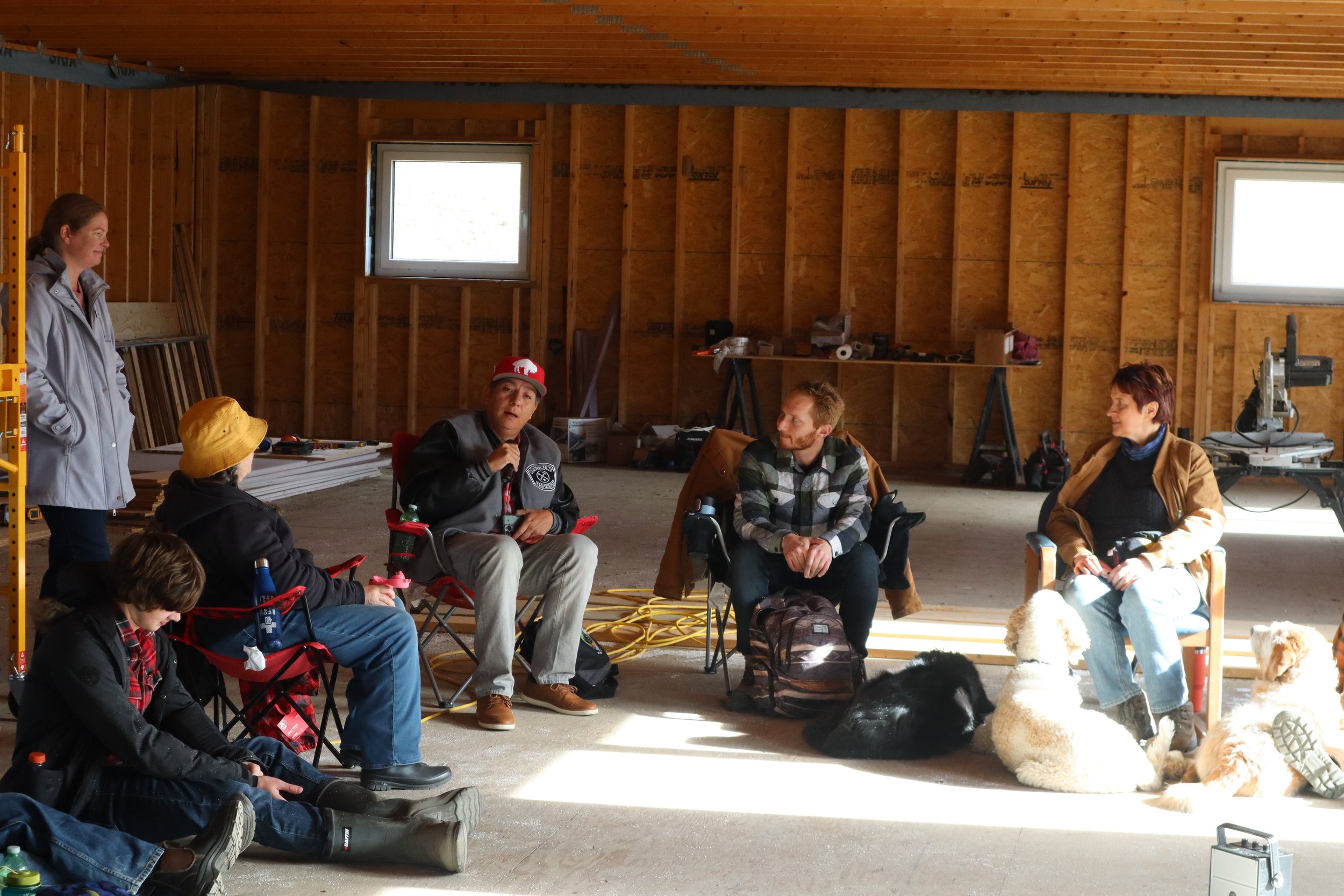
Alvin First Rider, in red hat, speaks to Authentic Watershed Experience attendees. Photo: OWC. Blog by Watershed Stewardship Assistant Rachel Morris.
We were honoured to have Alvin First Rider of Kainai Nation speak at the Oldman Watershed Council’s final Authentic Watershed Experience in November 2025, an event where watershed residents learned about land and water stewardship. Alvin is the Environmental Manager with Blood Tribe Land Management, where he is responsible for carrying out land stewardship initiatives, including building capacity for cultural burns, supporting the Iinnii (bison) herd, and planting native trees and shrubs. He joined us to share his experience working in land stewardship, and his knowledge of the role that fire plays, and has played, on the prairie.
Learning: fire and people
Alvin explained that southern Alberta’s grassland systems are no stranger to fire. In fact, fire has shaped the prairie landscape over millennia. Historically, fires on the prairie could be very frequent: some grassland areas on traditional Blackfoot territory used to burn as often as every two to five years.
Suppressing fire over a long period of time has consequences. Photo: OWC.
Alvin described people, bison, and fire as existing in an interconnected cycle. Fire played an important role in how bison and people moved across the landscape: regrowth after a burn provided high-quality forage, so people could burn sections of prairie in expectation of bison coming there when the plants grew back. The Niitsitapi (Blackfoot) people would burn sections of prairie in the spring to attract bison to that place in the fall, and burn in the fall to attract bison to a place in the spring. In this way, people planned ahead to be close to bison herds as food sources. Unfortunately, fire has been suppressed in many systems, with new patterns replacing the old, and with consequences such as invasive species, unbalanced ecosystems, and a higher risk of serious wildfires.
Alvin described Blood Tribe Land Management’s projects in carrying out and expanding traditional land management on the prairie. Alvin has been building the Kainai Nation’s capacity to work with fire by implementing the Blood Tribe Fire Guardians program. The Fire Guardians are a dedicated fire management team that will be able to carry out burns on Kainai Nation. Crews will be ready and available to burn selected areas when conditions are right, adapting to changing wind and weather conditions. Last year, the Blood Tribe Fire Guardians carried out their first cultural burn in recent times on Kainai Nation. Cultural burning is carried out not only to reduce fuel, but also to increase the health of prairie plants and animals.
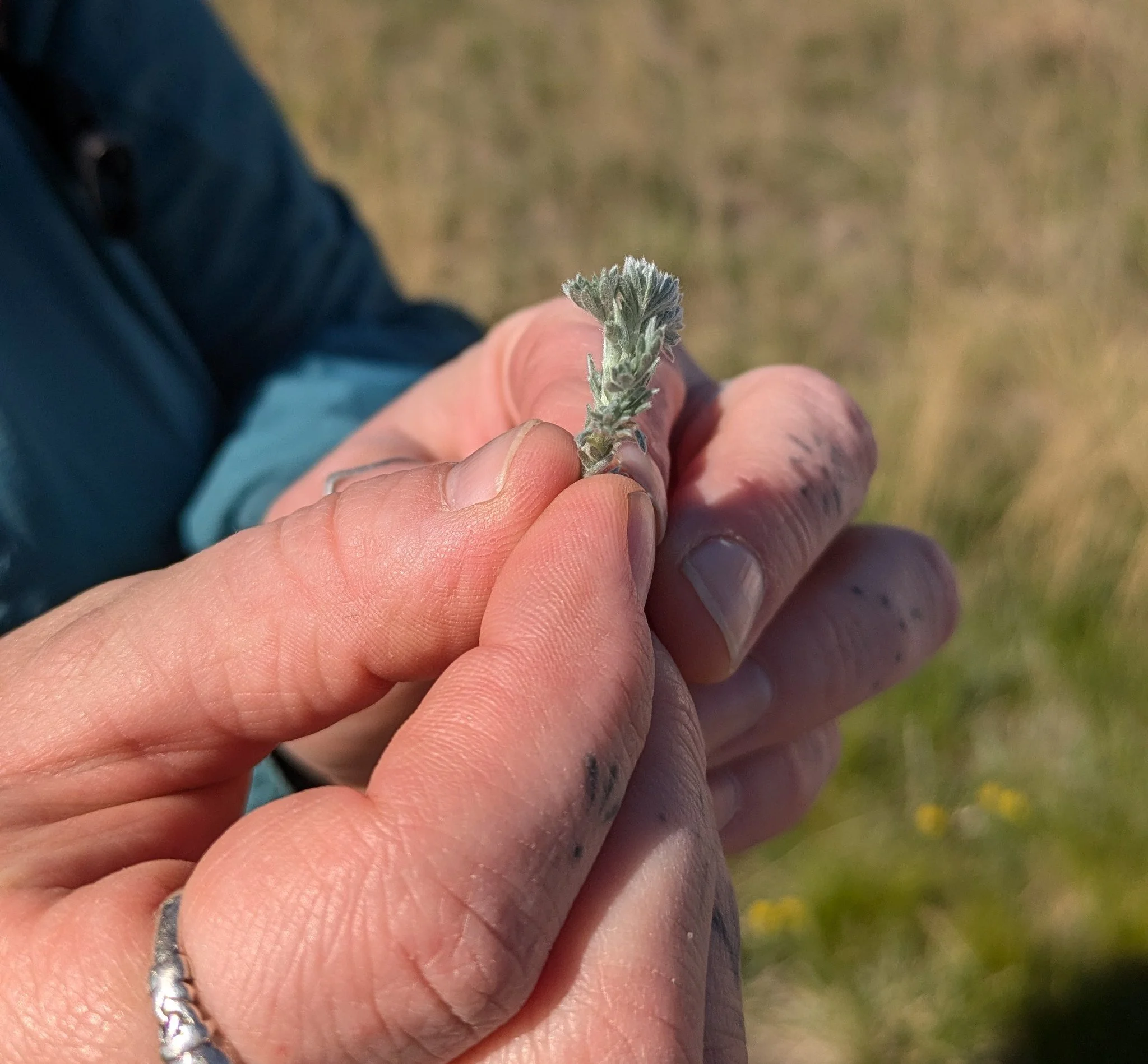
Fringed sagebrush, a native prairie plant. Photo: Rachel Morris.
Blood Tribe Land Management also grazes a cultural rematriation Iinnii (bison) herd on Kainai Nation. They first brought bison home to Kainai Nation in 2021, where they are healing the landscape by reinstating traditional relationships with prairie plants and animals. Within the bison pasture, Alvin said, Blood Tribe Land Management is removing fences to allow bison to move more freely across the landscape, mimicking their natural patterns.
Alvin also described collaboration across traditional Blackfoot territory, where Blackfoot people are sharing traditional stewardship methods. He explained that Treaty 7, which covers the Oldman watershed, is a land-sharing agreement, and that sharing land involves sharing responsibility for taking care of it. Siksikagaitstipi member nations are working toward co-management of aspects of Paahtómahksikimi (Waterton Lakes National Park), such as the park’s bison herd, prescribed burns, and species-at-risk conservation. As he described the network of land stewardship initiatives he is working on, Alvin said, “it’s more than just fire.” Species at risk, such as loggerhead shrikes, burrowing owls, and leopard frogs, are reappearing at the bison paddocks and across traditionally managed lands.
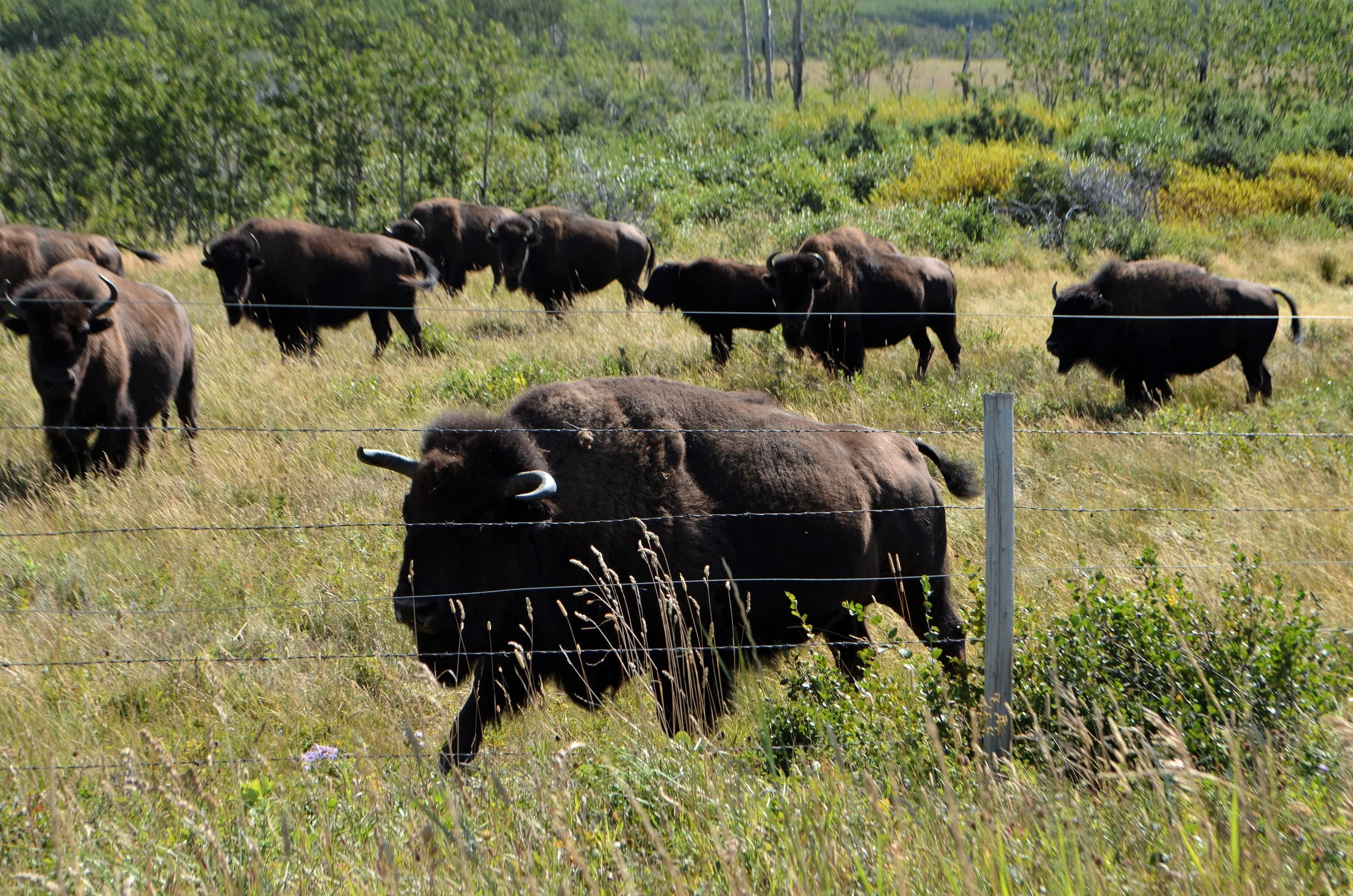
Bison, fire, and people existed in an interconnected cycle. Photo: Connie Simmons.
Reforming connections
From an ecological perspective, it is incredible to hear about processes and interactions being re-established in systems that had lost them. Fire and bison are two integral aspects of prairie ecology. Hearing Alvin speak made me feel hopeful about the future, and about the health of the land in southern Alberta. His emphasis that people are part of ecological processes, that they both influence and are influenced by other factors and players in the system, such as bison and fire, really resonated with me.
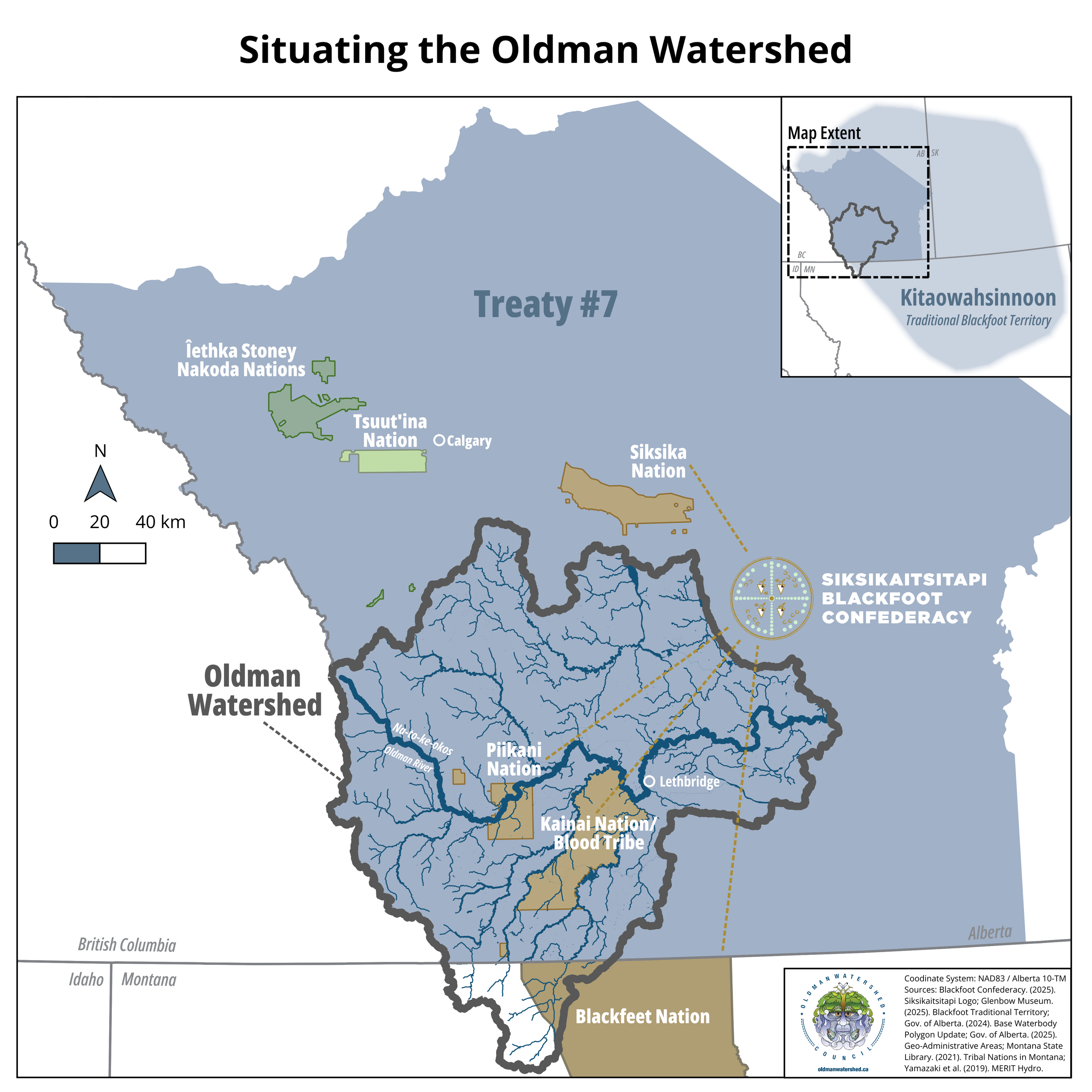
The Oldman watershed is on Treaty 7 land. Map: Lauren Thompson.
As scientists, part of our job in reconciliation is learning to listen, both to Indigenous people and to the land. Cultural burning supports processes that maintain and develop the landscape. It involves listening to the natural rhythms of the landscape, rather than suppressing or changing them. Working with fire, rather than against it, is a way of learning from and honouring the land. Remembering to listen, in this way and in others, is helping me to change the way I perceive myself in relation to the environment. Just like fire and bison, humans are part of ecological cycles, and we are responsible for taking care of those cycles.
Further learning
The historical context of Treaty 7 and the significance it has had on the landscape are summarized in this article.
The Indigenous Leadership Initiative made a video of the Blood Tribe Fire Guardians’ cultural burn in 2025, and the people involved in sharing fire knowledge. It is definitely worth a watch! The event is also described in this longer article from The Narwhal with many beautiful pictures of the burn and the surrounding landscape.
Learn more about the cultural iinnii rematriation on Kainai Nation in this article about the 2025 iinnii days celebration.
The Oldman Watershed Council would like to extend a heartfelt thank you to Calgary Foundation for generous contributions that made the Authentic Watershed Experience events possible.

Like all OWC’s blogs, this post was written by a real live human, without the use of generative AI.