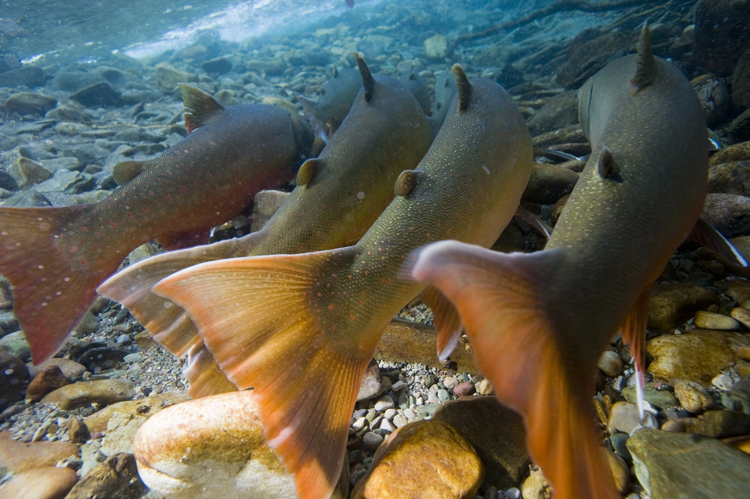
Banner photo and blog by Watershed Stewardship Assistant Rachel Morris.
This blog series is part of OWC’s Connecting People, Solutions, and Innovations project. In these blogs, you’ll hear directly from agricultural producers and managers in southern Alberta who are working to solve challenges in innovative ways.
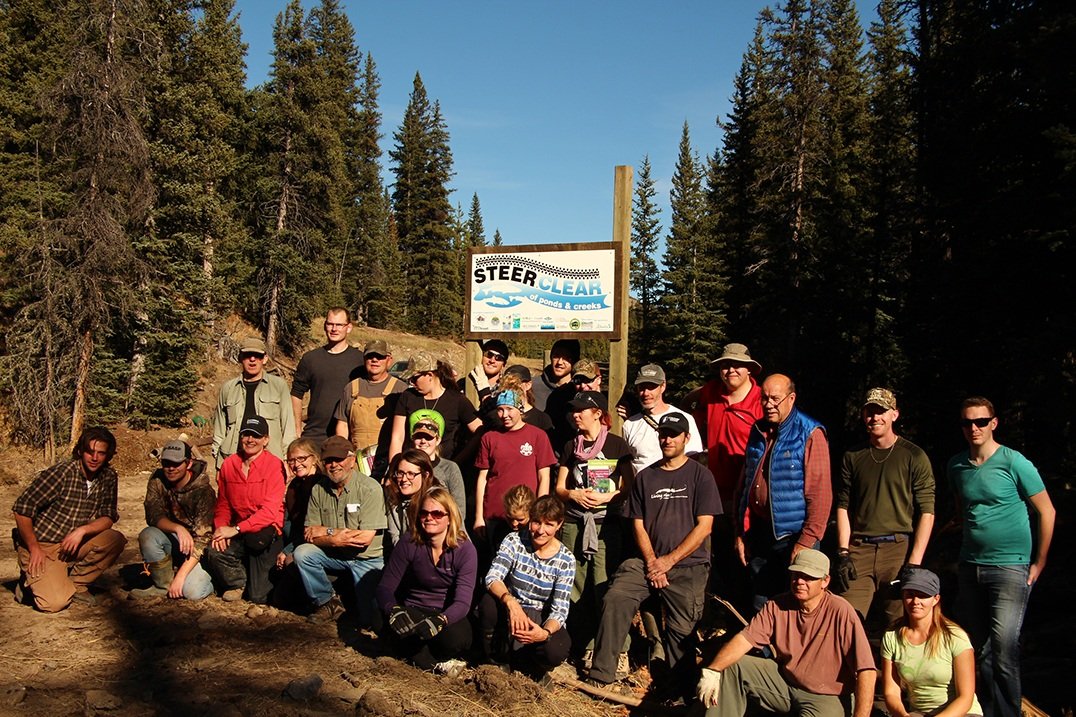
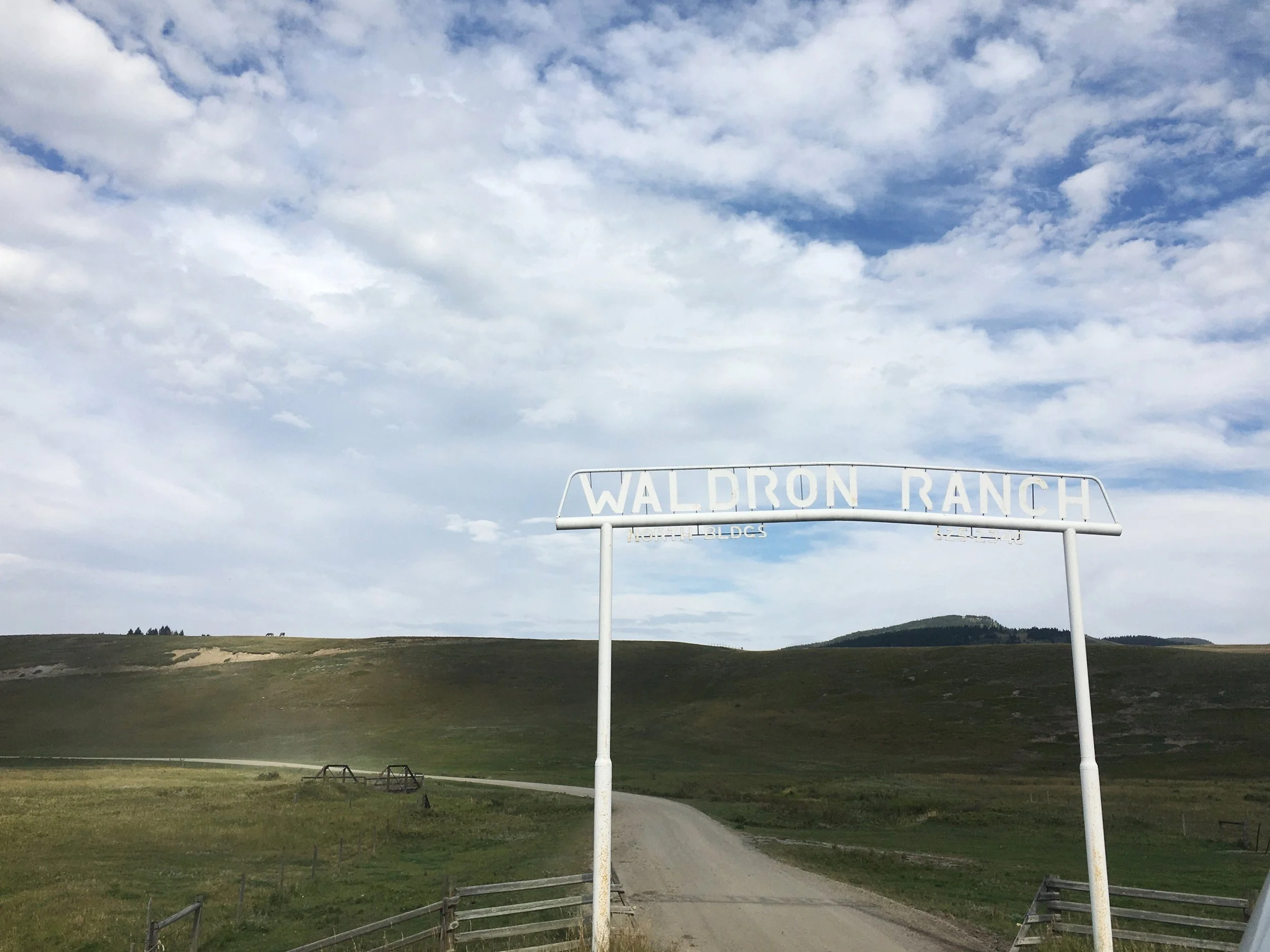
Waldron Ranch is an expansive tract of grassland sloping down the western Porcupine Hills. Today, there’s snow in those hills, but that doesn’t stop Oldman Watershed Council (OWC) staff and a team of keen volunteers from spending this morning building a series of beaver-dam analogues in the Waldron’s Sharples Creek, a tributary to the Oldman River. Though the surrounding hills are snowy, the Waldron’s lower farmland is dry, and a crisp wind ripples the yellow grass in the pastures around us as we stand on the gravel of the ranch yard.
We’re here to listen to Dr. Christy Goldhawk, the Waldron’s manager, but first we simply must pay our respects to the two adorably snuggly horses that stand behind her, who are of course oblivious to the facts that we’re trying to record an interview.
Christy watches them for a second, smiling. She’s only been at the Waldron for six months, but she is already deeply acquainted with the horses, affectionately calling the one nuzzling her shoulder “such a character.”
Christy been in high demand today, with attention from the horses, a CBC reporter, and now us. She jokes before we start that she gets interviewed for a living. As the wind dies down just enough for the crowd to hear her speak, Christy tells us about the place we’re standing and the work she does here, which is wide-ranging and clearly extends far beyond media appearances.
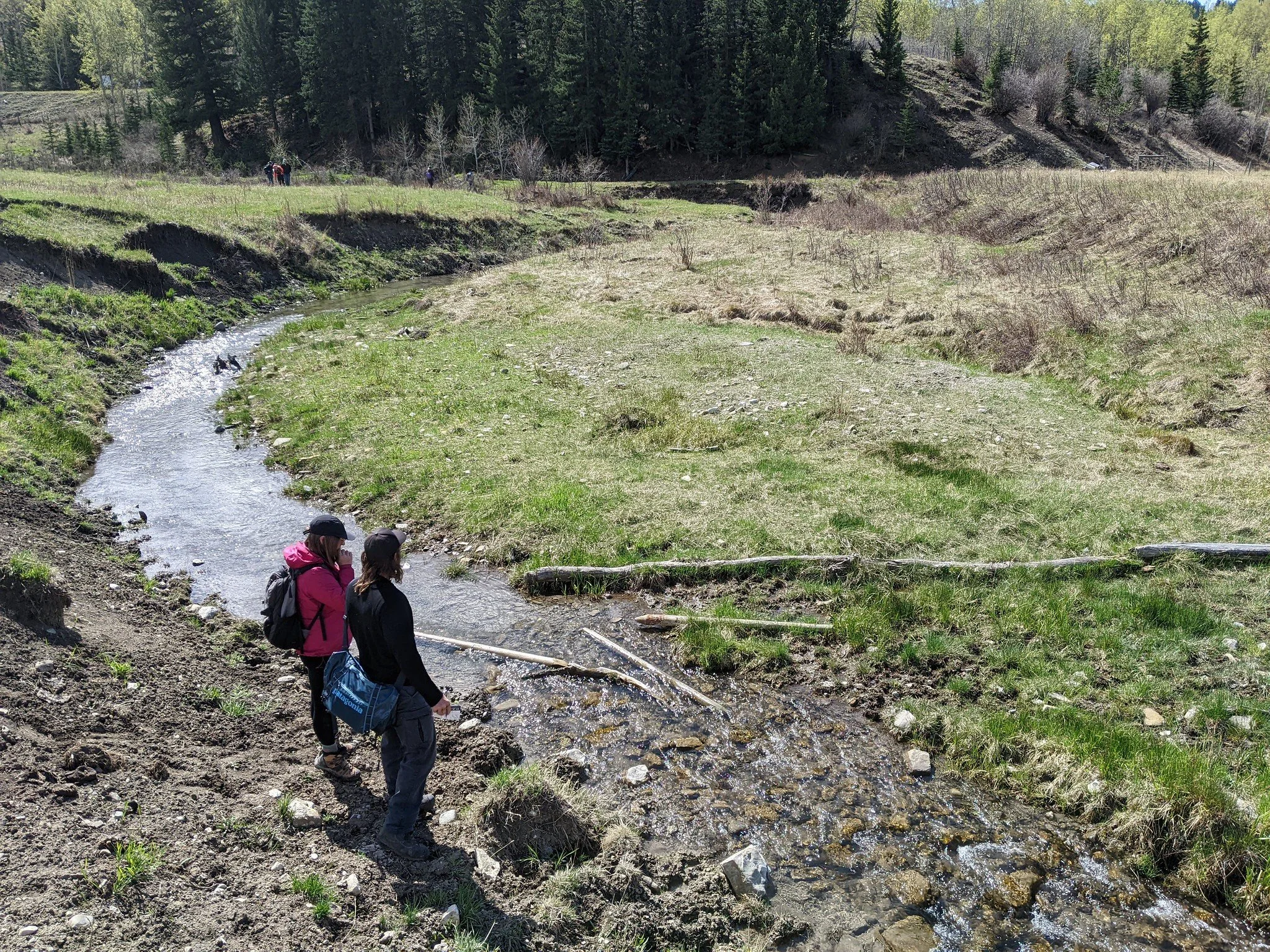
Sharples Creek. Photo: Sofie Forsström/OWC.
This conversation has been edited for length and clarity.
Could you please introduce yourself and tell us about what you do?
My official title is Dr. Christy Goldhawk. My role here is the general manager of the Waldron Grazing Co-operative. I just started at the end of May 2025. My role here is often administrative, strategic planning, and relationship development. Some of that strategic planning is looking at how we graze cattle.
The Waldron Grazing Co-operative is a collection of about 80 shareholders, and having a share in the Waldron gives you the right to bring cattle to graze for a certain amount of time. We adjust what that means based on how the grass is and how the water is. So it's not that each share corresponds to the same amount of animals each year; instead we are responsive and adaptive to what the environment is experiencing and what it can carry.
The Waldron’s shareholders are really big on this being a living legacy for generations to come. It's not just about getting the most number of pounds [of beef]. It’s about maintaining our grasslands and our waterways and our resources and our environment, and have them continue for longer than we can even think about.
The Waldron started in 1962 with 116 ranchers that pooled their resources to be able to have a large tract of land to run their cattle on. And that, over the years, has grown. It started with the main Waldron property, and over the years has expanded into what was called the King Ranch and Bob Creek Ranch.
We operate on 88,000 acres; 40% of that is deeded land that the operation owns. The rest of it is what you call grazing rights to public lands, whether that's provincial or federal. And we maintain our cattle through that, being responsive to the environment.
Part of that is through a lot of partnerships. The biggest partnership that people have heard about is with the Nature Conservancy of Canada. This created an easement on this land, which means it will not be developed or changed. There are envelopes where we can do some building — hence we're building a new house. But beyond that, to build any type of permanent structure is not what the intention of the easement and agreements were. The intention is to maintain native grasslands and other healthy ecosystems for the purpose of grazing cattle and having these environmental resources.
What kind of challenges do you currently face here?
A big, clear one for anyone that's been around is drought for the last four-plus years and the changes in the weather dynamic. But I will say that speaks to the resiliency of the co-op and the vision of those that are here. How we've responded to that challenge was we decreased the amount of cattle that we put on. We started resting different areas. We partnered with a few different conservation groups to maintain our waterways.
Another thing that’s not always a challenge, but could be seen as one, is that the Waldron is inaccessible. You can't take a tour bus to the northwest corner. You're not going to get there. You have to get there by horse. It's even questionable on a quad or a side-by-side. So, we are very equine-based. We rely on a small but highly-skilled labour force, so it’s almost a challenge to recruit and find people. We have eleven employees who all live on-site, and six are seasonal from April to November, which is when the majority of our cattle come through. But I think our employees, and our ability to do what we do, is also one of our greatest strengths.
There are also lots of stakeholders that want to be a part of the Waldron, or a part of the land, which is an opportunity that comes with administrative and regulatory challenges. Figuring out the funding models and figuring out what we can do together, with an intention of doing well and conserving the environment, is a challenge. Prices are going up, and we have to figure out how to finance some of the innovations that help us conserve around what we're doing. That can be one of our biggest challenges, but also one of our best creative opportunities.
We have a diversified income model. Shareholders pay a grazing fee on their shares, which helps pay for the mineral we give the cattle, and pay some wages. [Editor’s note: cattle are given a mineral formula to supplement the nutrients they get from grazing.] We have some pipeline revenue, from pipelines being across the land. We also have our gravel pit. That is something that the Waldron inherited; we didn't create it. But that does provide a small amount of income.
And then we have other partnership projects, which is taxpayers' money coming back here through the political realms. And grants and partnerships help us to fund some of the innovations here. When you put together that diversified income generation, that's how we get the bills paid.
Also, in a nonprofit, that’s what you spend most of your time doing. Okay, so is there something new that you're doing that you are excited about?
In terms of innovation, there's so many things that are exciting, but I'll point out those blue waterers over there.
That is a solar water system; we also call it an off-site waterer. Riparian areas are really great, but you don't want the cattle running through them at high intensity because those little hooves can be disruptive if you don't manage the area properly. [Editor’s note: a riparian area is the land closest to a water body, with different soil moisture and vegetation than its surroundings.]
What those waterers allow us to do is take a pipe and pump water into the nice, clean trough, and put that trough away from the water source. Any overflow water goes right back into the watershed, so it's not like we're diverting or removing a lot of water. It allows us to maintain our waterways, maintain their structure, and get cattle sources of water; obviously cows need water, it's a hugely important thing. And, those things are portable. We can hook them up to trucks and quads and take them all over.
That is one of the cool things we're doing: developing a water-management strategy to try to maintain such an important and vital piece of the ecosystem. We exist on the shoulders of giants — of the managers before us and the shareholders before us — and we're taking that forward by looking at all of those 88,000 acres, and considering: where are all of the water sources, where are the cattle going, what is the grass like, what are the weeds like, and what is the recreation use like.
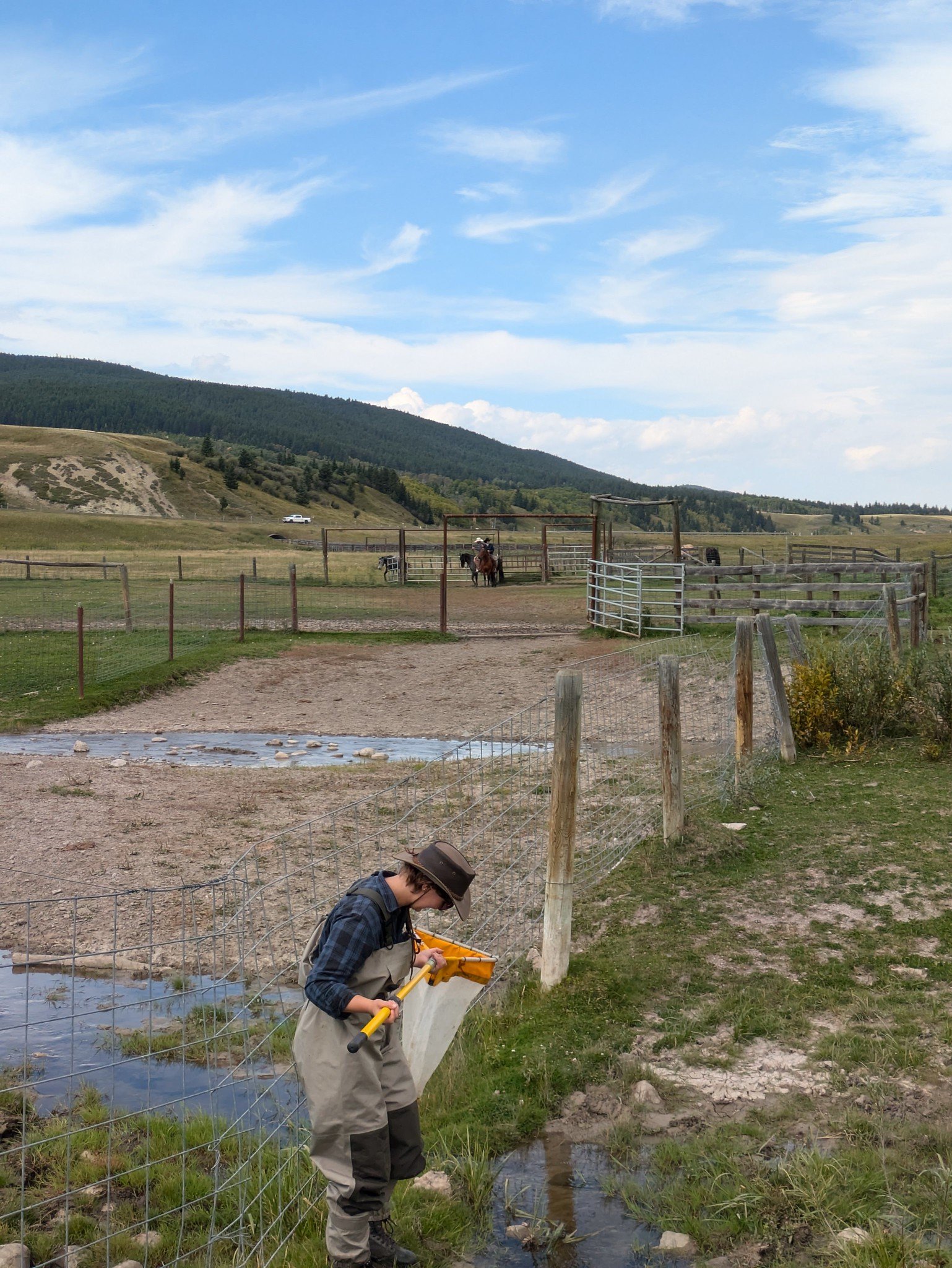
The OWC working at the Waldron. Photo by OWC.
In terms of maybe off-site watering or other innovations, what impact has that made day-to-day in terms of the overall operation?
“We’re in ag; we worry about a lot. When we can have reliable innovation, that allows us to be really adaptive.”
We're in ag; we worry about a lot. We worry about the weather. We worry about the grass. And when we can have reliable innovation, that allows us to be really adaptive. An offsite waterer is portable. It is low impact. If the cattle are stepping around it and making a mess, we can move it and find a better area. So, in terms of the day-to-day, it gives us that agency to be able to do a better job, and to see the effects on the cattle and the environment, and to support local innovation.
It also allows our staff to be innovative and to solve problems. That's awesome because it helps those people have pride in their jobs. That keeps people in agriculture. That keeps us helping to feed the world and providing livelihoods for families. And when those things make people have a good time doing it? Awesome. That's the impact it makes for us.
Have there been any unexpected positive or negative outcomes or consequences because of the specific innovation of offsite waterers?
While innovation is great, if it's not appropriate for the local environment — whether that's the microenvironment, or it's going to disrupt something else going on in that creek, like other species' use — then it won’t work. That's one of the unintended consequences of introducing an innovation, especially a simple water system: people want to use it everywhere. But one of the positives is that then we get to broaden the discussion around the appropriateness of innovation — where does ag-tech actually have a benefit versus where is it just more cost and more labour?
That's one of the bigger implications. Sometimes we can't always put it [a waterer] where we intended to put it, or we need to pause and say, “Do we have the right evidence and the right information that this is a sustainable place to put this equipment?”
What makes you hopeful for the future of agriculture?
My shareholders.
My family's been around ag for a while, and I actually come from a non-agricultural background. I grew up in a city. Heaven forbid, I was once a vegetarian. And I think what drew me to ag was that sense of community. And then what drew us to this place was when we saw and spoke with the people at the Waldron. This was it. These are people that truly care about the future of the grasslands and the ecosystem, and engaging in the community. They really want to get stuff done, do it well, do it together, and do it for generations to come.
I think you can get really stuck in the muck and mire of difficult things and toughness. But when the people you surround yourself with have good conversations and aren't afraid to back down from tough situations, you can figure it out. And if we can't, we'll figure something else out. I think the people that are here at the Waldron today, and the people that own this place and bring their cattle here and trust us, are amazing. And that really gives me hope for the future.
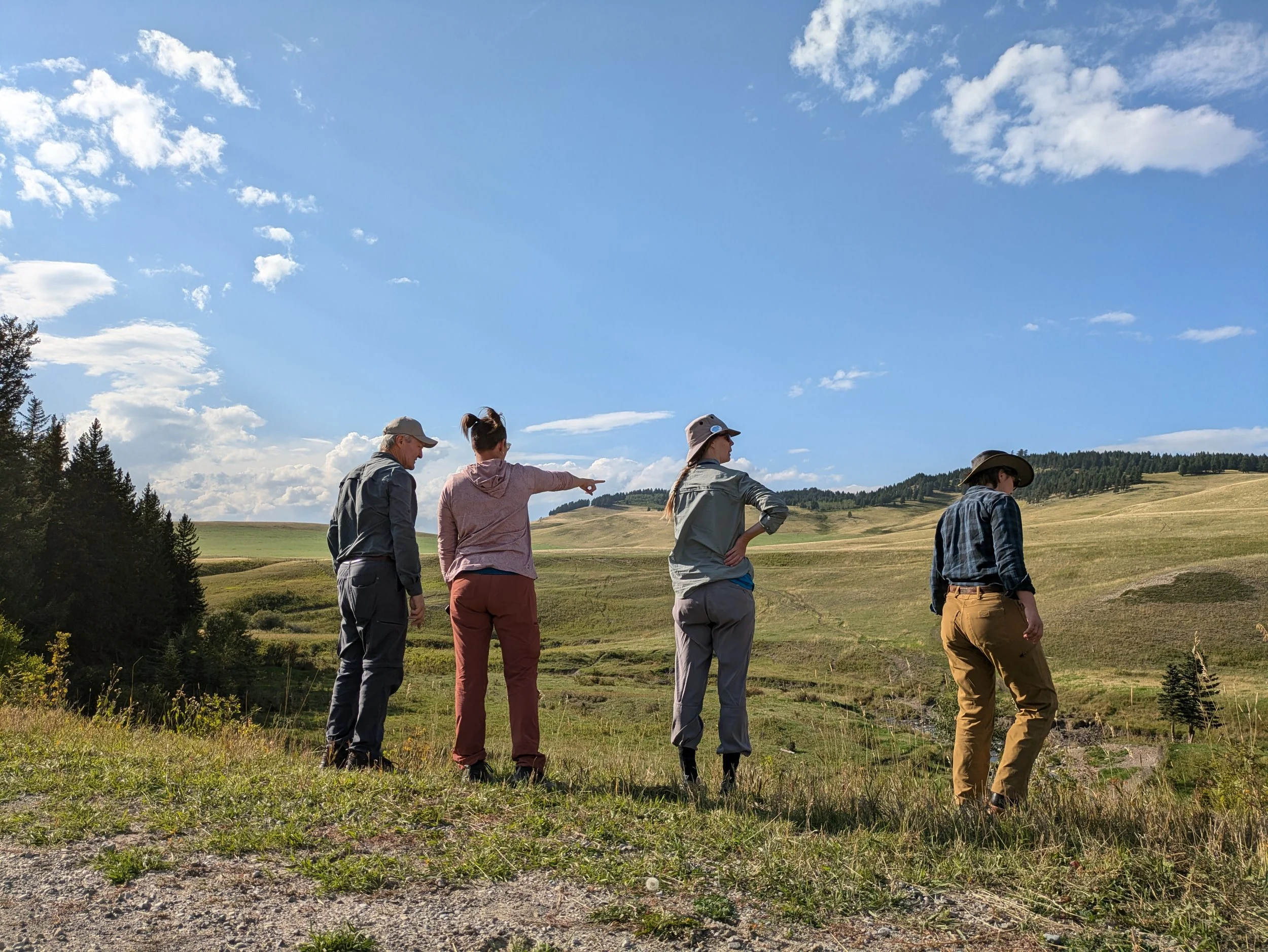
Overlooking part of the Waldron's land. Photo by OWC.
Are there other ag operations that are owned by a collective like this? That's a pretty unique thing about this spot. Do you know of anywhere else that's running their business or operation in the same, or a similar, way?
No.
Why do you think that’s not more common?
I think this happened because of ranchers, generations before us, with that ethos and ethic came forward. I think — this is going to sound so cliché — but there's others that have tried to be like us. We're special. It's a massive amount of land, and it's that cooperative mindset that keeps it kind of going.
I know there isn't another place like this, because people are contacting us to ask things like, “How do we structure ourselves like you?” and, “Can we do a study on this as an alternative ownership model which has stood the test of at least a couple generations?”
As we look at how agriculture is evolving, we're getting into more alternative land-ownership models. Next week, we have people coming over from across the world to come and look at the Waldron as an idea of how to build an agriculture cooperative to work together. So, there might be others like it, but there isn't necessarily anything of this magnitude of land base and this directive and this innovation, and the partnerships — for example, with the Nature Conservancy of Canada. I've yet to really find anything that's replicated it.
Like all OWC’s blogs, this post was written by a real live human, without the use of generative AI.
Connecting People, Solutions, and Innovations is made possible thanks to funding from the governments of Canada and Alberta under the Sustainable Canadian Agricultural Partnership.