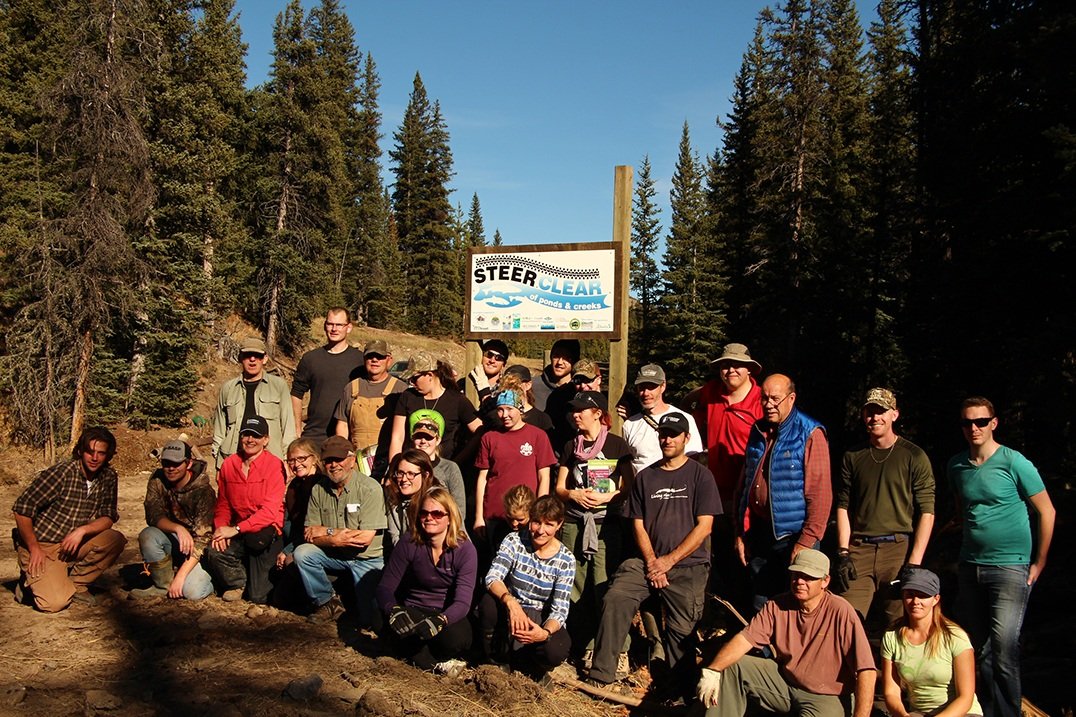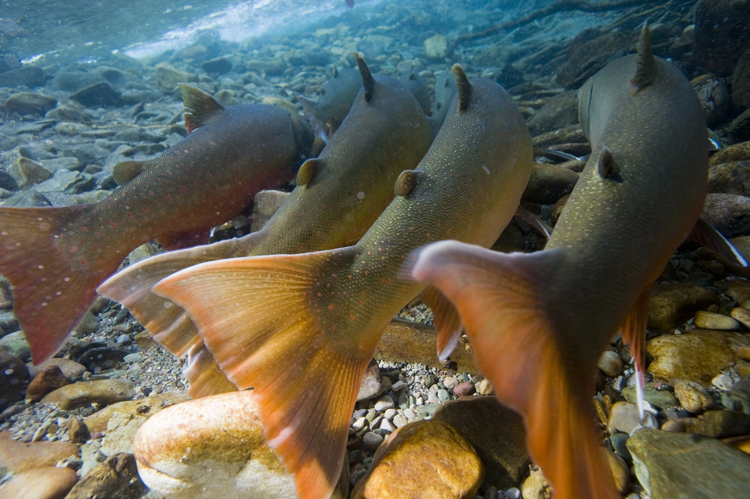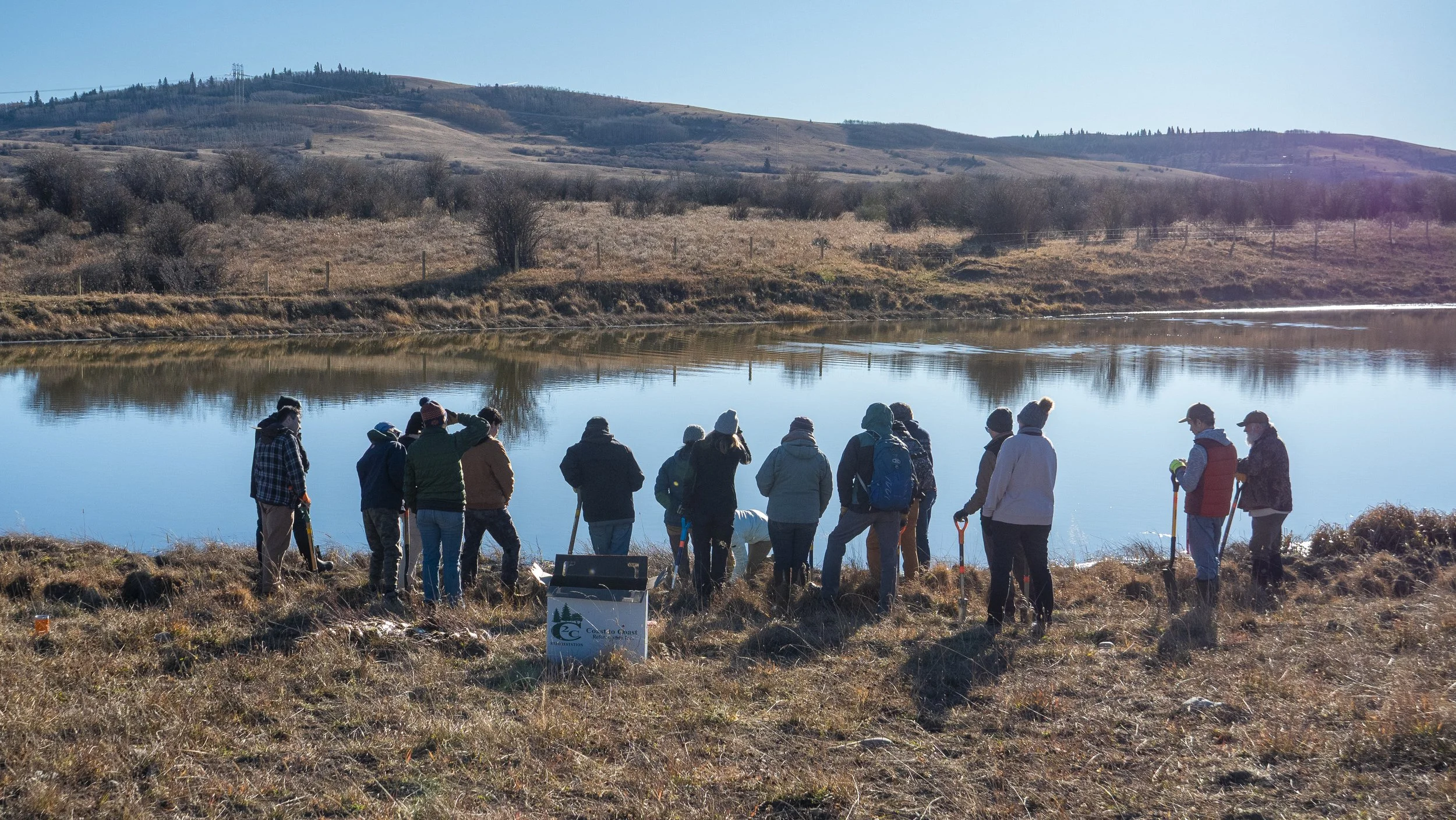
Banner photo by Jon Martin. Blog by Lauren Thompson, Watershed Assessment Program Manager.
I’m pleased to announce that the Oldman Watershed Council (OWC) is launching a State of the Watershed assessment beginning this fall!
The State of the Watershed is a project that supports planning and stewardship across the lands and waters of the Oldman region within Treaty 7 territories. It provides up-to-date information about watershed conditions, grounded in science, research, and community input.
The OWC last completed a State of the Watershed report, which was focused on environmental factors, in 2010. You can read it here. As you can imagine, a lot has changed since then! We’re addressing the information gaps and challenges that have emerged over the last 16 years in a new State of the Watershed assessment that harnesses collaborative knowledge to be a more holistic resource.
A New Approach
In addition to drawing on the expertise of our many partners, we are prioritizing making sure the final State of the Watershed can be used by many organizations and communities across the watershed. Some other assessments, including OWC’s in 2010, look at just environmental factors. But the environment exists alongside and is shaped by social and economic contexts, so looking at it in isolation misses important information. That’s why our upcoming State of the Watershed has three key pillars: Environmental, Socio-economic, and Indigenous. By weaving Western and Indigenous knowledges, and incorporating social and cultural indicators along with environmental factors, the resulting assessment will reflect a more holistic view of the health of the watershed.
“At the Kainai Ecosystem Protection Association, we understand how important it is to undertake this assessment of the Oldman watershed’s lands and waters in a way that centres Niitsítapi (Blackfoot) knowledge. Our Niitsítapi way of life teaches reciprocity and living in harmony with the land. Considering watershed health from environmental, socio-economic, and Indigenous perspectives will provide an essential pathway to protecting and restoring the ecosystems that sustain us.”
Once finished, the State of the Watershed will be publicly accessible on an interactive online platform, another change from our previous efforts. We’ll be starting to work with project partners this fall, and publish the final assessment in early 2028. Stay tuned for updates along the way!
Working in Partnership
We are thrilled to be working with a number of exceptional partners on this exciting work.
For the environmental aspects of the assessment, we are using a standardized scientific method called the Freshwater Health Index. This method was developed by Conservation International, and it was used by the North Saskatchewan Watershed Alliance in their recent State of the Watershed. This will be the first time this method has been applied to the Oldman watershed ecoregion!

Photo: Sofie Forsstrom
“The opportunity to standardize the approach to State of the Watershed assessments across Alberta with the Freshwater Health Index will enable scientifically validated benchmarking of current conditions that can be monitored over time and compared with other watersheds—something that hasn’t been possible before.”
The Prentice Institute for Global Population and Economy at the University of Lethbridge has also signed on to this project, providing socio-economic research expertise. This analysis will provide context for how human priorities affect ecosystems, a groundbreaking approach that avoids siloing environmental conditions from the social and economic realities that shape them.
“The Prentice Institute is building research capacity across the water resource sphere and fostering thinking about how water fits into the day-to-day and the broader developmental trajectories of our communities. Analysis for the State of the Watershed integrates demographic changes and their impacts on ecosystems, health, and the economy. By supporting the Oldman Watershed Council on this project, we are making credible information available to support sustainable land use and long-term investment stability.”
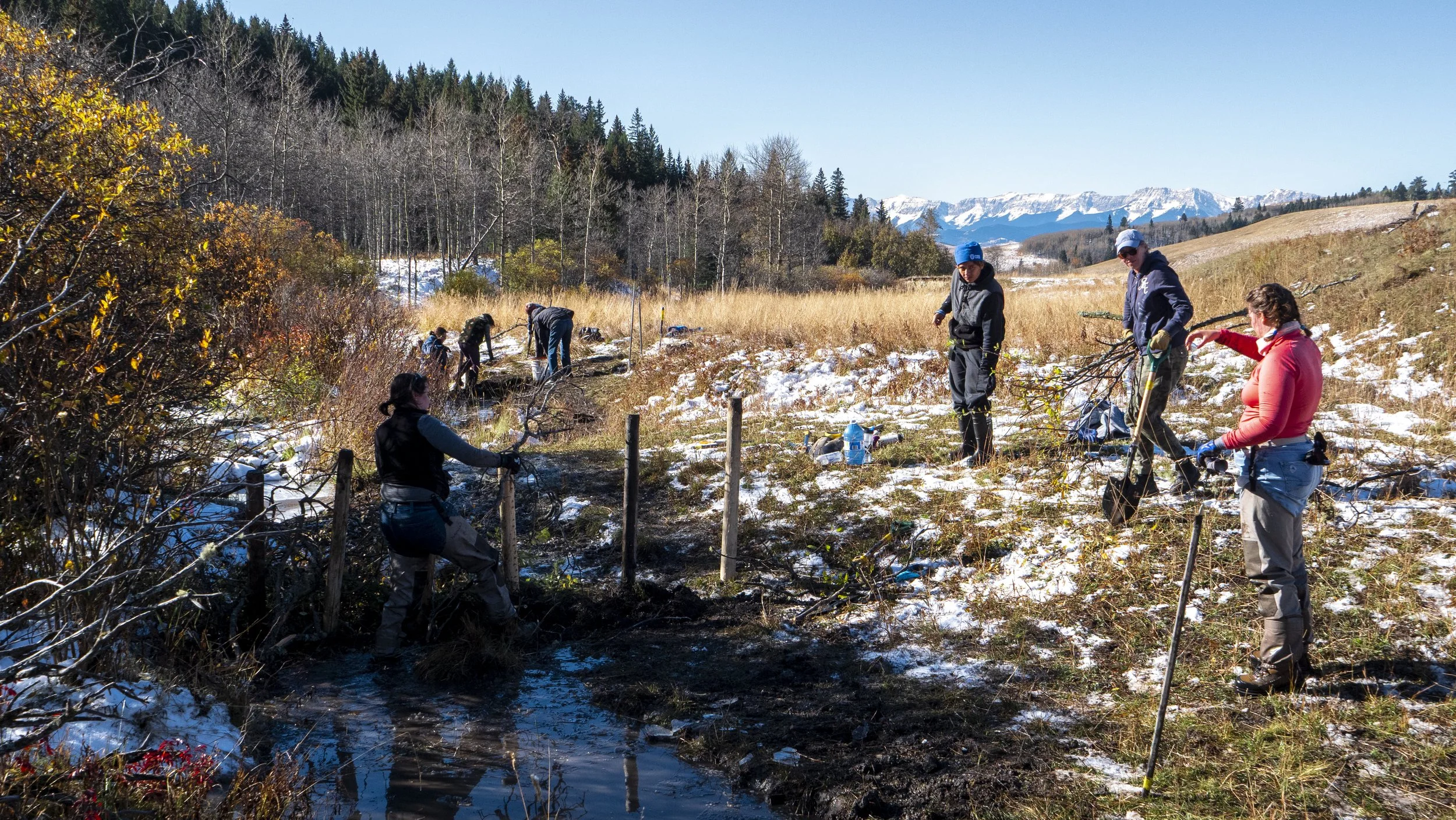
Photo: Jon Martin
Weaving Niitsítapi (Blackfoot) perspectives throughout the State of the Watershed is part of OWC’s efforts to strengthen this assessment by including diverse knowledge systems. Both Western and Indigenous knowledge will inform future land and water stewardship and decision-making, better representing the watershed community. We will be developing this part of the State of the Watershed in collaboration with the Kainai Ecosystem Protection Association.
Other key partners for this project include the Government of Alberta and the Lethbridge and District Association of Realtors. We are grateful to have the generous expertise of partners across many sectors as we develop a State of the Watershed that is useful for planning and stewardship activities on the ground.
“As a forest products company operating on the eastern slopes, West Fraser recognizes the importance of measuring, monitoring and responsibly managing the lands, waters and ecosystems that support healthy forests. This assessment will provide high-quality information to guide sustainable forest management and responsible stewardship.”

Photo: Jon Martin
Your State of the Watershed
Time and again, OWC has heard from communities and industry that credible and current information on the watershed is needed. As we get started on this collaborative work, there are ways for you to be involved, too.
First, we are hiring an Indigenous-led or Indigenous-partnered provider with demonstrated experience working with Nations of the Blackfoot Confederacy. This consultant will lead the Indigenous Pillar of the assessment, drawing upon community guidance, the First Nations Principles of OCAP (Ownership, Control, Access, and Possession), and the CARE Principles for Indigenous Data Governance (Collective Benefit, Authority to Control, Responsibility, and Ethics). We are looking for the right person to lead this critical work. Qualified applicants can submit a proposal by Oct. 15, 2026.
Second, we will also be hosting engagement opportunities this fall to hear from individuals and organizations to understand concerns and perceptions of watershed health and water security in the Oldman watershed. For more information, email Lauren Thompson, Watershed Assessment Program Manager, at lauren@oldmanwatershed.ca.
And, as always, to support this project you can make a donation to OWC.
The State of the Watershed is an important tool for managing the Oldman basin’s lands and waters. It makes scientific and research-based information easy to find, and uses the expertise of OWC’s trusted partners to create a key resource for watershed stewardship and planning—paving the way to support a healthy watershed and thriving economy in southern Alberta.
Thank you to the State of the Watershed partners and funders for supporting this work!




Like all OWC’s blogs, this post was written by a real live human, without the use of generative AI.