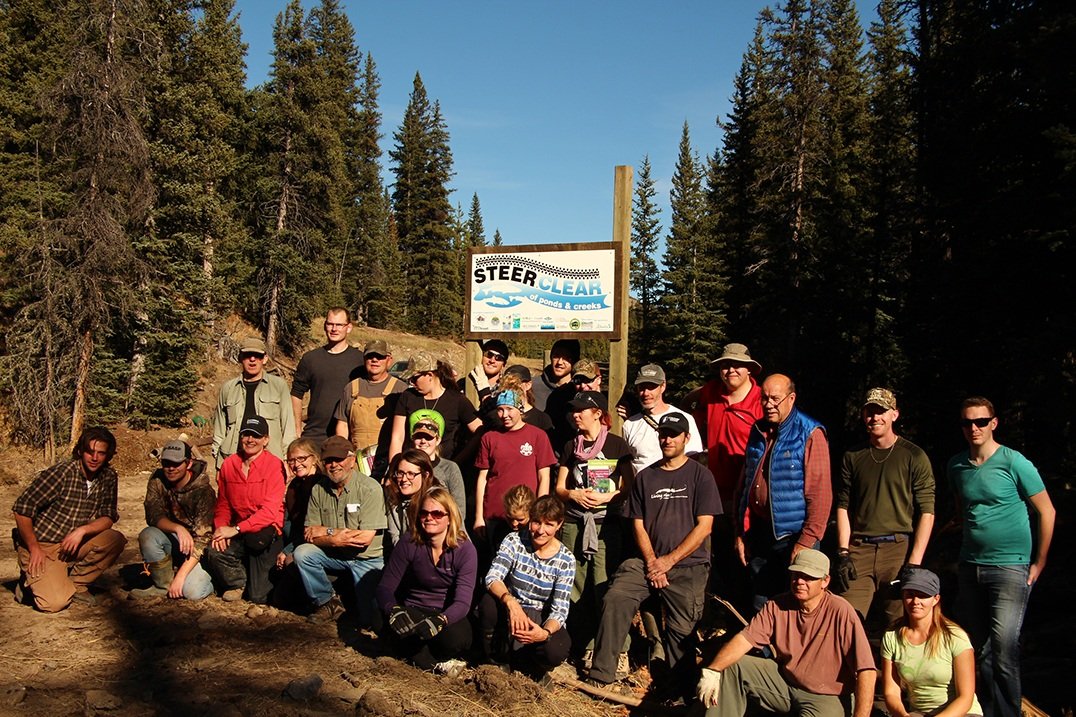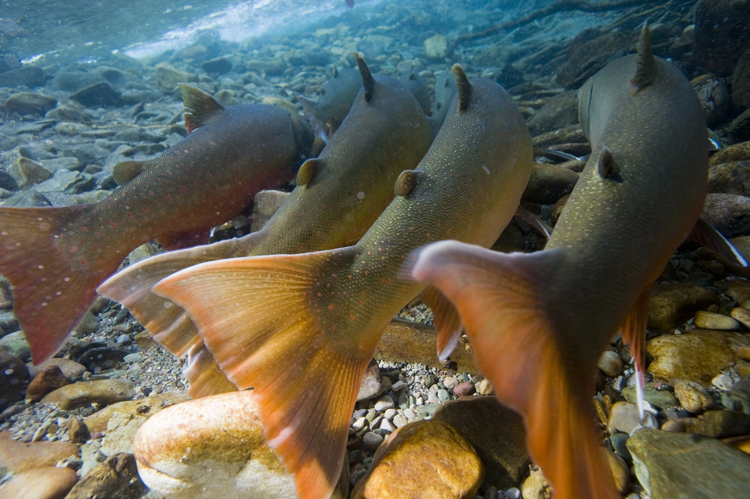
Banner photo by Elijah Stempien. Blog by Writer & Content Specialist Sarah Moore.
What do creating pollinator gardens, planting willows, and installing beaver dam analogues have in common? They’re all projects done by the Oldman Watershed Council (OWC) and its partners—but if you said they are all examples of nature-based solutions, that is also correct!
Nature-based solutions, as you might guess, use nature to solve a problem, usually by addressing an infrastructure or conservation need. The International Union for Conservation of Nature defines nature-based solutions as “actions to protect, sustainably manage, and restore natural and modified ecosystems in ways that address societal challenges effectively and adaptively, simultaneously benefiting people and nature.” Activities like enhancing wildlife and fish habitat are nature-based solutions; so is protecting a wetland, one of those “spongy” landscapes that store and slow the movement of water—extra important during droughts and floods.
Many OWC projects implement nature-based solutions in our watershed. As we’ll discuss in this blog, it’s also important to show how these sites have changed and how they help our communities. And as we’ll see, these solutions are a cost-effective way to manage our watershed, providing economic value in addition to all the other services they provide. But first, let’s head out to the Waterton River…
Behind the scenes of planting willows
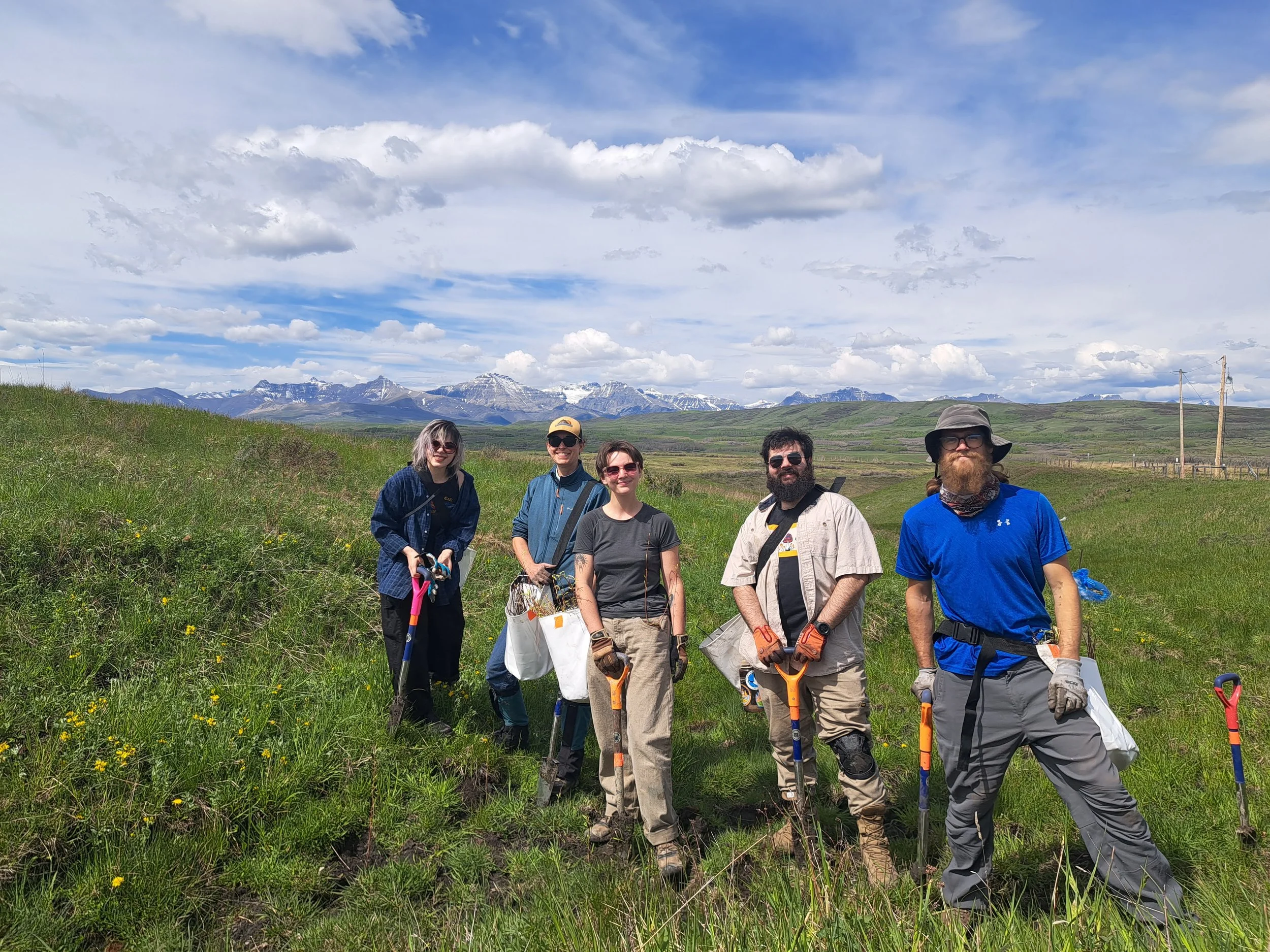
This spring, OWC and some fantastic volunteers planted 1,100 willows along streambanks and prairie potholes near the Waterton River. With the snow-capped Rockies on the horizon, clouds scudding across the blue sky, and wildflowers blooming in the prairie grasses around us, it was a picturesque day for some hard work.
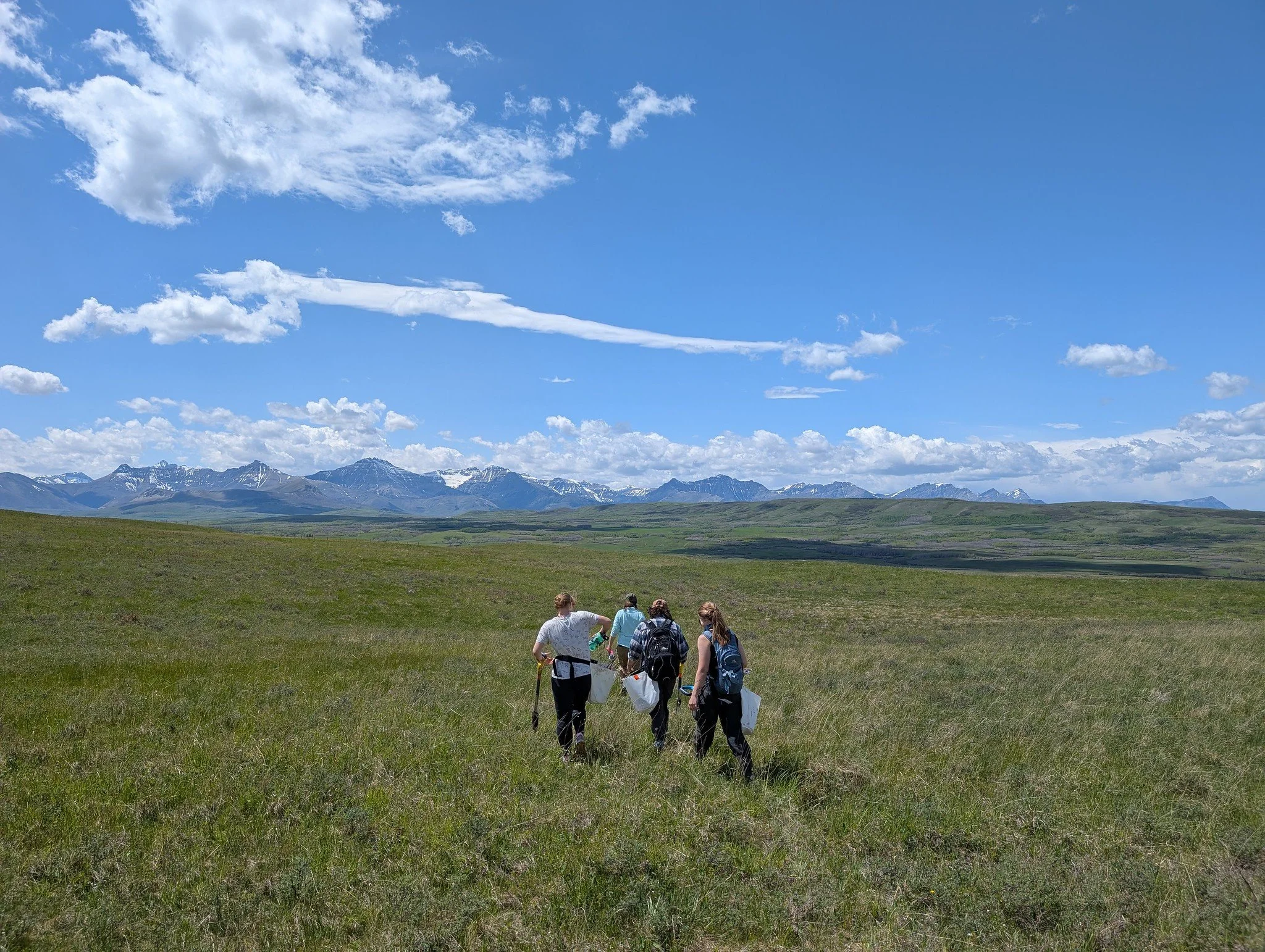
Photo: Chantel Youmans
Willows, which are bushy green plants often found near water, are critical to protect streambanks from erosion. Their strong roots hold soil together and are an important species for Niitsitapi (Blackfoot) cultural ceremonies and tipi construction. They are also amazing plants: they can grow from a small clipping (which looks a lot like a stick) or section of the stem placed deep into the ground.
When we plant willow stakes, we first dig a hole approximately one meter deep. The hole is made with a large metal planting bar that is hammered into the ground. The more the willow is in contact with soil, the more surface area is available for it to take up water and nutrients, and the better chance it has to survive. To help increase this contact even more, we often use a mallet to gently tap the stake into the soil. Finally, we back-fill the hole with soil and tamp it tight; the willow stake should not be easily pulled from the ground. Willow planting is done throughout the year, but is particularly effective in the colder months when the plants are dormant and the ground is partially frozen.
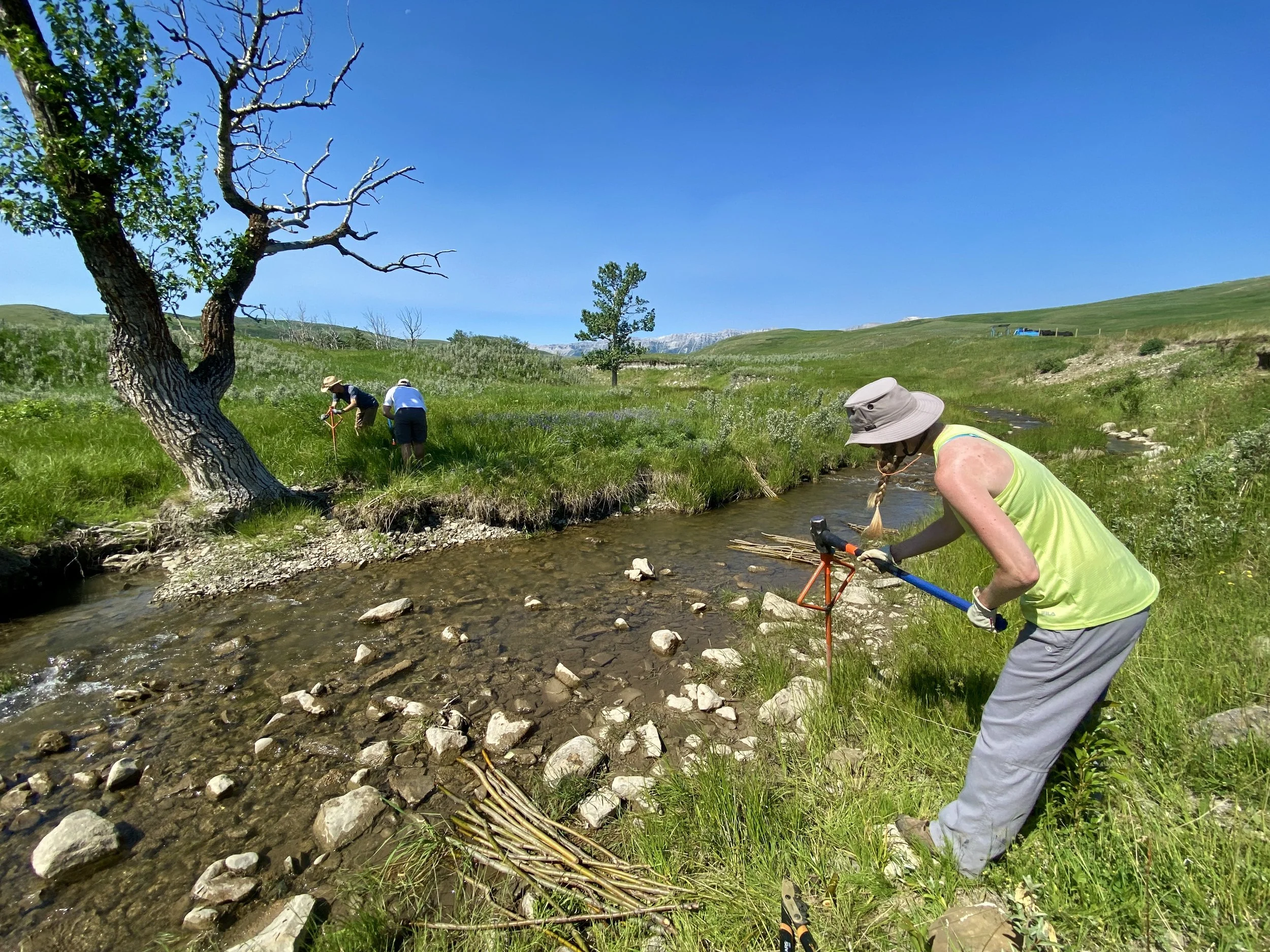
Preparing a hole for a willow stake on a field day in 2021.
Planting willow stakes is just one way that OWC supports nature-based solutions. What does a larger nature-based solution project look like? Find out with a peek behind a headwaters restoration project here, which used varying activities to restore six sites along Beaver Creek.
Seeing nature-based solutions in action
Nature-based solutions are great to talk about and see in a healthy streambank, but sometimes you need to feel the wind on your face or get your boots muddy as a river gurgles beside you: you need to see the work in action.
That’s one reason why OWC invites decision-makers and elected officials out onto the land for tours of work sites throughout the year. These areas can feel disconnected and distant when they’re far away from someone’s everyday experience. Seeing them in-person helps to understand just how delicate and critical they are. With this information, decision-makers have a better understanding about easy-to-miss details and can make the best decisions to support these solutions, allowing OWC and our partners to increase our impact.

A tour of Windy Coulee pasture and creek in fall 2025. Photo: Sofie Forsström.
Nature-based solutions help meet community and infrastructure needs while staying cost-effective. Ecosystem services, like filtering water, recharging groundwater, and protecting areas from floods, are provided free of charge from nature—meaning that additional physical infrastructure is not required. Investing in natural infrastructure can increase these free services and reduce how much we have to spend on grey (human-built) infrastructure, which includes things like reservoirs, water treatment plants, pipes, and concrete. Learn more about natural and grey infrastructure in this blog series.
Since we can’t transport you from this blog to the Oldman River headwaters to show you what we mean in-person, have a look at this video where we revisit a restoration site months later and see the difference that nature-based solutions make on the ground.
A worthwhile return on investment
The economic return on nature-based solutions is immense. Functioning ecosystems provide incredible value in services like flood control, drought relief, and water filtration. In fact, we created a purpose-built tool—OWC’s Ecosystem Services Value Calculator—to calculate approximate dollar values. While OWC’s work costs about $180 per hectare, we can calculate that the land improved by this work then generates an estimated $13,700 per hectare per year, a 76X return on investment! This is especially valuable given that where these natural high-functioning ecosystems are lost, governments often have to build and maintain the same services in concrete and steel, which can be much more expensive.
In 2025–26, OWC invested $474,217 in 25 restoration projects, and a further $280,000 through our Watershed Legacy Program. This investment in nature-based solutions adds up to a big impact on southwestern Alberta’s ecosystems and economy. Over the past 17 years OWC has improved over 7500 hectares of land, which is providing $103 million per year in critical ecosystem services.
In conclusion
Nature-based solutions use the ecosystems around us to benefit both people and nature. The OWC supports nature-based solutions by doing restoration work on the ground in critical areas across the watershed; we also bring decision-makers on tours to these sites to see for themselves how effective nature-based solutions can be. These areas provide valuable ecosystem services and deliver a worthwhile return on investment, in addition to showcasing the creativity and innovation on display in southern Alberta.
Thank you to Nature Canada and the RBC Foundation for supporting this work!
Like all OWC’s blogs, this post was written by a real live human, without the use of generative AI.