Blog by Watershed Stewardship Assistant Elijah Stempien.
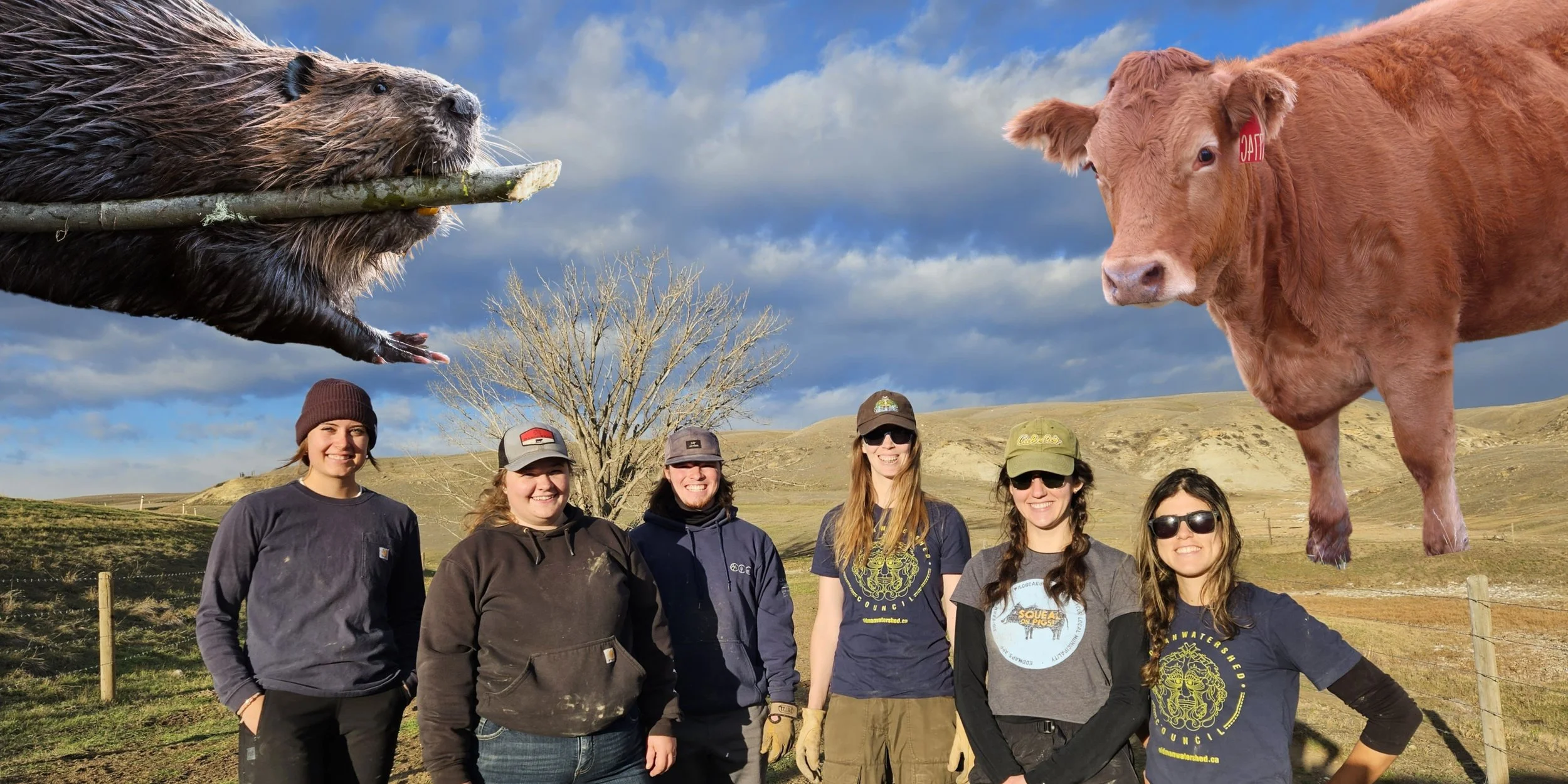
Did you know watershed stewardship is happening RIGHT NOW in the Oldman watershed? In fact, the Oldman Watershed Council (OWC) is always hard at work to make sure our landscape is a great place to live for humans, animals, and plants alike. Our Watershed Legacy Program (WLP) is one way we do this. We partner with land managers to support a wide range of stewardship projects, encouraging healthy ecosystems and best management practices on our landscape. Some of these projects are old favourites we have supported since 2009. Others provide exciting, new approaches that might even change the way you look at restoration. From bees to bison and willows to wildflowers, here are six of the top ways the WLP helps keep our watershed an amazing place to call home. Be prepared—numbers 5 and 6 might BLOW YOUR MIND!
1. Riparian Enhancement
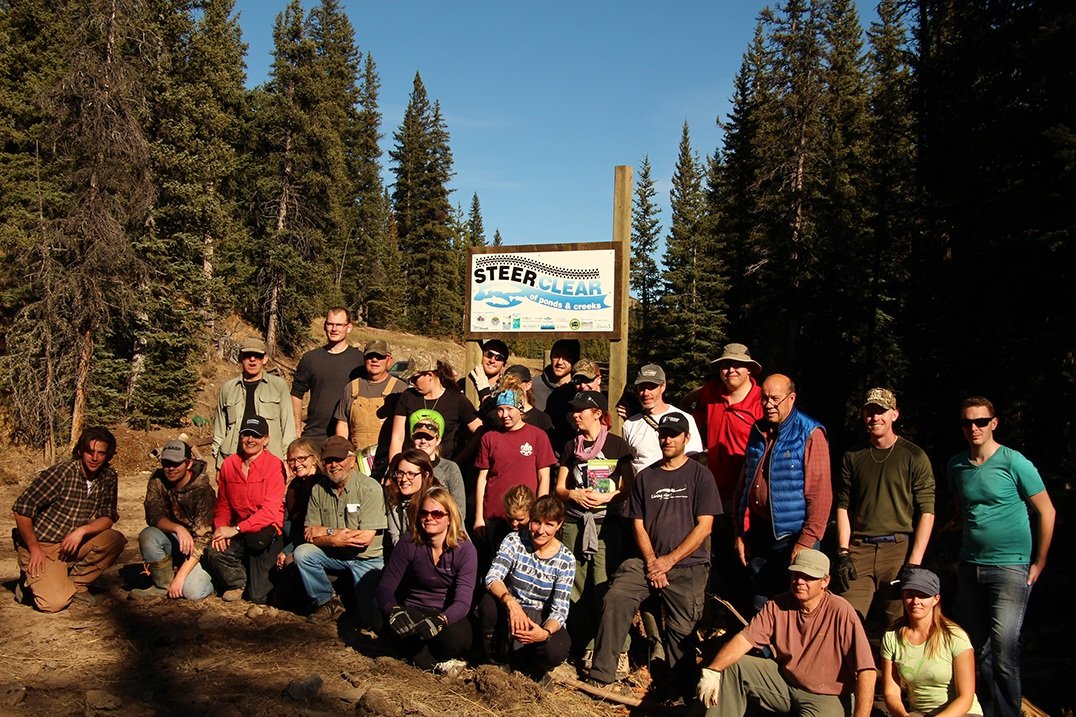
Riparian areas are the transition zones between land and water, and they always need our help! These areas are necessary to keep our rivers clean and clear, and provide critical habitat for wildlife (and families camping on long weekends). The OWC has been supporting land managers on riparian enhancement projects since the WLP began. One of the main ways we do this is through planting willows. With the help of dedicated volunteers and partner organizations, we plant these “little-shrubs-that-can” along rivers and lakes so they can do the hard work of filtering water and preventing erosion for us. We also support fencing around riparian areas and off-site waterers to keep livestock out of these delicate ecosystems while giving the animals other ways to access water. Who knew such simple changes could make such a big difference!
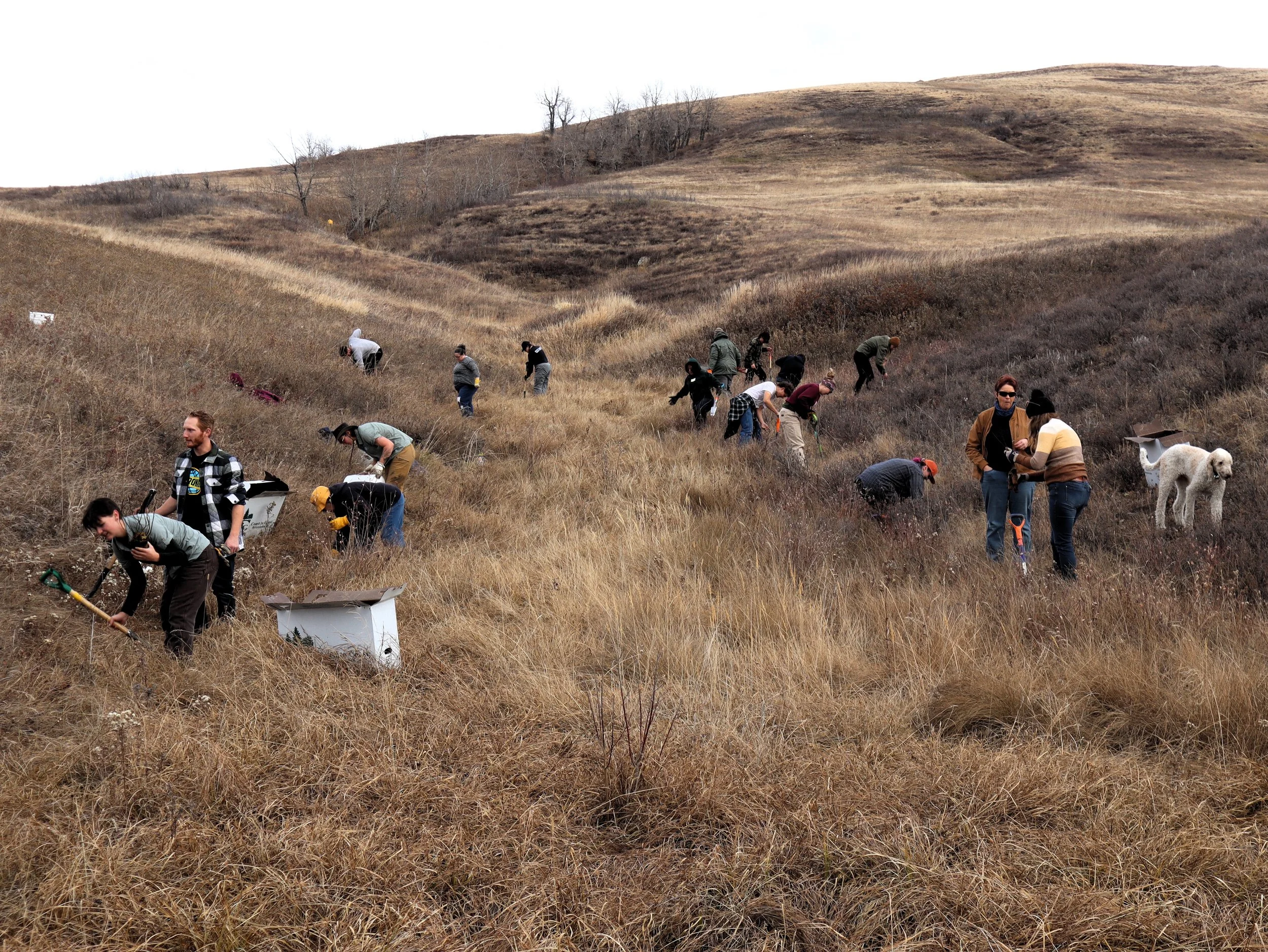
Volunteers helping with riparian planting. Photo: OWC
2. Wildlife-Friendly Fencing
Fences keep livestock safe and contained—something we can all appreciate after coming across a cow-caused traffic jam on a rural road. However, barbed-wire fences can also be a barrier for wildlife such as pronghorns and deer. OWC supports land managers to install wildlife-friendly fencing, allowing the best of both worlds. Some projects involve installing a barbless bottom-wire or tubes that cover any sharp edges. Other landowners have set up adjustable electric fencing: when pastures aren't being used, fences are moved, giving wildlife free range of that area.
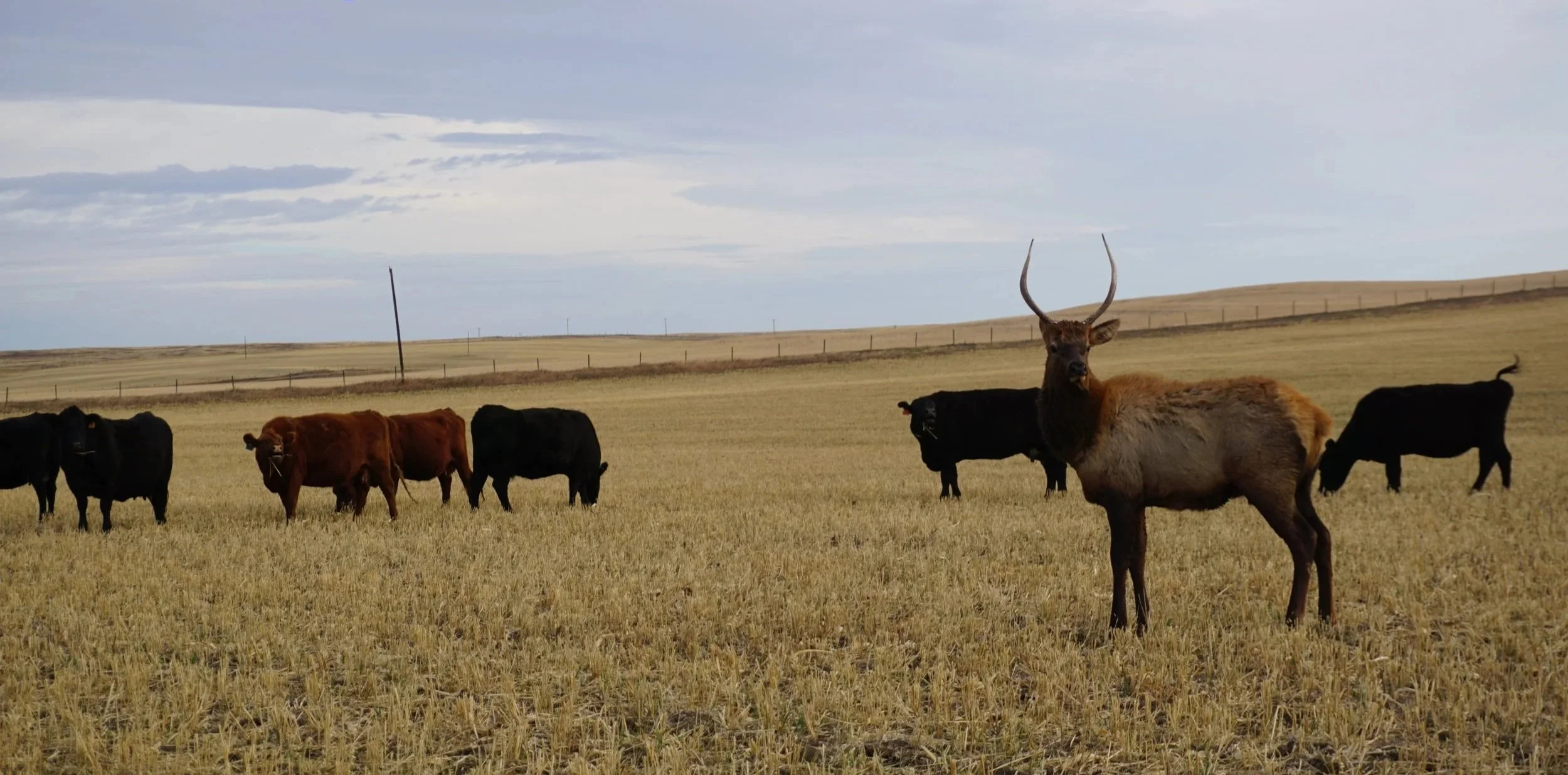
Young elk and cattle. Photo: OWC
But wait, there’s more! Land managers have been adopting an innovative new approach in our watershed: virtual fencing. Imagine those invisible fences for your dog, but scaled up for a full herd of cattle. Each animal is outfitted with a GPS collar that uses sound, vibration, and gentle electric pulses to guide them into certain areas. Ranchers can use a phone app to draw and change boundaries—all while having their morning coffee. With no physical fences in the way, wildlife are free to roam where they like. Ranchers can also move cattle more easily and more often, which prevents overgrazing and promotes healthy grasslands. Recently, the OWC supported one of the first-ever uses of virtual fencing for bison!
3. Water Development
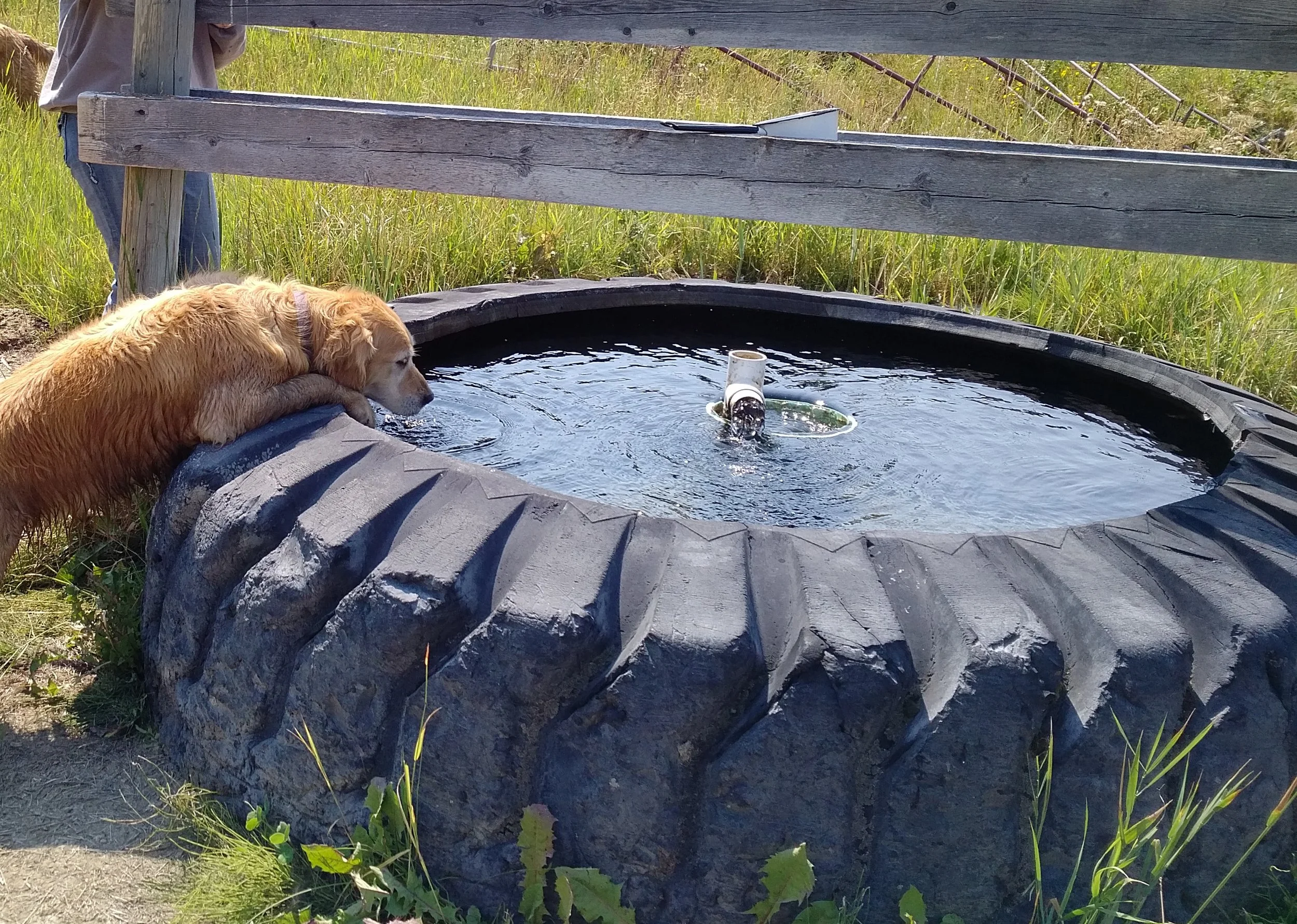
A watering trough in action. Photo: OWC
Let’s face it—we need water for just about everything that happens in our watershed, from food production to household chores to recreation. If you’ve been following along at ABWater.ca the last few years, you’ll know drought and water access are a growing concern in southern Alberta. Through the WLP, we help ranchers access their groundwater resources through wells and spring development. By installing collection tanks, pumps, and watering troughs, OWC ensures producers have access to clean and consistent water for their livestock while keeping the animals out of rivers, wetlands, and delicate riparian ecosystems. This helps produce the food we eat everyday while keeping our rivers clean and full. Something to think about next time you’re out enjoying the Oldman River!
4. Pollinator Habitat
Watching a bumble bee “bumbling” around visiting flowers in the sunshine, you might think they have it easy. The truth is, it’s nearly impossible to find a creature who works as hard as they do to help our crops and native plants grow. The problem? Our local bumble bee populations are in decline. The OWC works with communities and land managers to plant native wildflower gardens, making sure important habitat remains a hub of activity for our native pollinators. In Claresholm, we planted three pollinator gardens in urban parks, with volunteers continuing to water and weed them. The “buzz” this year is our garden in Kainai Nation, which not only increases bee habitat, but also provides a space to teach students about native plants. With 24 species of bumble bees in our watershed alone, and 375 different species of bees Alberta-wide, these projects help us maintain biodiversity of both our insects and native plants.
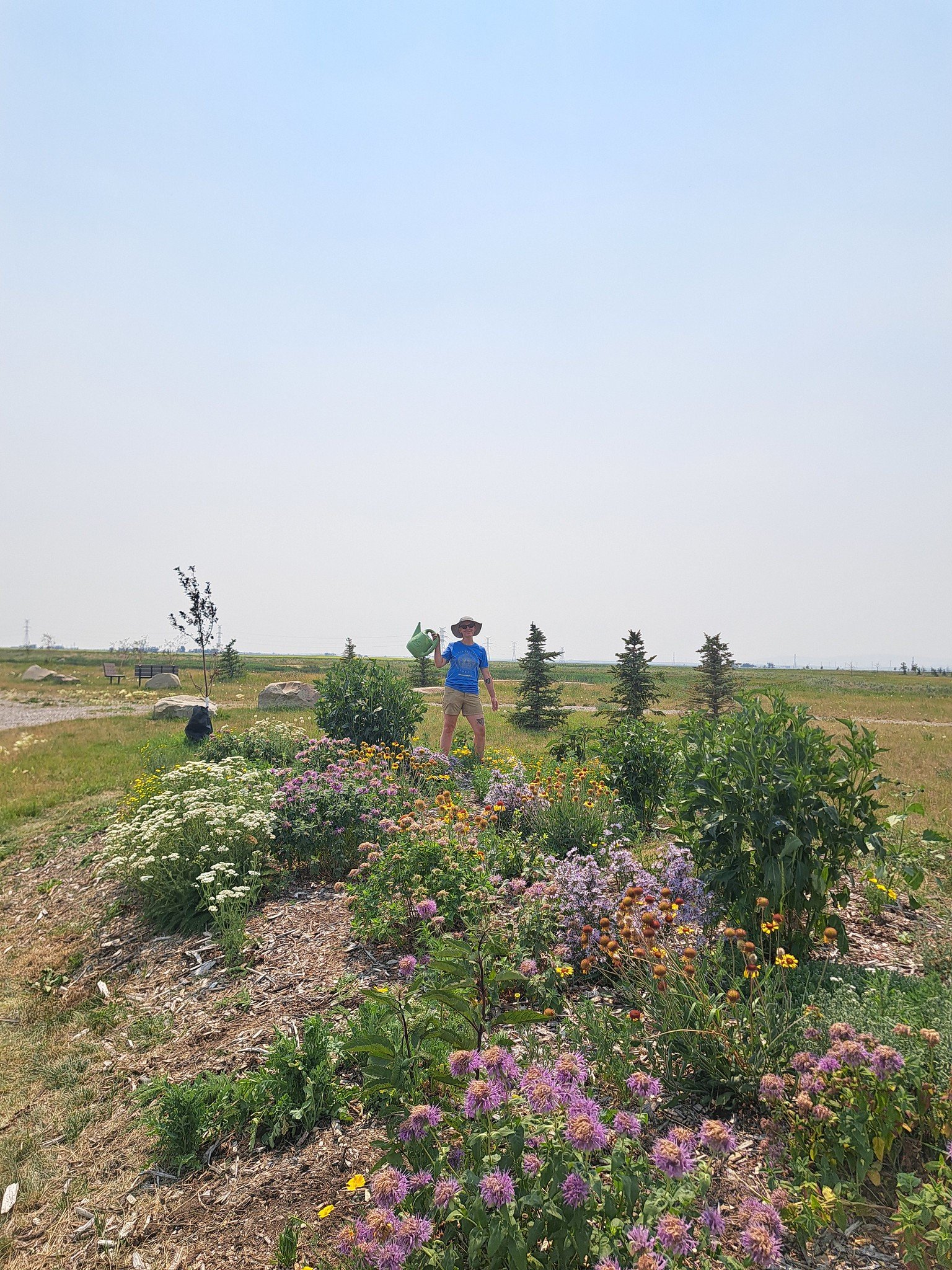
Just look at that pollinator heaven! Watering a garden in Claresholm. Photo: Elijah Stempien
5. Controlled Burns
A new addition to our WLP options is controlled burns. This unique management tool provides a ton of benefits to humans and the environment. You may have heard of the work being done in Waterton National Park using controlled burns for grassland stewardship, or the Kainai Nation’s Fire Guardians who do cultural burns. The OWC is now working to make controlled burns an option for land managers across our watershed. With wildfires a growing concern for many people, controlled burns can help minimize the risk of large, unpredictable fires by removing dead, dry plant material. They also support new, green growth that lowers the chance of future fires by germinating new plants, cycling nutrients, and controlling invasive species.
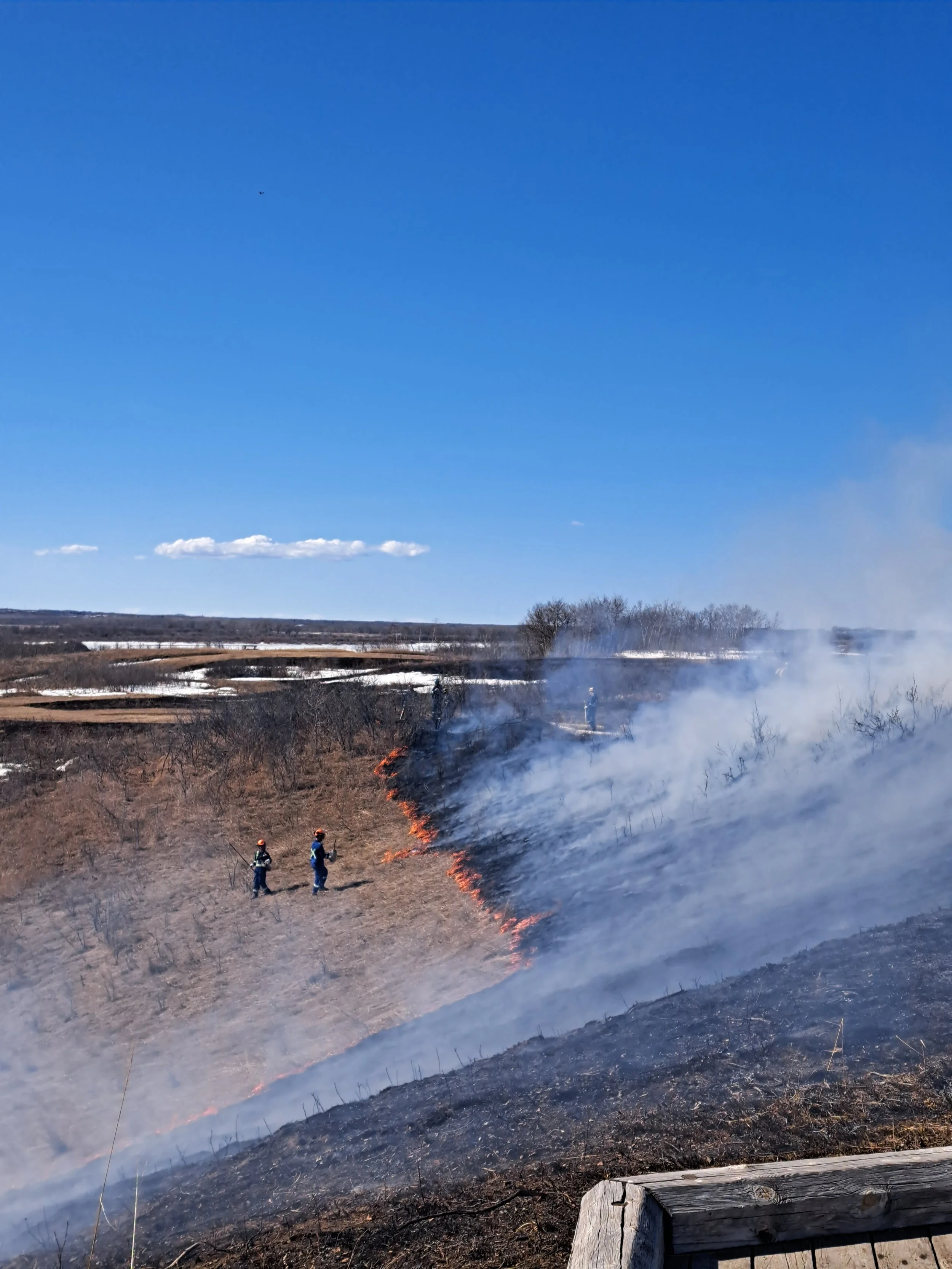
A controlled burn at Beaver Creek, Sask. Photo: Elijah Stempien
OWC works closely with experts like the folks at Canadian Prairies Prescribed Fire Exchange, who have years of experience supporting safe controlled burns. Using expert teams, relatively small areas are burned in a careful, controlled manner to reintroduce beneficial fire cycles to the landscape. Preparation for a controlled burn is a careful and extensive process requiring monitoring, permits, and a detailed plan that considers a wide range of scenarios. These projects are done in the spring and late fall when the landscape is cooler and has more moisture to keep burns under control. Topography (such as streams and hills) is used to provide natural fire breaks, while on-site weather observation means even a change in wind direction is taken into account. Fire suppression equipment is used so burns stay small and at a low temperature, and to keep the team safe. After a controlled burn, the area is monitored to ensure the fire is fully extinguished. With all this in mind, controlled burns offer an effective, safe, and incredibly unique opportunity to restore healthy grassland ecosystems and protect our landscape from wildfires.
6. Beaver Coexistence
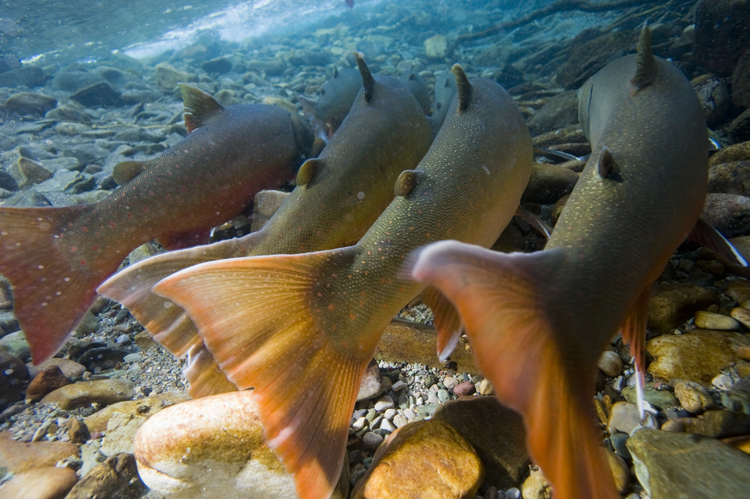
Canada’s national animal sometimes gets a bad rap, but our beaver coexistence projects are here to set the record straight. Despite their cute appearance, beavers are often accused of (allegedly!) harming waterbodies by cutting down riparian trees and causing flooding with dams. In truth, it is important to understand how integral these ecosystem engineers are. Their dams regulate stream flow, retaining water in dry years and preventing floods and erosion in wet ones. They also create ponds and wetlands, important habitat for all kinds of waterfowl, frogs, and fish.
Our projects aim to encourage the amazing benefits beavers provide. In streams where beavers are no longer found, we use mud, branches, and wooden posts to construct Beaver Dam Analogues (BDAs). These structures help approximate the work beavers do, but it turns out no one builds a dam quite like a beaver can. OWC also supports land managers who want to reintroduce beavers so they can do all that restoration work for us.
Pond levellers are another great tool in areas where beavers and humans live close together. A pipe is installed through an existing dam, which lowers the water level in the upstream pond without draining it. This way, beavers can go about their business without causing problems for people’s properties and pastures, whether that’s flooding or taking down more trees as they try to rebuild destroyed dams.
Conclusion
Whether we’re planting shrubs to keep our river banks sturdy, or using controlled burns to restore native grasslands, the OWC works hard to keep our watershed healthy for all who live here. The WLP supports land managers in stewardship projects that help us grow the food we eat, access clean water, and support the amazing plants and animals whose home we share. If you or someone you know is interested in taking part in the WLP, you can find more information and application forms here!
When land managers apply for the WLP, OWC reviews the applications, focusing on locations and plans that will have the biggest positive impact on the watershed. For selected projects, OWC can provide support by funding up to 50% of the costs (and up to 100% for Indigenous-lead projects), connecting land managers with experts, and helping with planning and implementing projects on the ground.
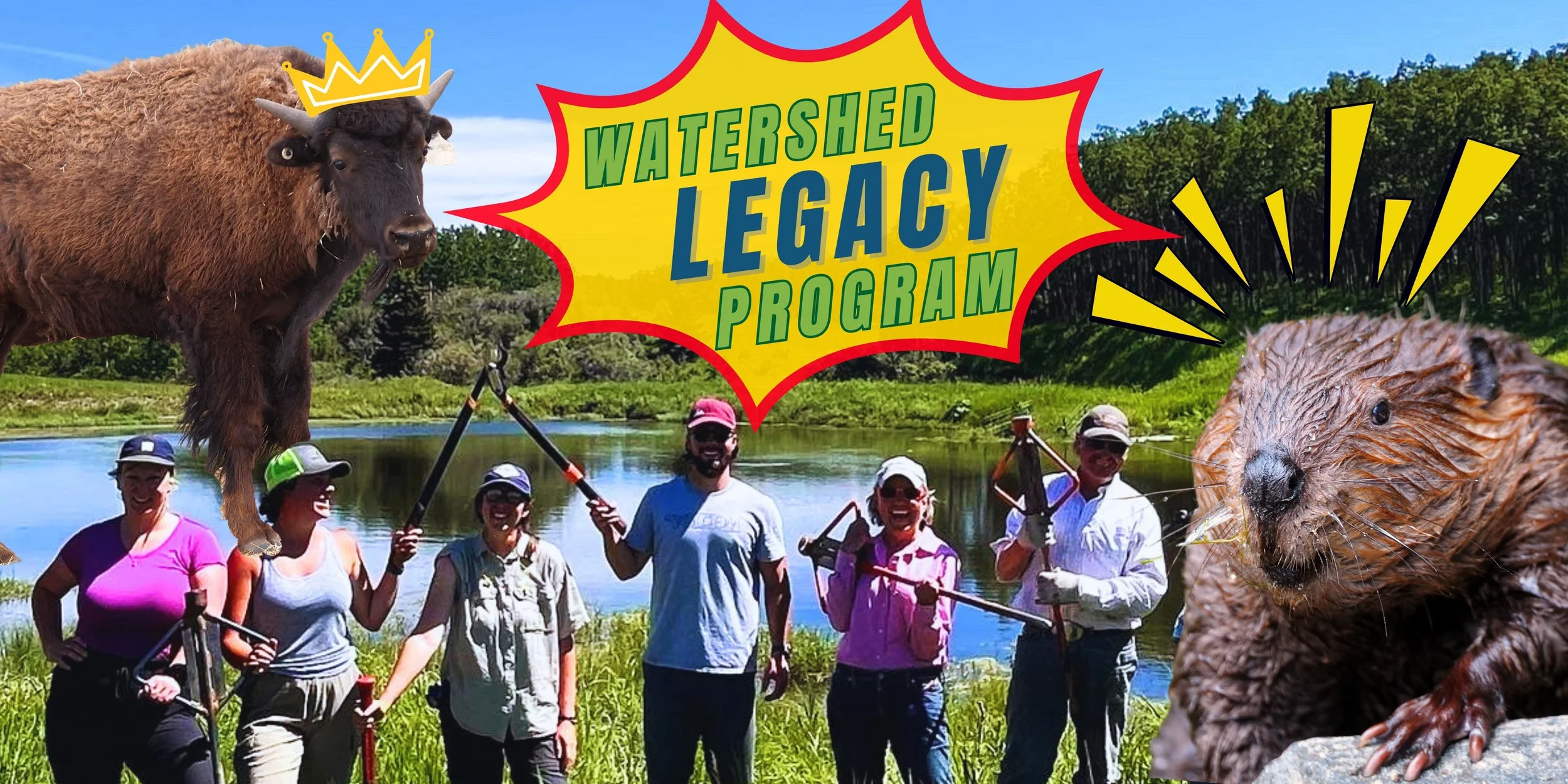
You, too, could be a stewardship superstar!
Like all OWC’s blogs, this post was written by a real live human, without the use of generative AI.