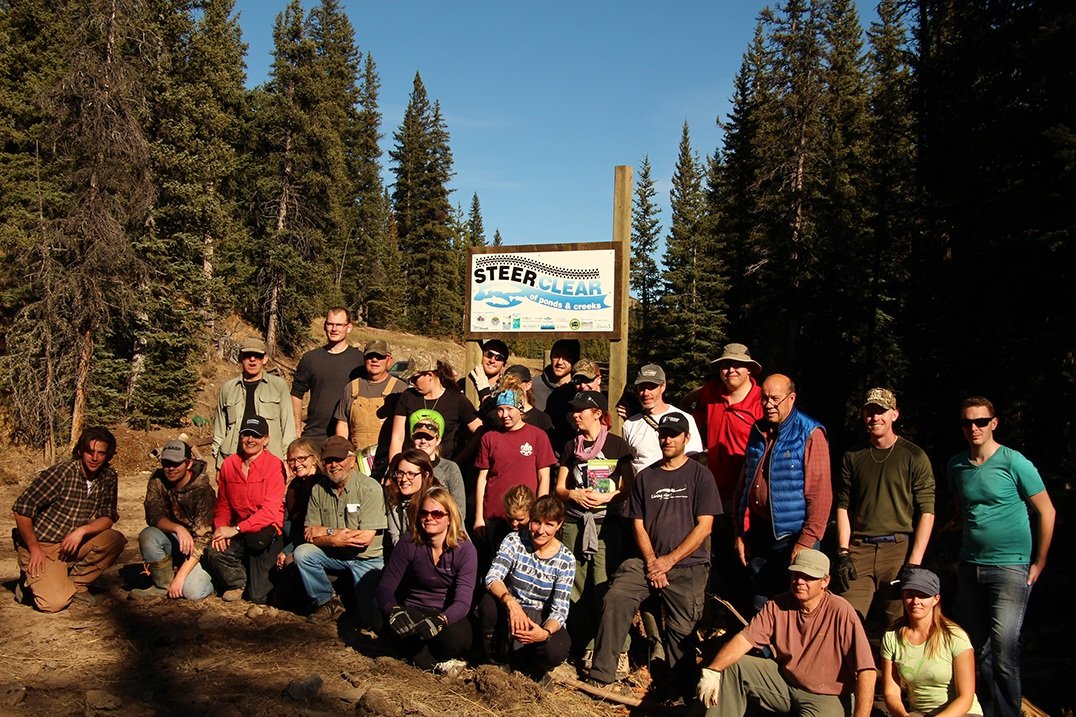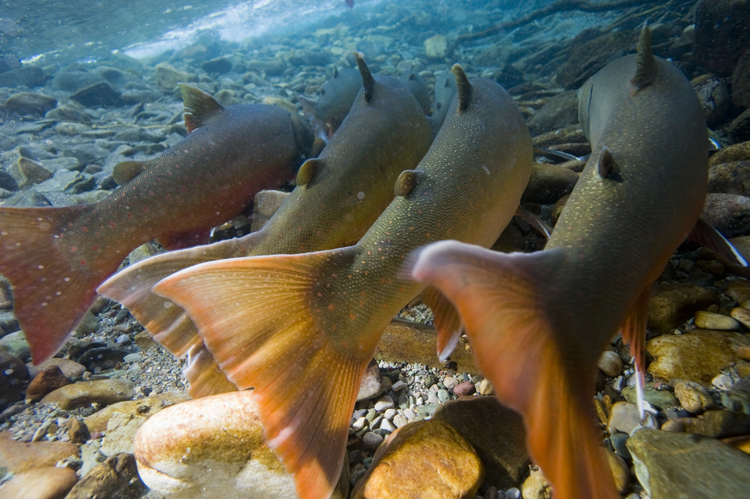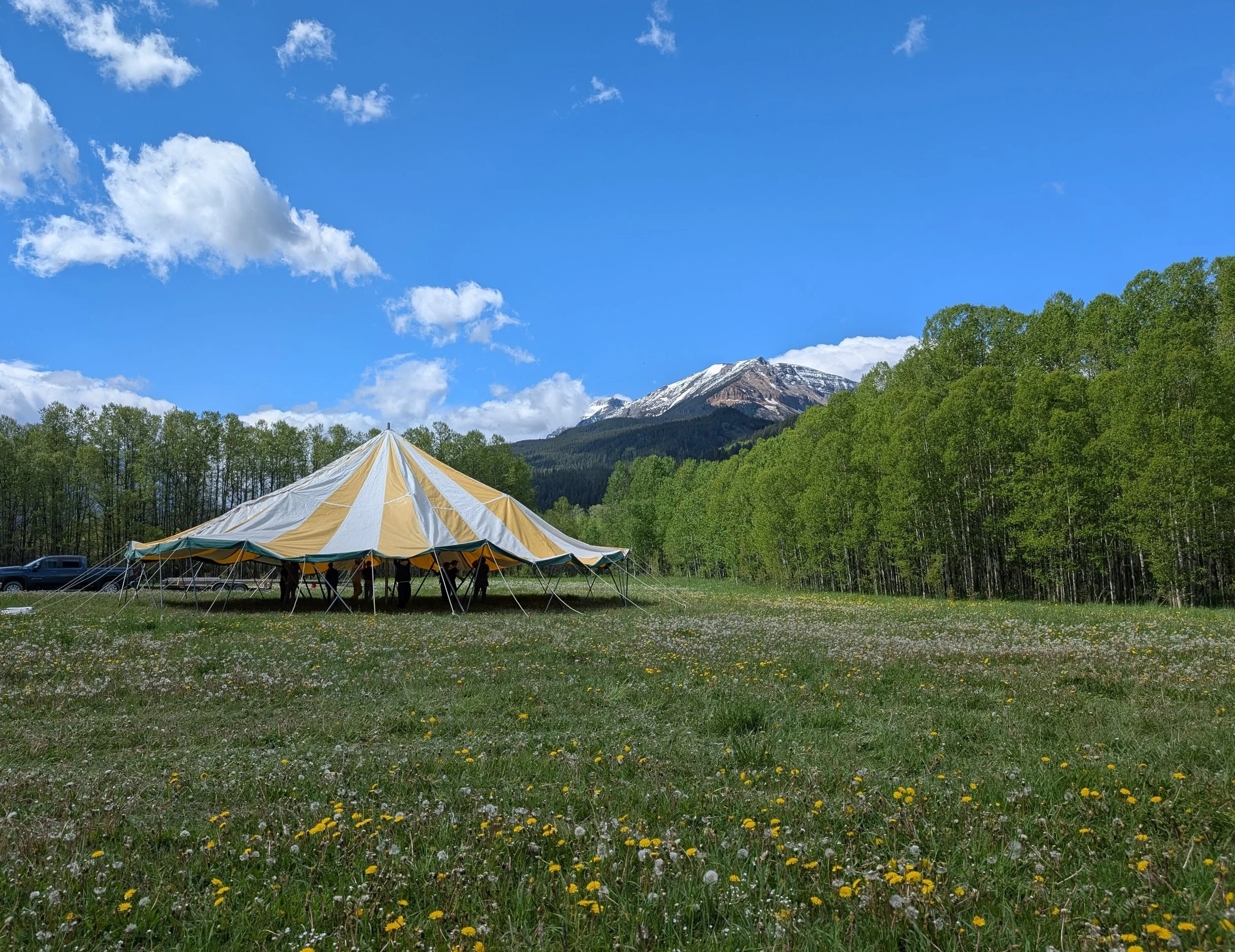
Banner photo: Raising the big-top tent at Belly River Campground in Paahtomahksikimi (Waterton Lakes National Park). Banner photo and blog by Watershed Stewardship Assistant Chantel Youmans.
This year marked the 12th annual Kainai Ecosystem Protection Association (KEPA) Summit, a collaborative gathering hosted in order to share on subjects such as Traditional Knowledge, water security, and land use. The 2026 summit thundered onto the scene with a strong theme: cultural keystone species. Cultural keystone species are part of the bedrock of Niitsitapi (Blackfoot) culture, offering not just their ecological benefits but also their spirit and meaning to medicine and ceremony. Mirroring those contributions from the more-than-human is the diverse cast of organizers who make the KEPA Summit possible every year. These organizers weave their own culture and efforts into the fabric of the summit, creating presentations and activities that capture the essence of KEPA. I would love to regale you with details from all of the wonderful presentations and lessons from our incredible group of presenters, Elders, and leaders, but to tell you the truth… I missed most of it!
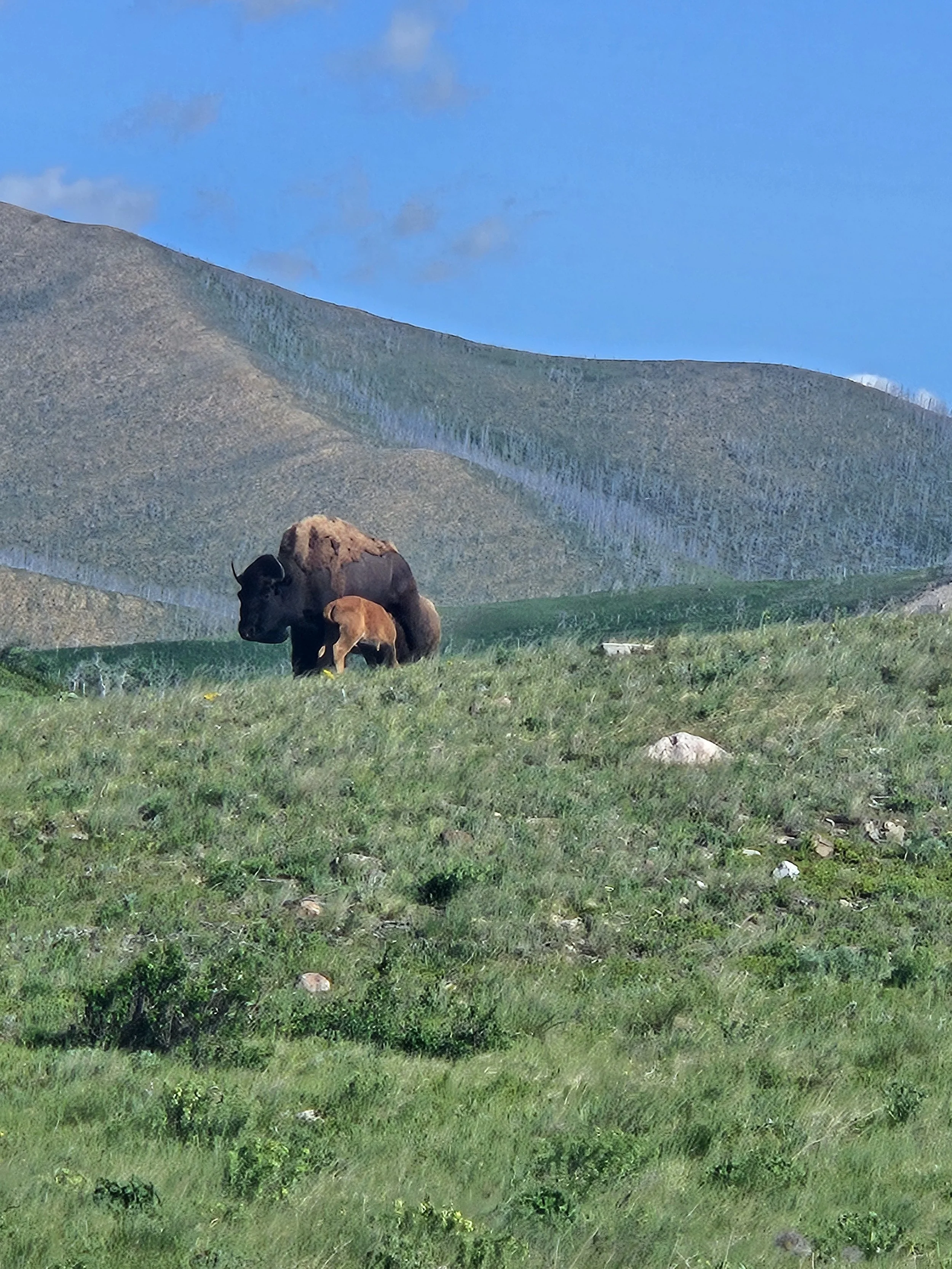
Iinnii (bison) grazing peacefully in the bison paddock located in Paahtomahksikimi. Photo: Lauren Thompson
The funny thing about being deeply entrenched in the planning and execution of any event is that in the whirlwind of presenters and last-minute tweaks to the schedule, your vision often narrows to the strictly necessary. Is there enough seating? Are the microphones working? Is it time for that delicious chili lunch yet? In my experience, this narrowed field of vision makes it difficult to absorb everything happening around you as you strive to keep everything running smoothly. And yet, brief moments of connection, of community, shine through the fog and crystallize into unforgettable memories that make every harried moment worthwhile.
Act 1: Cultural Keystone Species
The concept of keystone species in ecology receives a lot of attention, while many people haven’t even heard of a cultural keystone species. Conventional keystone species are defined by their critical roles in ecosystems: creating habitat, providing food, cycling nutrients, you name it. On top of their ecological roles, cultural keystone species are defined by their invaluable place in Indigenous food systems, medicine, ritual, tradition, and art. For example, ksísskstaki (beavers) are a well-known keystone species and ecosystem manager, but they are also a powerful component of medicine bundles with a place in many cherished Niitsitapi stories. No two species are interchangeable in their ceremonial use, and the knowledge of how to properly use them is safeguarded by Elders and community members to be passed down through generations. It would take years to learn all the nuances of these important species; the KEPA organizers had just three days to provide a crash course on the subject.
Every year, the KEPA Summit welcomes up to 150 participants per day and hosts as many as twenty presenters, many of whom travel from out of Alberta to share their knowledge. The presentations change scope from year to year, but you can expect to hear personal and academic accounts on everything related to land, water, sky, and human relationship to the environment. Traditional games, song, dance, and ceremony are also spotlit throughout the event, like the pipe ceremony that starts the summit each year.
You can probably imagine that pulling all of this off requires a lot of dedication and unseen work. That work starts as a quiet background hum months in advance: a few emails here and a few phone calls there, slowly building into a chorus of 7 p.m. meetings, last minute adjustments to the agenda, and finally, running the summit itself. There’s the obvious work to be done, like organizing presenters, setting up tables and chairs, double- and triple-checking the computer cables and projectors. Sometimes the tasks are a touch less obvious, like slogging through a flooded sports field to pay a vendor, or trying to ‘tetris’ twelve carafes of coffee into the backseat of a truck.
Everything has to happen just right to make sure that every activity leans into the overarching theme of the event. None of that would be possible without the cast of organizers who collectively lend decades of experience to the event. KEPA is an Indigenous event, hosted by Niitsitapi leaders for the sake of Indigenous knowledge and perspectives, but every year it draws attendees and organizers of diverse backgrounds to learn and participate. A handful of non-Indigenous organizations offer their help and logistical expertise to complement the efforts of the Indigenous leaders of KEPA. Cross-cultural collaboration has quietly become a staple of the KEPA Summit, and it’s a part of why the event continues to draw so many people year after year. Much like keystone species that facilitate and support ecosystems, KEPA organizers provide the integral support that fosters community and connection, ensuring the event is rich with experience for everyone involved.
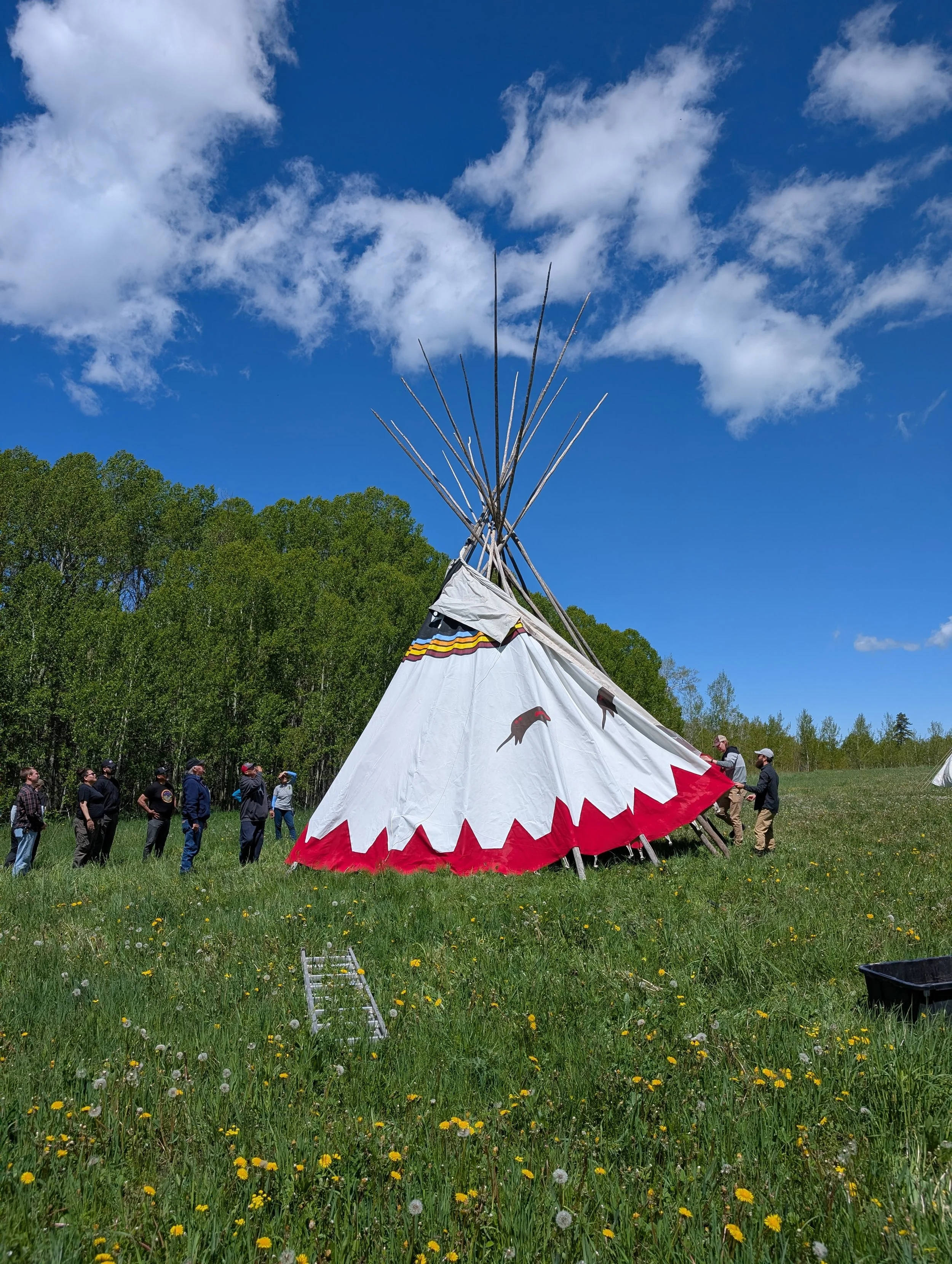
KEPA representatives and attendees raising a tipi together, painted by Niitsitapi artist Api’soomaahka (William Singer III). Photo: Chantel Youmans
Act 2: Inspired by small acts of reciprocity
Looking back on the KEPA Summit, it seems as though I spent a full three days running: racing to catch presenters before they disappeared into the crowd for honorariums, making sure Elders received their meals first, and constantly keeping one eye out for any last-minute tasks. The summit was bustling, but I was so focused on what the next task was or would be that so much just rolled right by me. That triumphant moment of finally seeing the big-top tent lifted in all its glory, going from a pile of poles to shelter? Overshadowed by coordinating pick-up times for the equipment used to raise it. Fascinating presentations by young students on powerful beings like bison, wolves, and eagles? I caught only snippets as I distributed lunches. Despite this, little moments did manage to creep through. These small exchanges and lessons that had seemed innocuous at the time later solidified into experiences that have deeply inspired me.
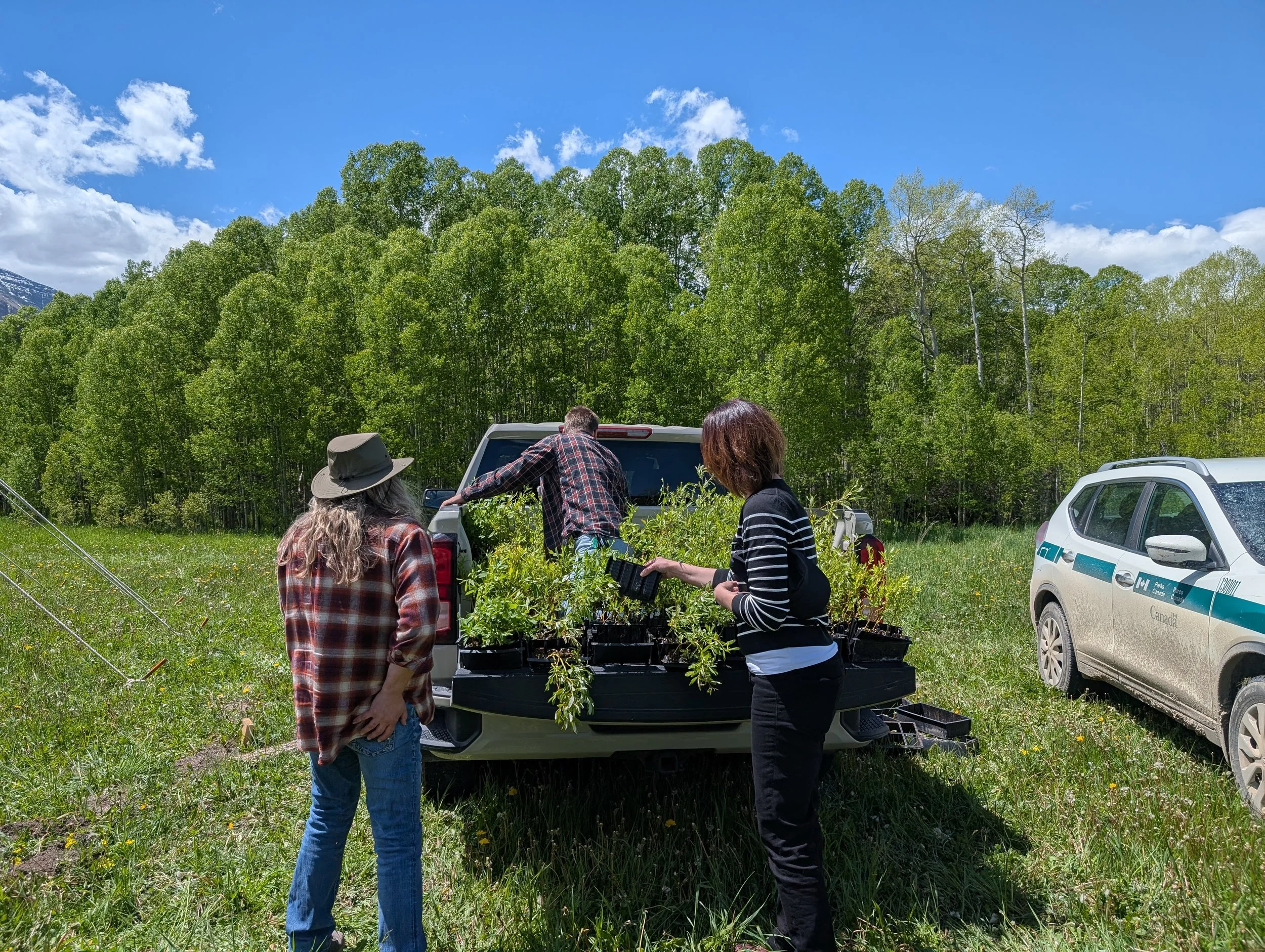
Sending saskatoon, poplar, and willow plants to their new homes with the KEPA attendees. Photo: Chantel Youmans
One was in the form of a humble willow plant. During the planning for the event, the Chairman of KEPA and the Restoration Manager for Oldman Watershed Council wanted participants to take more than just lessons with them. They wanted everyone to bring home a little piece of life, something that would continue to grow long after the excitement of the summit began to fade. So on the final day, flats of willows and poplars and saskatoons were passed out to participants. These willows had been intended as a gift to be taken home, a living memento of the experience. Imagine my surprise and delight when a handful of students from the KEPA Applied Studies program approached me, little willows in hand, with a simple request for a shovel.
It was nothing fancy. In the absence of any shovels, they used a hoof pick from our work truck (yes, really, a horse hoof pick) to carve out a space to plant their willows right then and there. Instead of taking the gift home as intended, these students chose to give back with no fanfare or pretence. We had spent two days now at the Belly River campground, gorgeous greenery serving as the perfect backdrop. Of course, the land is so much more than a backdrop. In a way, the land itself is the teacher, every plant and insect and process a lesson lovingly crafted through eons of evolution. In the frenzy of keeping the summit ticking along, I hadn’t taken time to consider this endless generosity. But the students were hyper-aware of just how much the land was giving us while asking nothing in return, and took it upon themselves to respond through reciprocity.
Act 3: Finding Community
Throughout the summit, I had been working with my fellow organizers while remaining largely physically and mentally separate from the experience of the summit itself. All of that changed the moment I saw the KEPA students joyfully walk into the woods to plant their willows. Handing out the willows had been one of the last activities on the final day of the summit, and I had found myself deflating slightly in the absence of tasks to accomplish. I love nature and the environment and try to cherish it as much as I can in my life, but I wonder if I would have thought to do something so simple yet so grand. I’m sure the students learned plenty in their time at the summit, but they weren’t concerned with what they were taking home. The thoughtfulness and connection to the land was a lesson they brought with them to the summit, equally as valuable as anything they picked up there.
This thought followed me as I worked on wrap-up tasks, handing out final door prizes and clearing the tent for the round dance that would mark the end of the 12th KEPA Summit. During the round dance, everyone held hands and danced around in a circle together, cautious at first before relaxing into the rhythm of the drum. Clumsy feet and nerves didn’t matter as we danced; everyone was encouraged to participate and let go of those social anxieties that plague many of us. As I held the hand of someone who was a stranger 10 minutes ago, all that mattered was doing your best and being fully present. At the end, as the song wound down, the circle didn't just break open. Everyone went around the circle one last time, shaking hands with every single member of the dance. An infectious smile worked its way through the crowd as I truly looked at the faces of the people that made this event happen, who made it memorable beyond comparison. I may have started the dance as a nervous stranger, but I finished with friends, a member of a community that built itself in the space of one song.
That is the magic of KEPA. Before the summit, during the planning process, I was aware of the fantastic people around me working tirelessly to pull it off, but they were at a distance, everyone firmly entrenched in their own work or seen only through a tiny square on a computer screen. In just three days, that distance transformed into lasting community and connection. I came to this experience prepared to give, but received more than I could have hoped for. The KEPA students gave me clarity and a deeply touching reminder of what reciprocity means. The round dance gave me reassurance that community can be found anywhere, when you give yourself fully, sometimes clumsily, to experiences that challenge you. And I saw how every organizer, volunteer, representative, and attendee trusted completely that their individual contributions would entwine with one another to become something great.
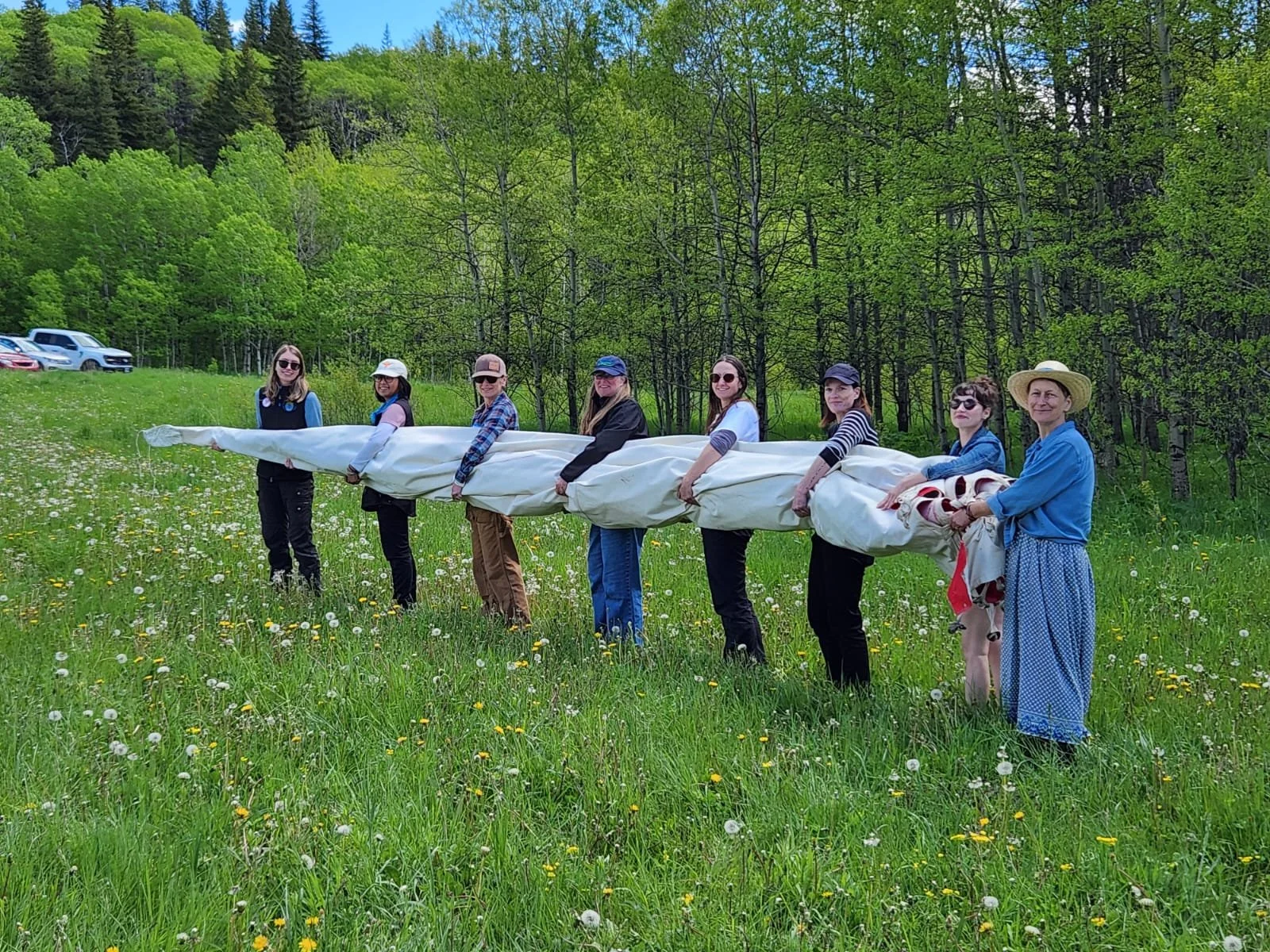
KEPA representatives and attendees carefully packing up the tipi on the last day of the KEPA Summit. Photo: Api’soomaahka (William Singer III)
During the summit, we learned a lot about cultural keystone species and their irreplaceable role in nurturing Niitsitapi culture. Along the way, it dawned on me that the organizers and planners of the world have their own crucial role in nurturing connection and culture. KEPA strives to enact change at every summit, to bring about truth and reconciliation in a meaningful way. That change has to happen in our own social ecosystems. Every single person has a place in this ecosystem, but I would consider those organizers and planners as community keystone species, providing critical services that contribute to the change and reconciliation we need to see in the world.
Parting Thoughts
Everything I experienced and learned at the KEPA Summit was facilitated by years of dedication and experience shared amongst the organizers, most importantly the Niitsitapi Elders and leaders that shared their vision with us. Even in the moments where it felt like I managed to miss everything from an event I had been so entrenched in for so long, meaningful moments and lessons crept in, waiting for me to take a breath and feel them. Maybe I missed the presentations and the stories, but I gained a technicolour understanding of my role in the social ecosystem, one I will never take for granted. It may feel scary and intimidating to see yourself in an organizing role, staring into the dark, cold waters of unknown responsibility and expectation. Your journey will likely look different than mine, but all the same: if you challenge yourself to just dive right in, you may find the water warmer than you could have possibly imagined.
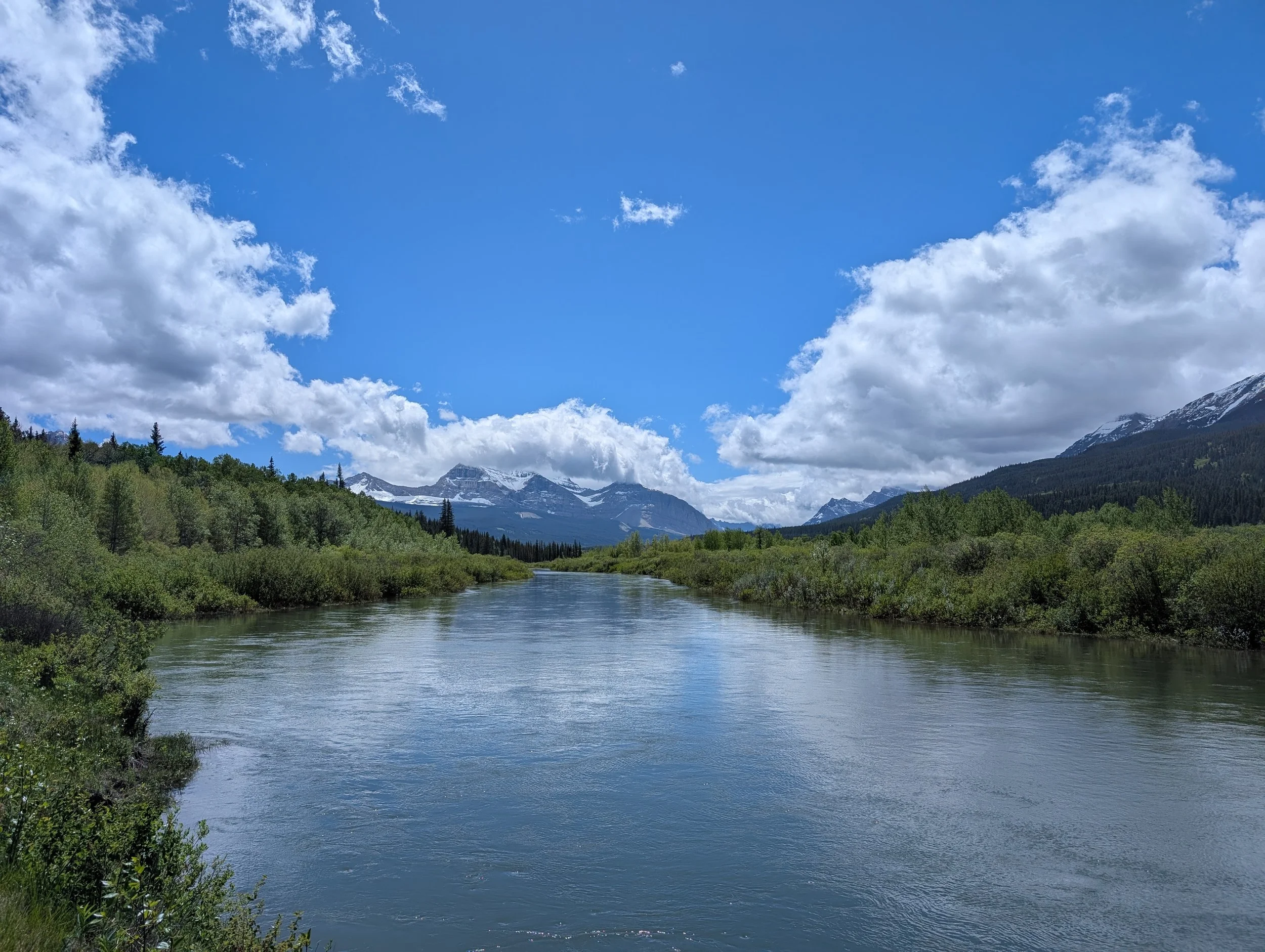
The Belly River in all its splendour. Photo: Chantel Youmans
Thank you to the Weston Family Foundation for their gracious support and contributions to the 12th Annual KEPA Summit.

Like all OWC’s blogs, this post was written by a real live human, without the use of generative AI.