Banner photo by Sofie Forsström. Blog by Watershed Stewardship Assistant Chantel Youmans.
This blog series is part of OWC’s Connecting People, Solutions, and Innovations project. In these blogs, you’ll hear directly from agricultural producers and managers in southern Alberta who are working to solve challenges in innovative ways.
It’s a beautiful, windy day on the range, where I’m about to receive a thorough sermon on beaver ecology and coexistence from southern Alberta’s resident ‘beaver guy,’ Kirby England. As part of one of the Oldman Watershed Council’s (OWC) Authentic Watershed Experiences, we were lucky enough to tour around Mt. Sentinel Ranch. The ranch is managed by Sarah and Harley Green, two agricultural producers that are wholly dedicated to the art and science of sustainable agriculture in southwestern Alberta. We had the opportunity to look at some of the practical approaches that they, in partnership with Kirby and his company You Betula Environmental Inc., are taking to work with, rather than against, the beaver population on their property.
I’m huddled behind the tailgate of OWC’s muddy work truck, ears constantly on the verge of popping from the wind, as Kirby and I settle into rickety metal chairs to talk about why beaver coexistence strategies matter. This feels eerily familiar: in bygone eras (and by that I mean two years ago), Kirby was my instructor for multiple classes during my undergrad. I’m no stranger to his passion for wetland ecology, or the plentiful puns he scatters throughout more ‘technical’ talk. Perhaps there’s never been a more passionate champion of our paddle-tailed friends. Surely there’s never been a greater enemy to the cause, any cause, than high winds when you’re fussing with audio recording equipment. Luckily, Kirby and I aren’t so easily defeated, and I was able to decipher the garbled audio recording of our conversation enough to share it with you here.
This conversation has been edited for length and clarity.
Okay, could you please introduce yourself and what you do?
My name is Kirby England and they call me the beaver guy. I'm a professional biologist here in Alberta, an authenticating wetland professional, environmental scientist, and primarily a faculty member at Lethbridge Polytechnic in the School of Environmental Sciences. I also own a consultancy called You Betula Environmental Inc. We specialize in everything related to beaver science: wetland science, beaver coexistence, the tools, techniques, outreach, and education.
And can you tell us a bit about where we are today?
We're on Mt. Sentinel Ranch near Stimson Creek, where we've worked with the Oldman Watershed Council and the Greens, who own and steward this ranch, to focus a little bit on beaver coexistence in this drainage.
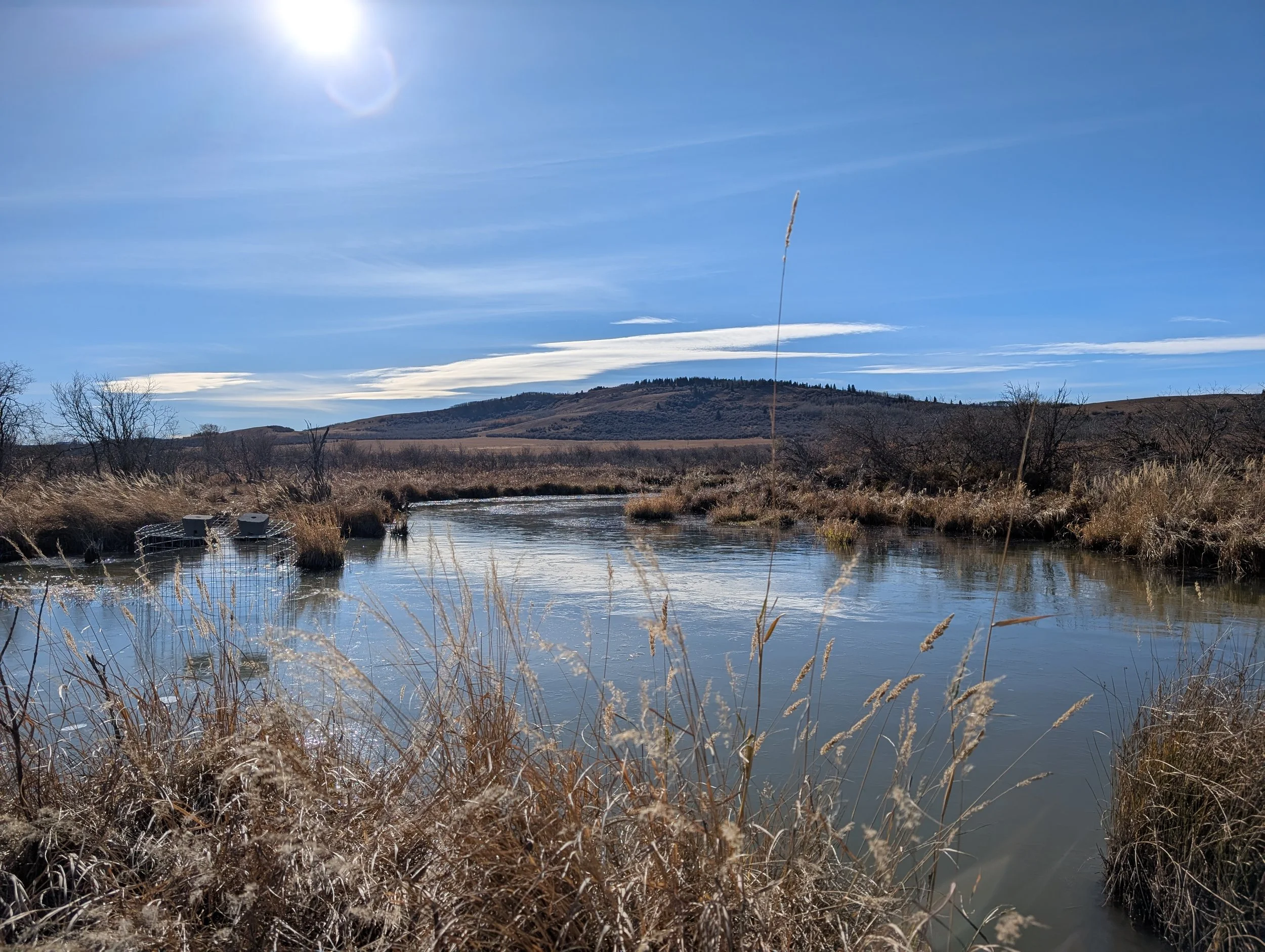
Just one of the beautiful scenes we were treated to at Mt. Sentinel Ranch. You may not have even noticed a portion of the pond leveller (far left in the photo) quietly going about its work to help beavers peacefully coexist with humans on the landscape. Photo by Chantel Youmans.
In your profession, what kind of challenges are you currently facing?
Time! We've got a lot of Alberta that needs to be ‘rebeavered’ and better managed from a wetland coexistence perspective. So I just run out of time to ‘beaver’ where I'd like to be. And I do tend to stay busy as beaver. We cover a lot of ground, and then we've got a few regulatory hurdles from the Department of Fisheries and Oceans in some cases, and Alberta Environment and Protected Areas or Alberta Energy Regulator, depending on which sort of project we're working on and where. We have to spend time on the regulatory process.
And what's something new that you're doing that you're excited about?
Boy, there's new things every day. I just had a meeting this morning with the Canadian Wildlife Federation talking about their aquatic barriers database and sort of obstructions to fish and water all across Canada, and how we might support that work both in my capacity as an instructor at Lethbridge Polytechnic, and also as an environmental consultancy helping them ground truth in some of their field data.
We've also got ongoing beaver coexistence projects with landowners, land managers, First Nations, Métis settlements, and industry. That's been pretty cool, to watch more of those projects come together and the conversation shift from solving problems of wildlife conflict into coexisting with beneficial ecosystem engineers like beavers.
For example, streams have this bad habit of rising and falling. It rains for a day or two, a fence floods, then beavers go over the fence and have their buffet. Well, no problem, we'll lift the fence up. That works well, until of course the water recedes. A couple days later, it goes down, and the beavers go under the fence. So in my infinite wisdom, I thought, “well, we just need to move the fence with the water.” How do we do that? We float it. So we installed a floating electric fence to keep beavers, or livestock like horses, from getting around the fence — whether they’re in the water or out.
That's called the ‘Touch of Current Critter Deterrent,’ because we're using electricity. We did the first one of these fences at the Glenfiddich Ranch, further south on Highway 22.
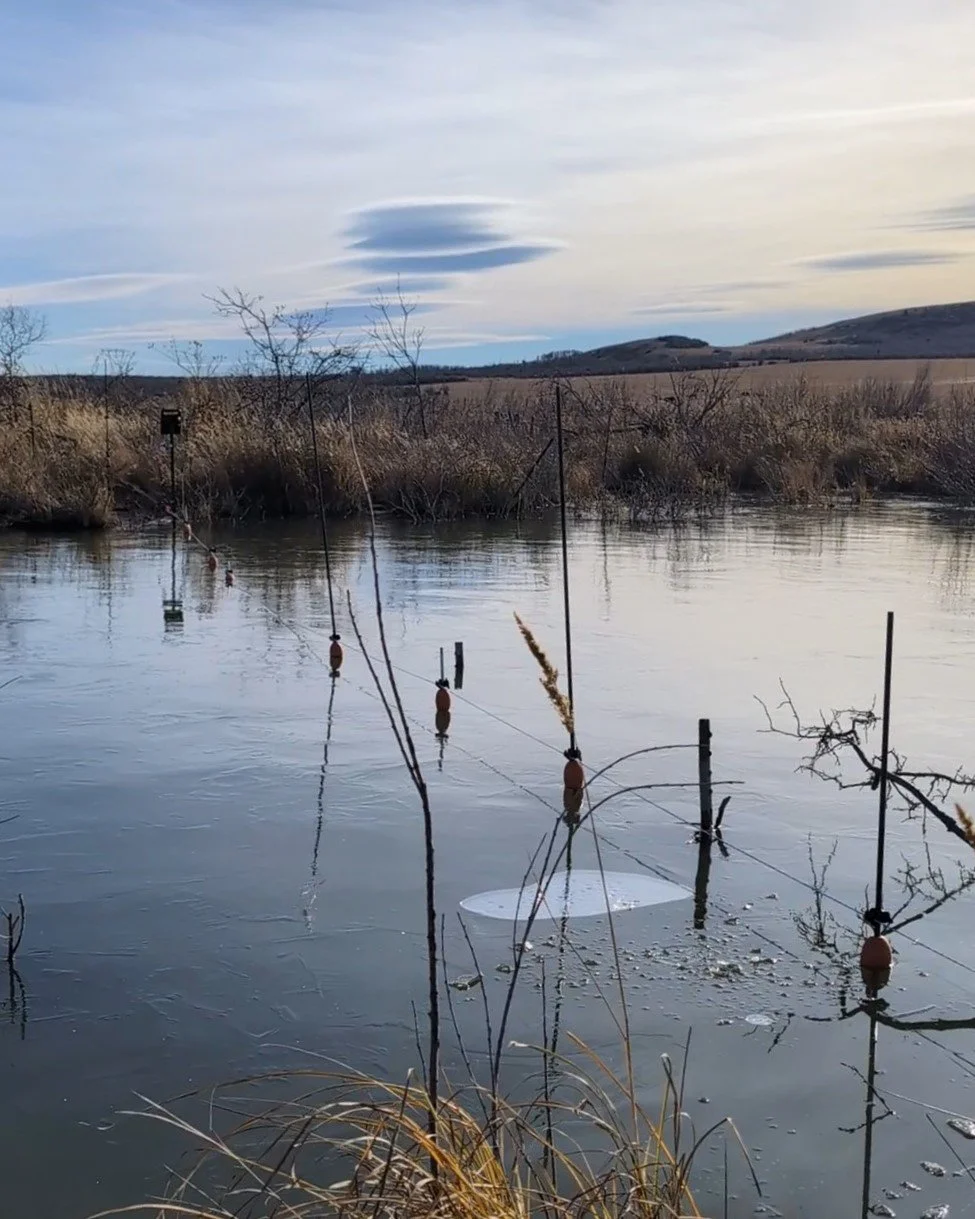
The ‘Touch of Current Critter Deterrent,’ a floating electric fence that moves with fluctuating water levels. These can be used to deter beaver foraging in sensitive areas, like restoration sites with newly planted willows, as well as for more traditional livestock containment. Photo by Rachel Morris.
How did you come to this mindset of coexistence, rather than conflict, with beavers?
“I think as more people realize the value of having an intact beaver population and of coexistence, beavers will get more acknowledgement of the beneficial role that they play.”
We realized that a lot of people were having what they perceived to be beaver problems, and we've focused the direction of our organization and a lot of our messaging to: at You Betula, we solve your ‘dam’ problems.
I say, “well, tell me where you're not living with beavers well and we'll figure out solutions to mitigate those problem areas.” And then if we tackle that, hopefully we can leave the beavers to their devices, and you'll have all those biodiversity benefits like water storage and the other great things that come with coexisting and working alongside the best wetland managers.
We're also trying to get a better system for orienting new clients, where people understand that there are options when it comes to living with beavers, benefiting from all of the ecosystem goods and services that beavers can provide and really minimizing the costs, whether that's flooding, overland flooding, foraging, or loss of vegetation. We’re trying to understand what people's problems are and then work together to find a solution, often connecting them with project partners like OWC and others that could help them along the way.
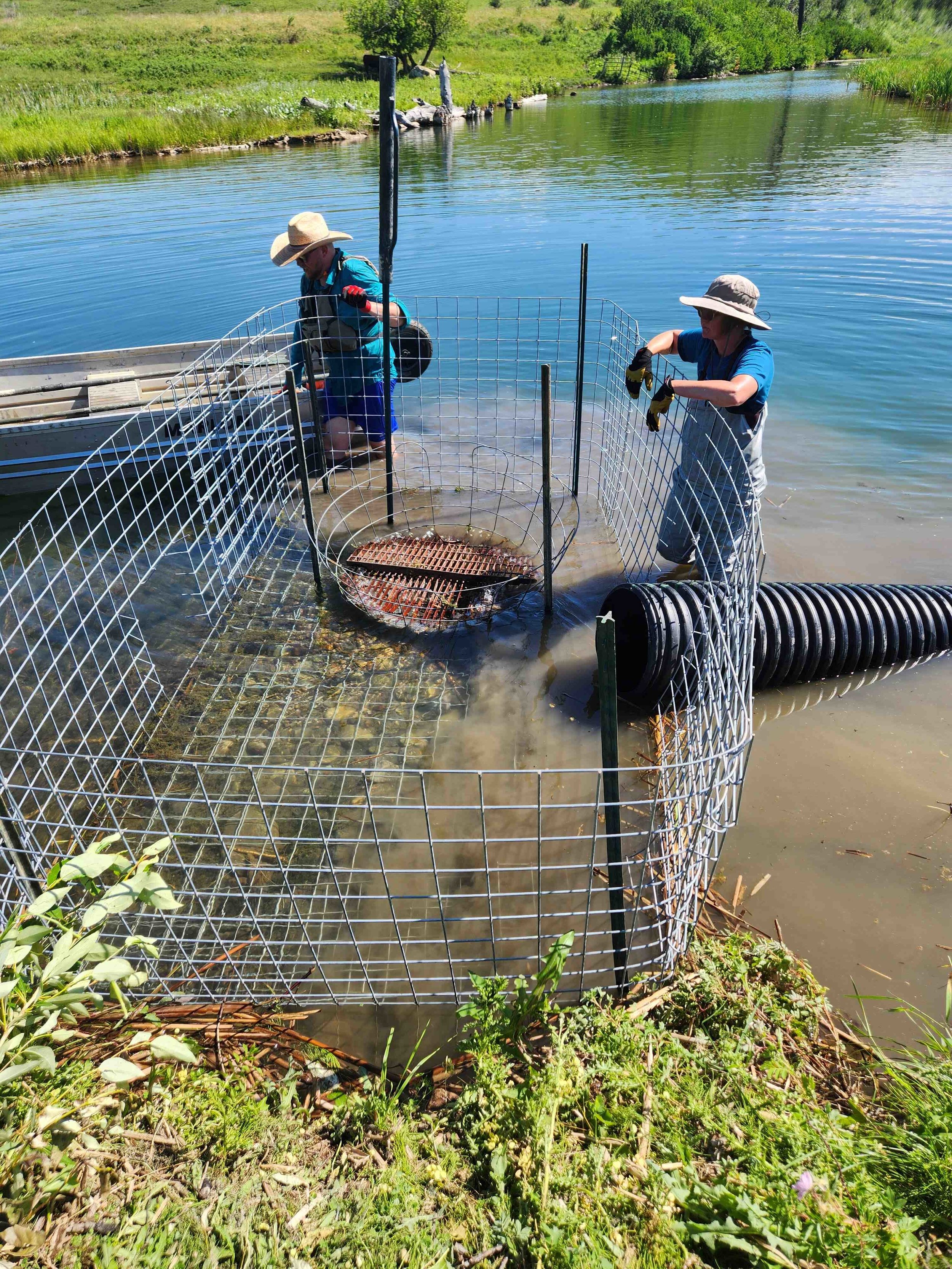
Previous work that You Betula Environmental Inc. and OWC have completed together, installing pipes and exclusion fencing to ‘sneakily’ drain water without the beavers catching on (or at least preventing them from damming that up too!). Photo by OWC.
Digging into that a little bit further, what difference or impact do you think that this practice is making?
We see a difference by recognizing and listening to folks identify their problems. Rather than proposing a blanket solution that the literature would suggest is beneficial, or a solution that has worked somewhere else, we go into the community or into the property first. Then we try to understand: What are the local issues? When did they become a problem? In what ways could you benefit from beavers? In what ways would you like to see some of these beaver behaviors altered?
Then we come up with very place-based solutions. We try to build local capacity with those folks so that they can be our next group of ‘beaver believers’ out there spreading the good word of coexistence.
Have there been any unexpected positive or negative consequences because of this?
The unexpected positive nature is we've accidentally generated a whole bunch of beaver appreciators out of folks who spent, in some cases, decades or nearly their entire lives, seeing beavers as an enemy with which to wage a seemingly never-ending war. Once we really focus in on the major sources of conflict and figure out how to mitigate those, instead of seeing beavers as an enemy, some of these fairly devout beaver haters have become closeted beaver lovers. Some send us photos or emails and updates, telling us, “Oh, you wouldn't believe what we saw them doing!” and “Do you think a beaver could do this?” That's a good focus on the positives.
Do you think that there's a scenario where that appreciation could be more widely adopted in agriculture?
Absolutely. To a lot of agriculture producers, beavers were agricultural pests. If you had crops underwater or you farm trees, you're losing woody vegetation or other crops, since beavers will eat almost any sort of crop. There was definitely a conflict there.
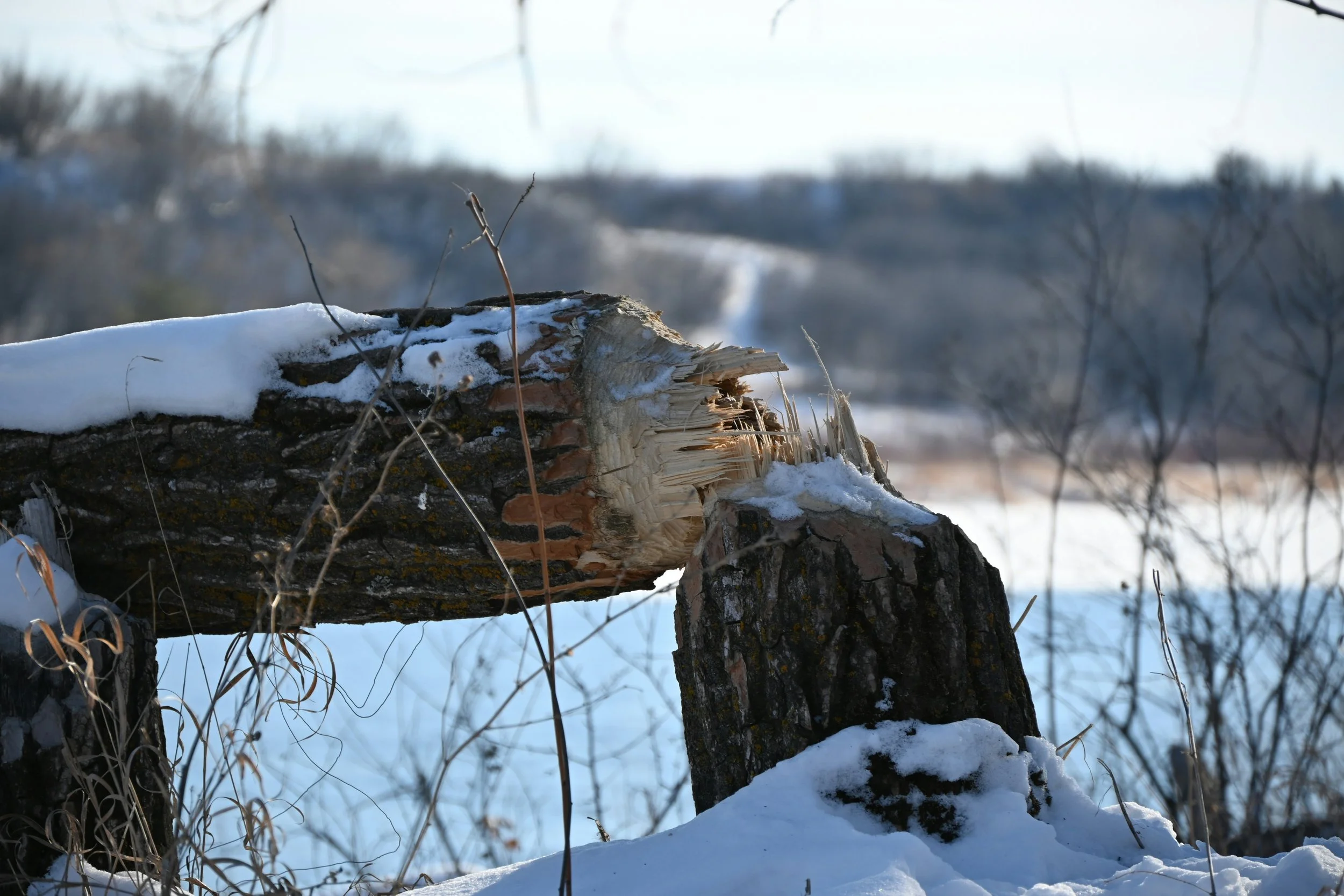
Beaver damage on woody vegetation. Photo by Len Rempel.
But with a few attempts at really understanding what the specific problem is for agricultural producers, then deciding what would be acceptable mitigations, we can shepherd them through that journey from beaver hate to beaver love, or at least beaver tolerance. If you have any questions about the applicability of some of these tools to your own beaver flooding or foraging issues — I call those the two big F-words that get beavers in trouble — then we can hopefully work with you to find a solution. We've had a lot of success.
Now, if you could snap your fingers and right now solve a single problem in your work, what problem would make the biggest impact if it was fixed?
Legalized beaver translocation. From a policy perspective, the next move is once we've established strongholds of beaver activity where we've solved the ‘dam’ problems, the beavers are welcome to stay. Then we could move any surplus beavers — like the young that get kicked out of their parents’ place each year — to a place where we could benefit from having more beavers on the landscape.
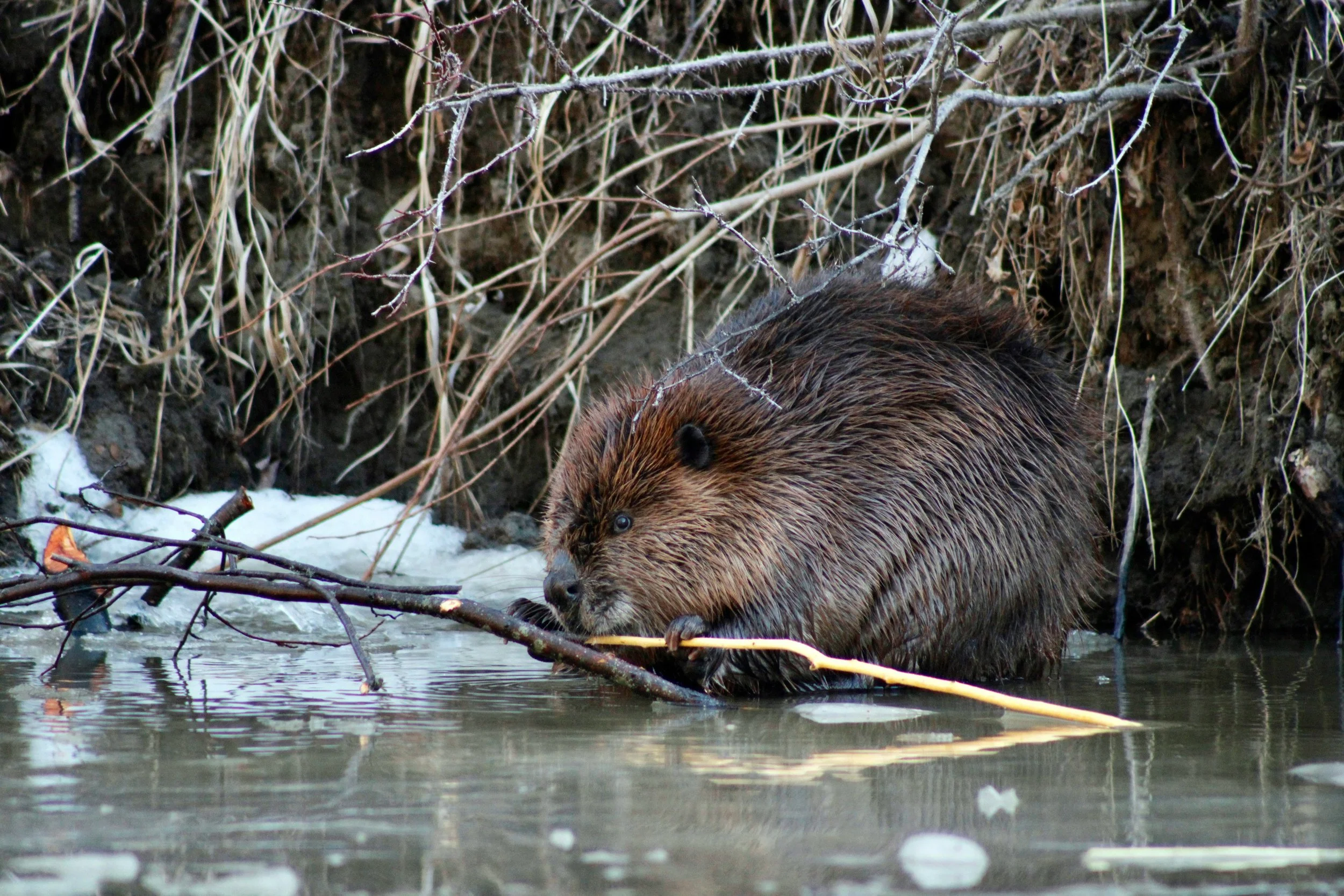
“What do to with a surplus of beavers? Move them”. Photo by Mark Ma.
For example, we have areas where, because we have producers or private landowners or managers or First Nations coexisting with beavers, the beaver populations have rebounded. But they've started to reach a carrying capacity in certain locations. Right now, we don't legally have a way to take that surplus of what would be dispersing beavers and move them to areas where they've been extirpated [completely disappeared from an area or region].
The snap-my-finger magic solution is that we would have a legalized system in place whereby qualified professionals that we trust to manage water bodies — professional biologists and authenticating wetland professionals — would assess potentially suitable sites, then live-trap those beavers, quarantine them as required, and translocate them to what would be recipient sites of these donor beaver populations. Then we could try to get the beaver-based ecosystem goods and services in place at these currently beaver-extirpated locations.
A bit of a pivot here: what makes you hopeful about the future of agriculture?
This will sound strange, but I’m hopeful in that we've had a sustained drought for a number of years. One of the results of drought is that agricultural producers recognize the ally they have in beavers. During these long droughts sometimes you have to find a neighbour who didn't trap out all their beavers [so they have water retained on their land] and water your cattle there, or fill water tanks from there.
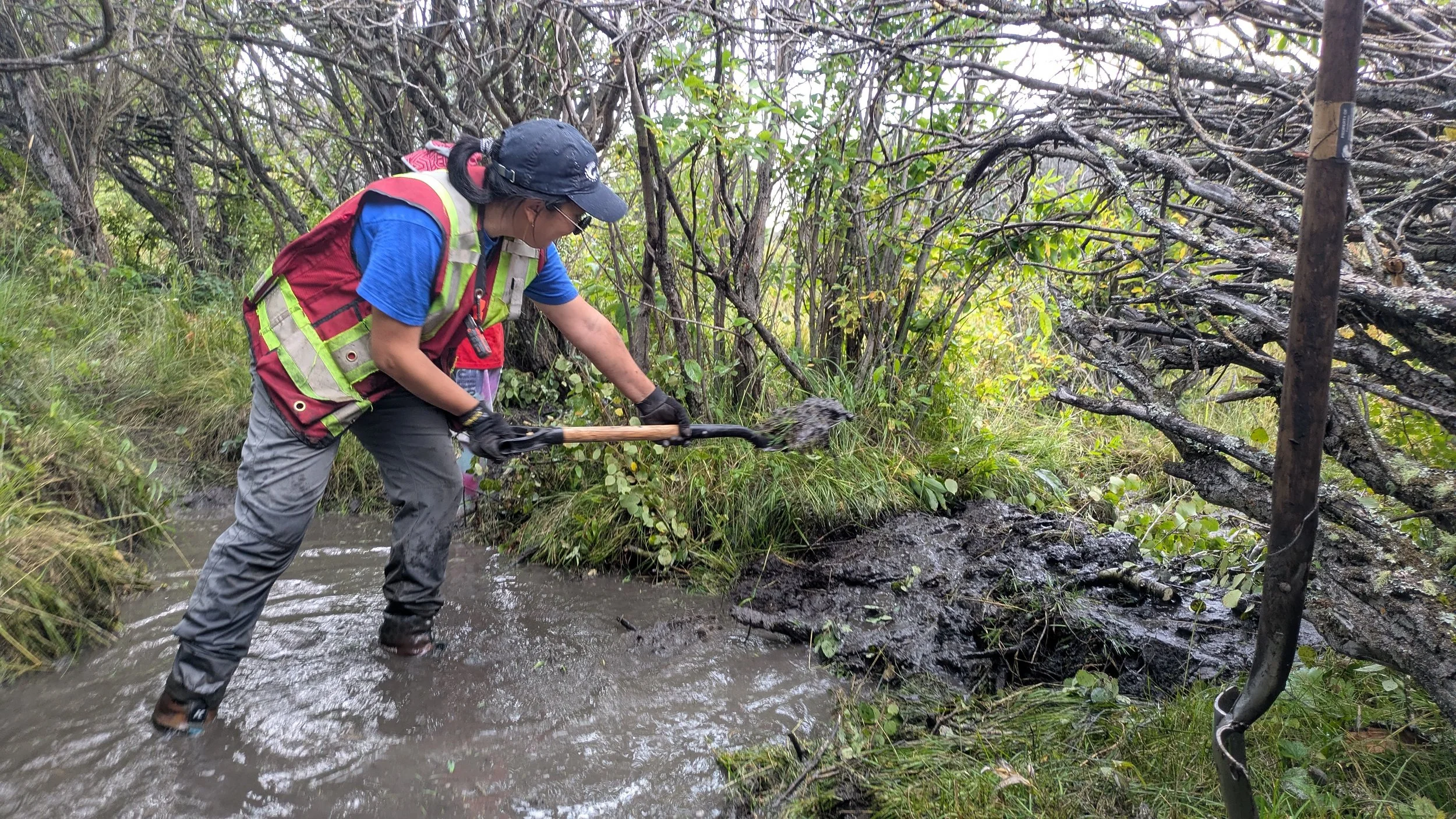
The OWC and our partners build “beaver dam analogues” to mimic the ecosystem services, like water retention, on the land. Photo by OWC.
I think as more people realize the value of having an intact beaver population and of coexistence, beavers will get more acknowledgement of the beneficial role that they play in climate change mitigation, in water security, and in drought resilience. So I'm pretty hopeful that the awareness is going to continue spreading and that we'll get out there on the land, solve those problems where they arise, and then have a community and an agricultural industry that sees beavers for the asset they are to that industry, and also of course to the broader biodiversity and ecosystem function.
Reach out to myself or others that are a little bit further along that path of beaver coexistence and we're happy to help get you there too.
Like all OWC’s blogs, this post was written by a real live human, without the use of generative AI.
Connecting People, Solutions, and Innovations is made possible thanks to funding from the Sustainable Canadian Agricultural Partnership.