Banner photo by Jon Martin. Blog by CEO Shannon Frank.
This is the third blog in our series of Behind the Scenes at OWC.
In this blog series, we’ve taken a peek behind the curtains at the Oldman Watershed Council. We’ve talked about how OWC has support across the watershed and invests the money we get back into communities, and we’ve explained how the core value of neutrality helps us be a collaborative forum for all voices.
But the Oldman watershed is a big place: 23,000 km² in southwestern Alberta, with about 210,000 people. At OWC, our staff of 11 work hard to have the biggest positive effect on as many places as possible. We sometimes focus our work on specific areas, begging the question: how does OWC make a tangible difference to the drinking water in communities many kilometres away?
The answer involves taking a step back and looking at the larger picture of how water flows through the landscape.
Protecting the source
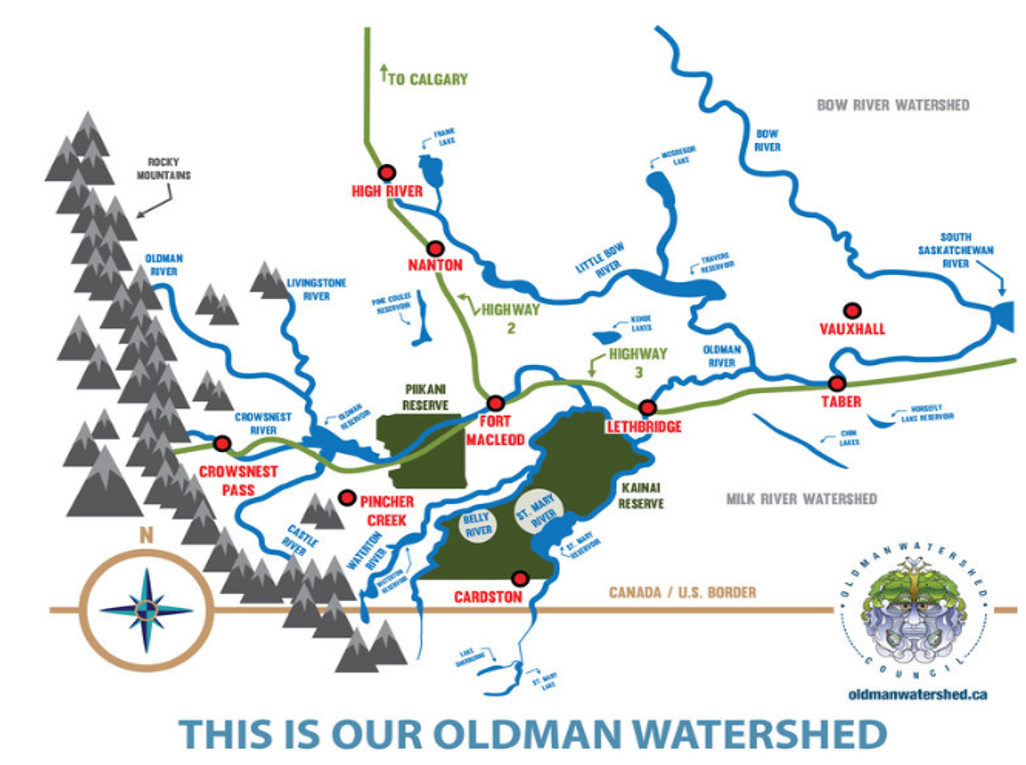
Water is a shared resource, and every person in a watershed depends on the same source. In the Oldman basin, all our water flows from the headwaters in the eastern slopes of the Rocky Mountains. If water levels are low, or if water quality is low there, everyone downstream is affected.
That’s why much of OWC’s work is focused on monitoring and promoting responsible stewardship of the headwaters. Every municipality drawing water from the Oldman River benefits from taking care of the source.
Providing knowledge
Because we all depend on the health of the watershed, everyone in the basin should be able to share their perspectives when decisions are made. The OWC is a forum for all voices; we also supply reliable, timely information so that watershed residents can take part in public engagement processes when governments are seeking input.
With accurate information in hand, people are empowered to participate in consultations and other decision-making processes about land and water management that affect their area. The OWC promotes these public opportunities and makes them easier to navigate, ensuring more stakeholders and rightsholders can have their voices heard.
The OWC also shares information directly with decision makers. Our multi-perspective Board of Directors discusses what input we want to share and agrees through consensus what we put forward to governments and elected officials.
Other OWC projects reach communities on the ground directly.
What is OWC doing today?
Many OWC projects take our staff to various places across the watershed. Let’s look at just a few below. You can always check out the full list of current projects on our website.
Canadian Aquatic Biomonitoring Network
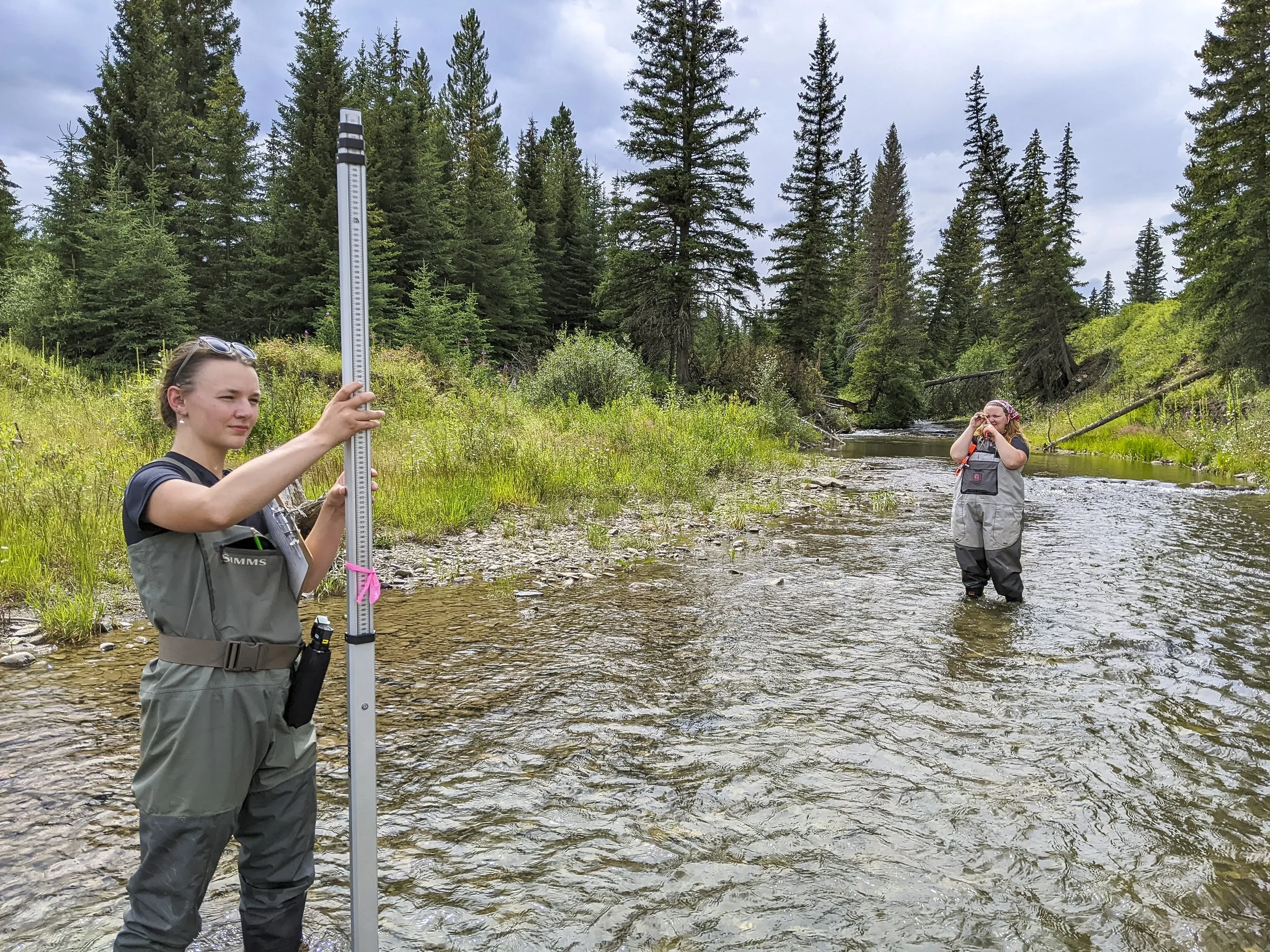
Photo: Sofie Forsström
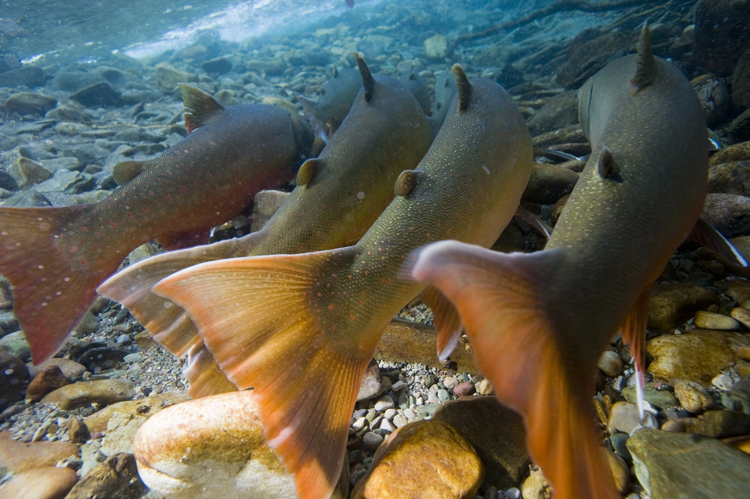
In order to address problems that can affect the watershed—like low river flows, or poor water quality—we first need to be aware of current conditions. The Canadian Aquatic Biomonitoring Network (CABIN) is one of the tools OWC uses to establish baseline stream-health conditions and to monitor changes at sites where we, or our partners, implement restoration or beneficial management practices. This work is focused in the headwaters, as the health in this area affects all users downstream. Learn more about CABIN sampling here.
Watershed Restoration
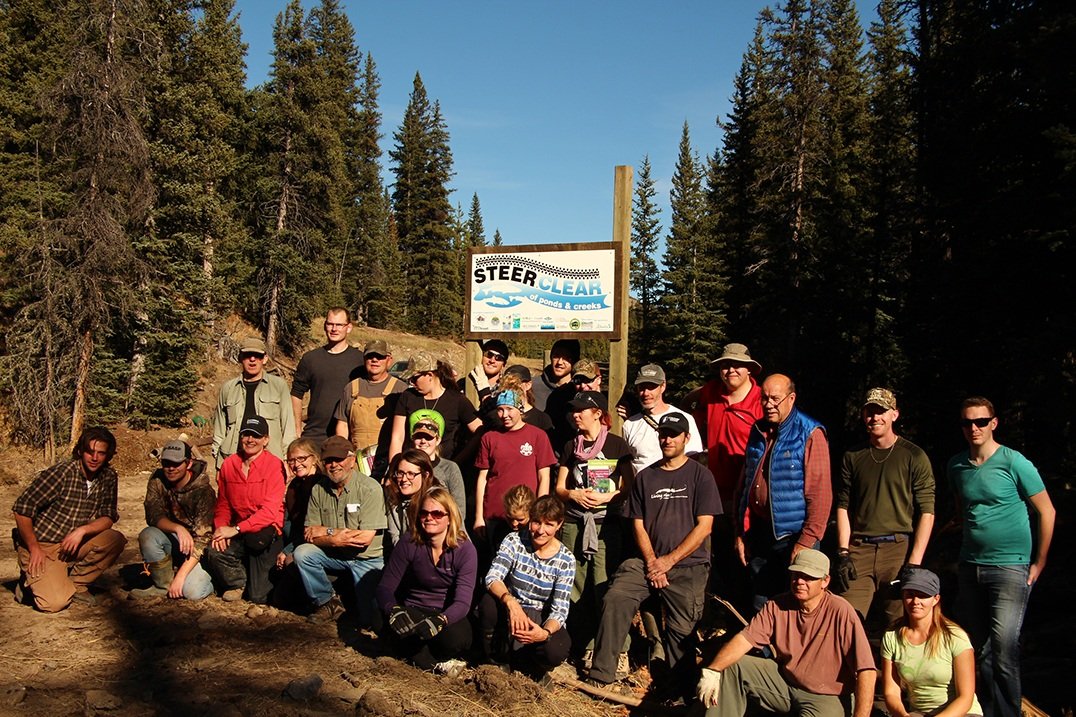
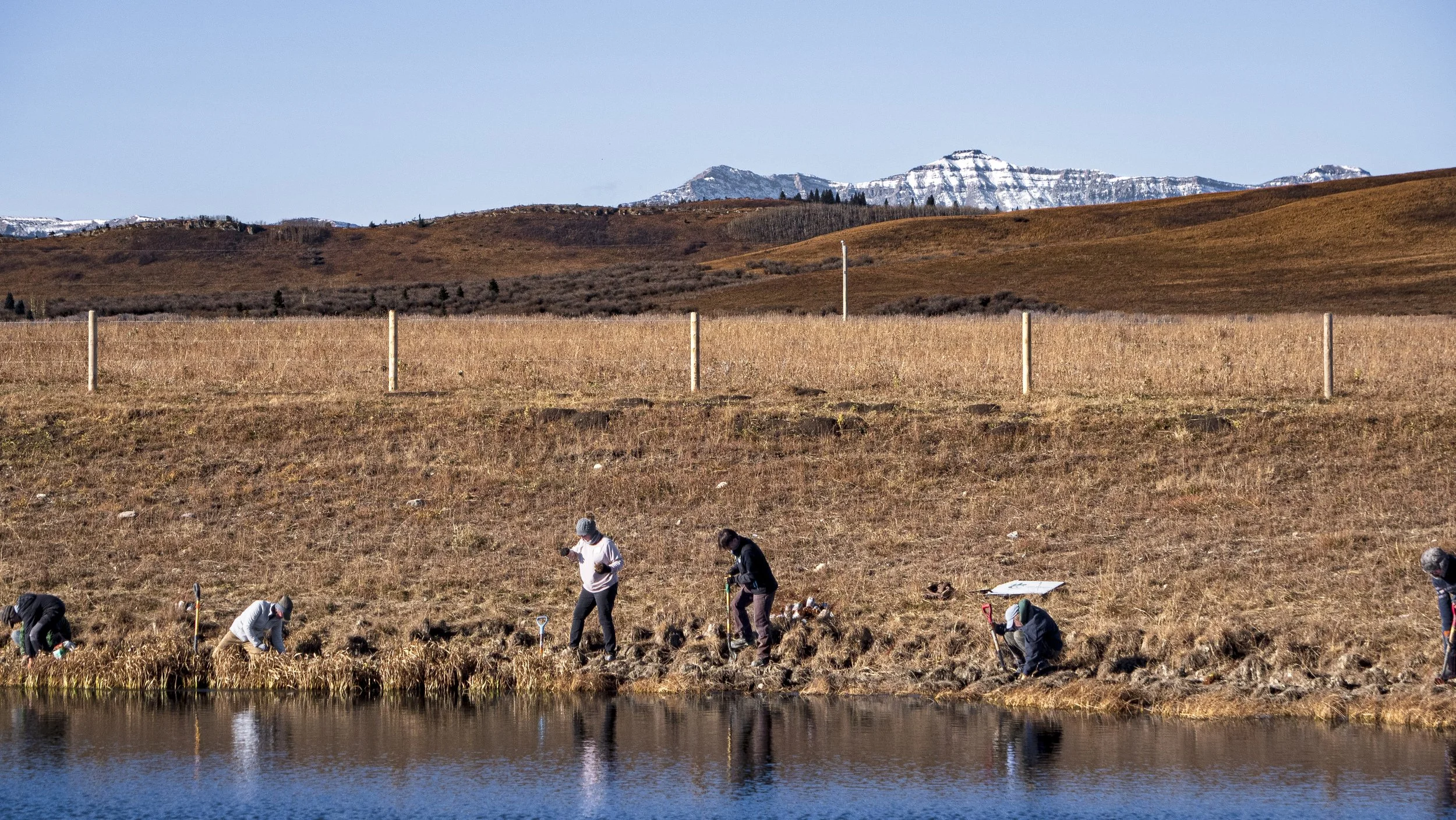
The OWC and our partners work to restore natural assets on public lands and within the headwaters so that downstream communities get a reliable supply of clean water. In the 2025–26 fiscal year alone, we restored 40 hectares of riparian area, 100 hectares of wetland, and over 450 hectares of grassland. With our partners and volunteers, we planted nearly 4,000 willows and native trees, created 65 beaver dam analogues—measures that slow erosion and hold more water on the land.
Restoration projects make communities more resilient to droughts and floods. A crucial result is that there is less costly damage when these events occur. Focusing on areas like wetlands means that there is more water on the landscape to share, a crucial point in times of drought (read more in the first blog in this series).
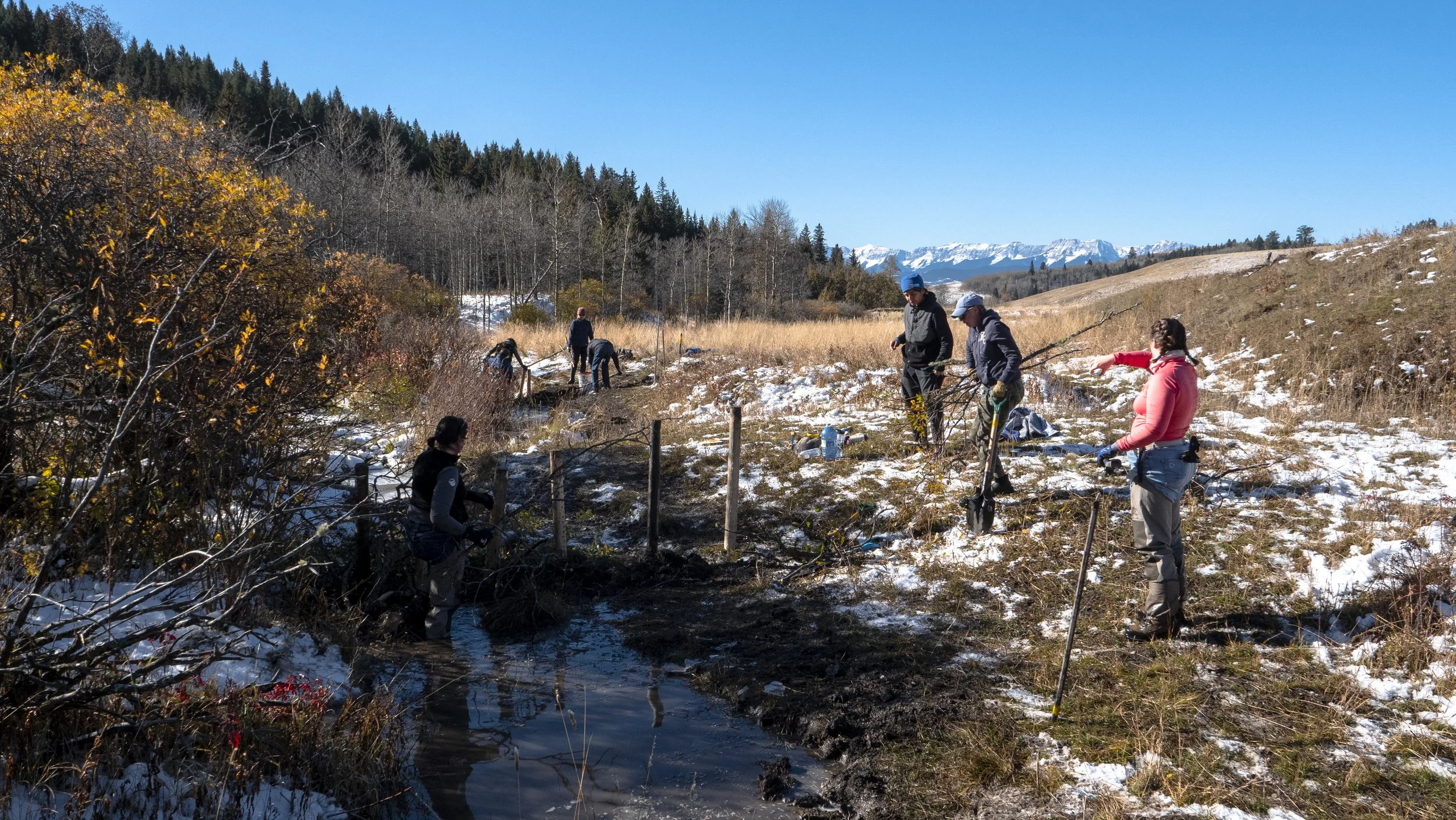
Photo: Jon Martin
As a small organization, we are heavily involved in this work. We also collaborate with partners like Cows and Fish and Freshwater Conservation Canada, who have vital restoration expertise and capacity, to have a greater positive effect on the watershed.
Read more about restoration here.
Watershed Legacy Program
The Oldman watershed has some of the most productive farmland and ranchland in the world. Through the Watershed Legacy Program, OWC equips rural stakeholders and rightsholders with the money, tools, and technical assistance necessary to take steps toward sustainable land management. We visit sites in-person to help with identifying and prioritizing areas and resources required to maintain a healthy watershed. By coordinating efforts throughout the basin, we improve water quality and land management.
Applications each year are open to anyone in the watershed with a stewardship project in mind. In the program’s history, OWC has enabled the completion of over 100 projects. The demand for assistance and guidance through this program is still strong; in 2026, we’ve received nearly 50 applications. Many aim to address critical issues like wells and dugouts drying up.
Read more about the Watershed Legacy Program here.
Agricultural Literacy
Our watershed is home to agricultural producers solving problems and leading innovations to benefit both the economy and the environment. The OWC’s four-year agricultural literacy strengthens trust between rural agricultural producers and urban consumers who both rely on the same watershed; it recognizes the innovation and stewardship of producers working year-round to solve pressing challenges.
The audience for this project is primarily urban consumers—but increased trust and knowledge of southern Alberta’s agricultural system are benefits to rural producers. We promote understanding of the important work food producers are doing to become more resilient to drought and other land-use challenges.
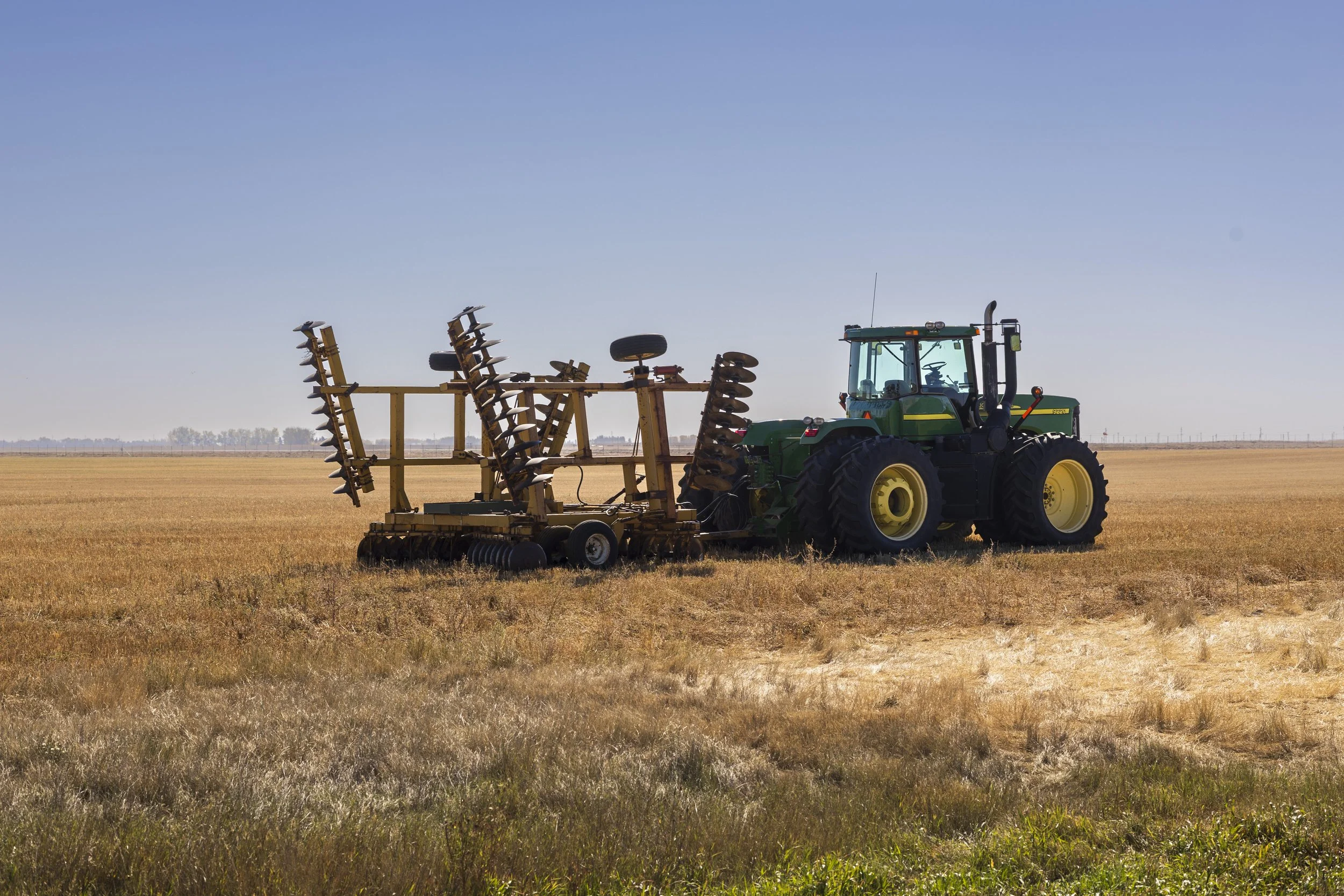
Photo: Jon Martin
Working for watershed communities
The OWC’s work is guided by the needs of watershed communities. Recognizing that we all depend on the same river, we strive to monitor and maintain the health of the Oldman’s headwaters. Drought conditions and land-use challenges affect many rural communities; in response, OWC focuses on impactful restoration projects—taken on by ourselves, in collaboration with volunteers and partners, or by equipping stewards with the money and assistance to make projects possible. Our educational programs, such as our agricultural literacy program, often target urban areas in order to benefit rural residents and make our watershed stronger.
Throughout all of our projects, OWC is a trusted source of reliable information, a key piece that empowers individuals to engage meaningfully in public consultations and conversations about watershed management. We all have a stake in the health of the watershed—OWC provides a space for all voices to be heard.
Like all OWC’s blogs, this post was written by a real live human, without the use of generative AI.