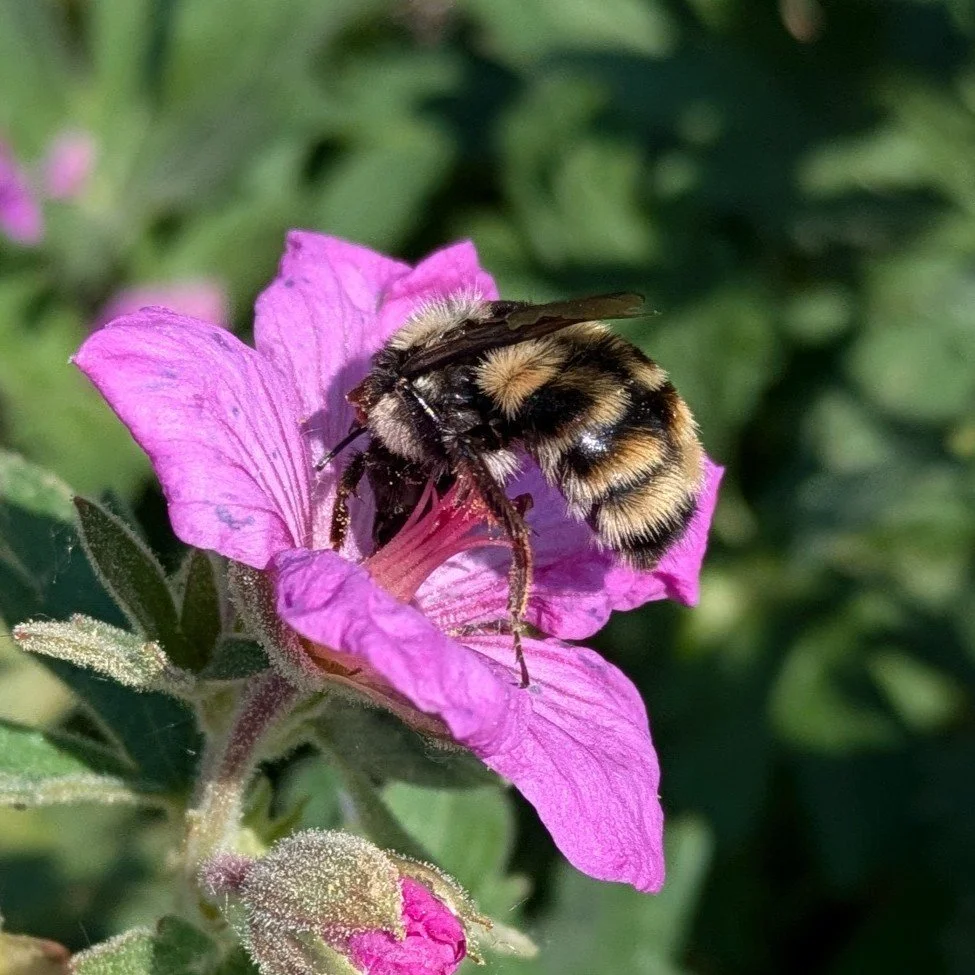
Banner photo and blog by Watershed Stewardship Assistant Rachel Morris.
After over a year of the Oldman Watershed Council (OWC) connecting with watershed residents by sharing information about bumble bees and other pollinators, here are the answers to our most commonly asked questions!
Do bumble bees make honey?
Yes, but not in the way you think. Honey bees (see below) are the ones that make and store lots of honey, because the entire colony overwinters together and needs stored food to eat while there are no flowers blooming. By contrast, not all bumble bees overwinter. Only newly mated queens survive the winter, and they do this in a hibernation-like state underground, so they don’t need honey to eat. In the summer, bumble bee nests make and store small amounts of honey so the nest has something to eat on rainy days.
So, yes, bumble bees do make honey, but not in a way that we could harvest it from them.
Wait, so what’s the difference between a bumble bee and a honey bee?
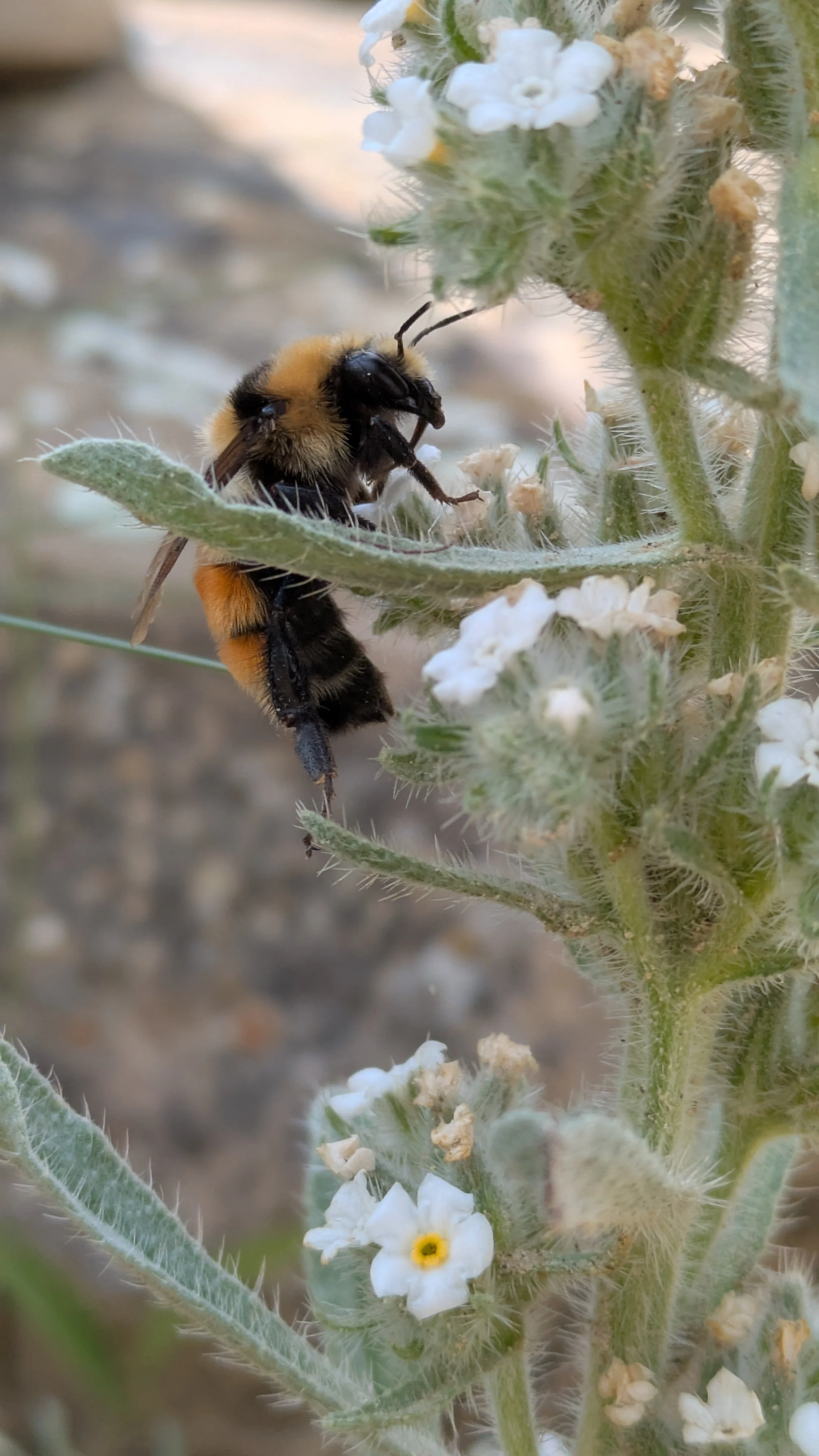
Bumble bee is one of 260 species worldwide. Photo: Rachel Morris.
I’m so glad you asked! I love sharing this. There are many, many types of bees; not all of them are black and yellow, or even live communally. All of them pollinate flowers. Two of the most famous types of bees are honey bees and bumble bees.
Honey bees are animals belonging to the genus Apis, and they typically live in perennial colonies—that means colonies that last for several years—and make honey. The most famous type of honey bee is the European honey bee (Apis mellifera), which is a domesticated insect kept in colonies worldwide for the honey and beeswax it produces. Importantly, honey bees are originally from the Eurasian continent, and are not native to North America. The honey bees we have here now are managed colonies, kept by bee keepers, and therefore are not wildlife.
Bumble bees, by contrast, are animals belonging to the genus Bombus, of which there are about 260 species worldwide. Bumble bees are fuzzier, and mostly larger, than honey bees. They have an annual life cycle, where each queen and colony only live one year. There are about 50 species of bumble bee that are native to North America; some of them are in decline, making it important for us to support our native pollinators.
The short answer is: bumble bees and honey bees are cousins, but they are two separate groups of bees. Honey bees are not native to the Americas and are largely here as livestock, but there are many species of native bumble bees here. To learn about the incredible breadth of native bees in Alberta alone, check out the Alberta Native Bee Council.
Do bumble bees die after stinging?
Nope! You have probably heard that honey bees die after stinging. This is because they have a barbed stinger, which will stay in your skin after they sting you. When the stinger is ripped out of a stinging honey bee, they will die. Bumble bees, on the other hand, do not have such a thing, and as a result they don’t die after stinging. They can actually sting you as many times as they want! Luckily for us, bumble bees are mostly unlikely to sting unless you are stepping near or on their nest.
Where do bumble bees nest?
Where do bumble bees nest?
Bumble bees are largely ground-nesting, and they build their nests in pre-existing cavities. These include ground squirrel burrows, in convenient gaps in brush piles, under roots, or in any other hole that a bumble bee queen might find cozy. This means sometimes bumble bee nests end up in places like mailboxes.
If you end up with a nest of bumble bees in a place that is inconvenient or possibly dangerous to you, I’d recommend reading this resource about bumble bee nests from the Xerces Society for Invertebrate Conservation.
I want to help bumble bees. What can I do?
I’m so happy to hear that! Lucky for us, there are several ways we can all help bumble bees thrive.
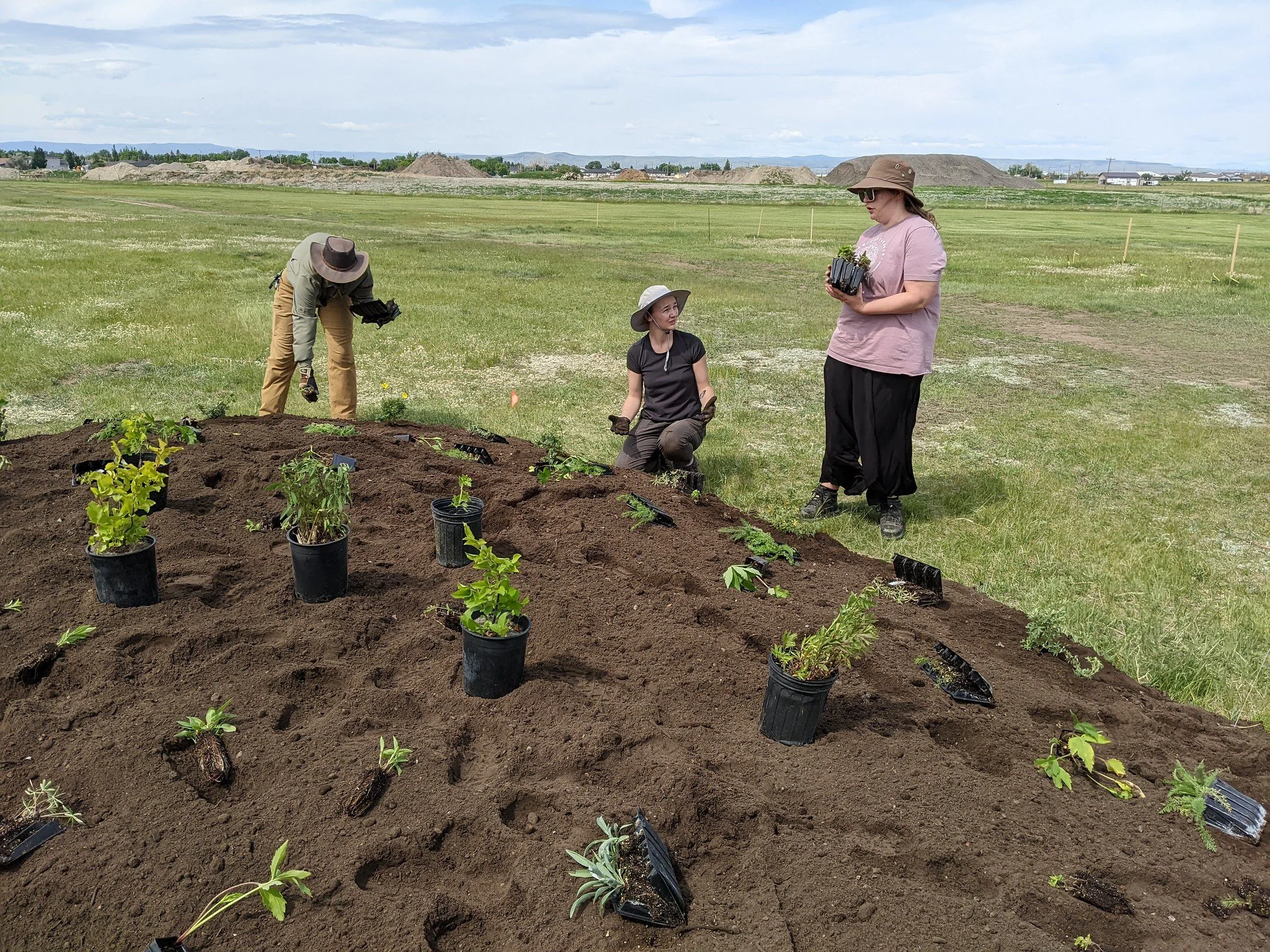
Creating habitat with a pollinator-friendly garden in Claresholm. Photo: Sofie Forsström.
The first is to create habitat. Bumble bees are small animals, and rely on patches of food resources (ie. blooming flowers) to be fairly close to where their nest is. They also depend on flowers being available for the entire growing season: spring, summer, and fall. If you plant and maintain a patch of native flowers which always has at least one type of flower blooming, you will directly help the bumble bees that live around you.
The second is to create information. Some bumble bee species are known to be in decline, but their distribution and abundance is still fuzzy: we don’t know where they are, and we don’t know how many there are. That makes it difficult for conservationists to target important areas for bumble bee recovery. Sharing all your bumble bee sightings to community science platforms like iNaturalist or Bumble Bee Watch adds data points to the map, allowing scientists and policy makers to be as informed as possible. Taking pictures of the bumble bees you see in your garden or on walks will also help you look for and learn about the wildlife you share your neighbourhood with!
Did you know? OWC has an iNaturalist project that tracks all bumblebees observed in our watershed. Add your own sightings.
The third way to help bumble bees is to share information—like this blog, for a starter—with your friends and family. When a lot of small actions add up, they become big!
Like all OWC’s blogs, this post was written by a real live human, without the use of generative AI.