Banner photo by OWC. Blog by Writer & Content Specialist Sarah Moore.
What is nature worth? It’s a question that’s impossible to answer. One person might have invaluable memories of summers spent fishing for rainbow trout along the Oldman River, while another might pass by that same bend in the river without a second thought. You might overlook a nondescript section of grassland, but the loggerhead shrike calling it home would have something far different to say. Most people agree that the value of nature is unquantifiable.
In contrast, something we can put a price tag on is the services provided by nature (think things like filtering water, reducing the effects of floods and droughts, providing wildlife habitat, and giving us humans spaces for recreation). The Oldman Watershed Council (OWC) did this in a recent blog, talking about the economic benefits of projects funded through the province’s previous Watershed Resiliency and Restoration Program (WRRP) that operated from 2014 to 2026. We did it again with a new tool, the Ecosystem Services Value Calculator, which tells users the average dollar value of nature’s services for each hectare of land.
However, assigning a monetary worth to the ecosystem services provided by different land types is a complicated process. So, we enlisted the help of Green Analytics and Associated Engineering Alberta Ltd. Let’s discuss the detailed process of building the Ecosystem Services Value Calculator.
Studying services
There are a couple proven and reliable ways to determine how much a particular ecosystem service is worth:
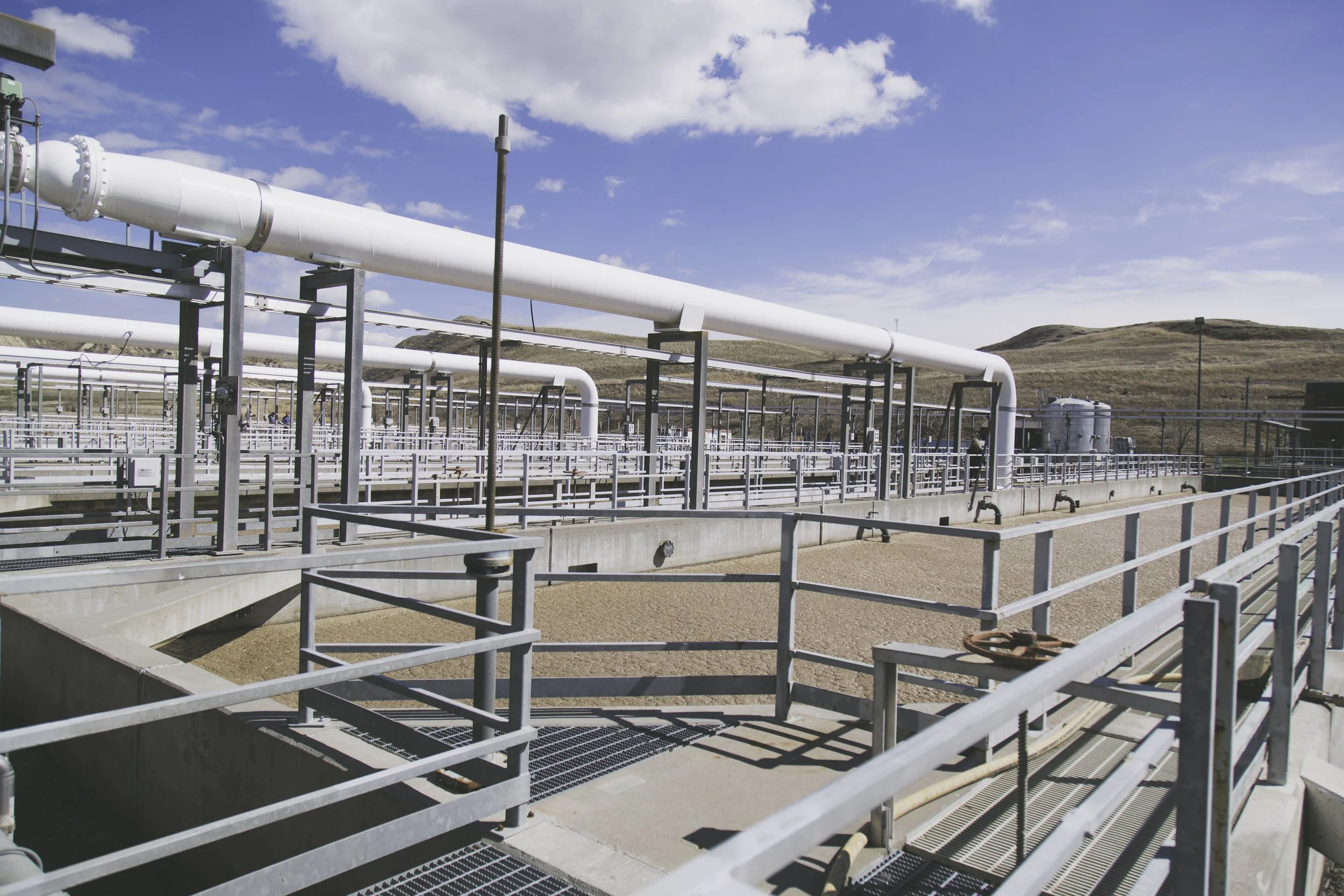
The cost of some ecosystem services can be compared to the cost of built infrastructure. Photo: Jayme Cabrera Lopez.
One is to compare it to the cost of using built infrastructure. For example, water purification is something that ecosystems naturally do for free, but it can also be done with built infrastructure, like a water treatment plant. To figure out how much that ecosystem service is worth, we could head to a wetland and measure the volume of water filtered, then calculate the cost of using a water treatment plant that would do the same job. Wherever possible, these clear-cost comparisons between natural infrastructure and grey, built infrastructure are used to determine the value of an ecosystem service. Because we know the cost based on well-established, real expenses, the values are very reliable and trustworthy.
A second method to determine the worth of an ecosystem service is to conduct surveys. This is used for ecosystem services that can’t be substituted with human-built grey infrastructure in the same way. In these cases, extensive surveys ask people about their willingness to pay to have a certain service exist. For example, a grassland provides habitat for our avian friend the loggerhead shrike. Studies evaluating the worth of providing wildlife habitat would ask people what they would be willing to pay to protect wildlife habitat in an area.
These two methods are well established in the scientific community and have been recognized and applied internationally since 1993 by the System of Environmental Economic Accounting - Ecosystem Accounting. You can read more about how this comprehensive system was developed here.
Benefits transfer
Studies using these methods—where data from the field are compared to the cost of grey infrastructure, or where extensive surveys are conducted—are called primary studies. It is very, very expensive to conduct primary studies to get site-specific data.
It is a common and accepted practice in economics to use a method called benefits transfer. A benefits transfer approach involves taking reputable numbers that already exist from primary studies and applying them to a similar area to determine the value of ecosystem services there. When the number of similarities between two sites increases, so does the reliability and value of the data.
This method, benefits transfer, is what was used by Green Analytics to determine the dollar values of ecosystem services of riparian zones, forest, wetland, grassland, open water, and shrubland in southern Alberta for use in OWC’s calculator tool. They looked at hundreds of primary studies that determined the dollar value of each ecosystem service. For example, for soil and sediment regulation, they used studies that evaluated the stabilizing effects of vegetation in reducing erosion compared to bare soil. In addition to these primary studies, Green Analytics looked at secondary studies. Secondary studies take the data from hundreds or thousands of primary studies, analyze the numbers, and calculate an average.
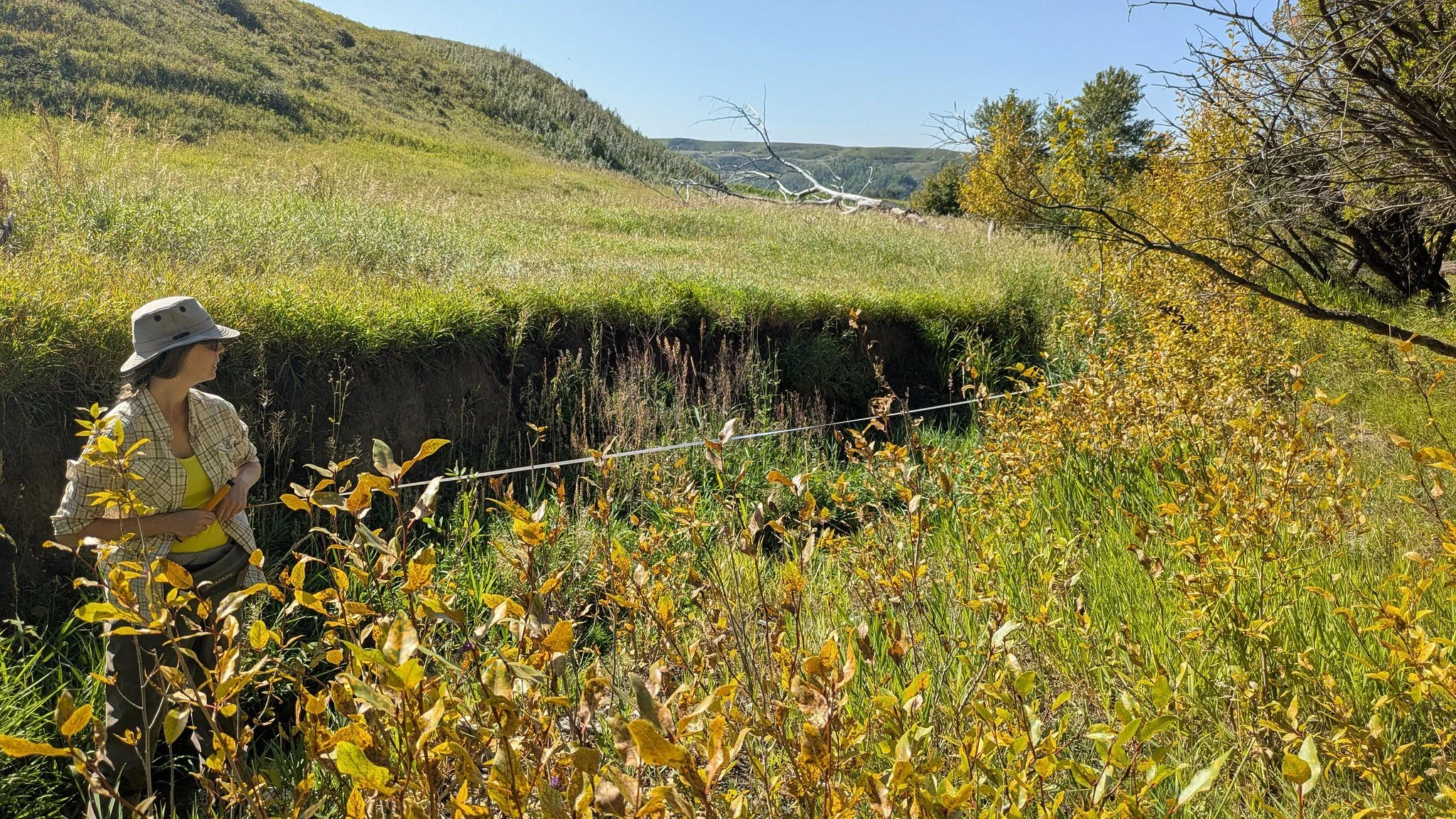
Different land types deliver different ecosystem services. Photo: OWC.
Both primary and secondary studies were used to come up with a range of dollar values for each ecosystem service. Then, Green Analytics filtered through this list to find what was most relevant to Alberta. This meant keeping studies conducted in Alberta, of course, and similar geographic areas, like western Canada and Montana.
From there, Green Analytics took an average of all the values. This is the number that is used in our Ecosystem Services Value Calculator. Taking the average value means that we avoid inflating how valuable a particular service is. This process removes the possibility of the calculator misrepresenting data through use of an outlying data point, or a number that would skew the results. he average reflects the range of values of each particular service, as found in scientific literature, and provides a more accurate result.
Estimates are conservative
In addition to using an average of many values rather than a single data point, the calculator is set up to avoid “double counting,” where a service is unintentionally counted more than once. For example, some studies combine flood control and water filtration into one dollar value; if this number was used in the calculator to determine the value of flood control and water filtration separately, it would lead to a higher value of services provided by that section of land. This potential pitfall was accounted for when selecting which studies and dollar values were appropriate to use in the application.
The ecosystem services included in the calculator are ones that have been studied extensively and that have robust data to support an accurate model. The list of 10 ecosystem services built into the calculator includes air filtration, flood control, habitat maintenance, and water supply—but there are many other ecosystem services that contribute value to southern Alberta. For example, we did not include the service of an ecosystem providing timber or food—which, in the agricultural hub of southern Alberta, is certainly valuable. If the calculator incorporated a more comprehensive list of ecosystem services, the overall dollar value would be higher. As more studies are completed with reliable data specific to these additional ecosystem services, we will add them to the calculator.
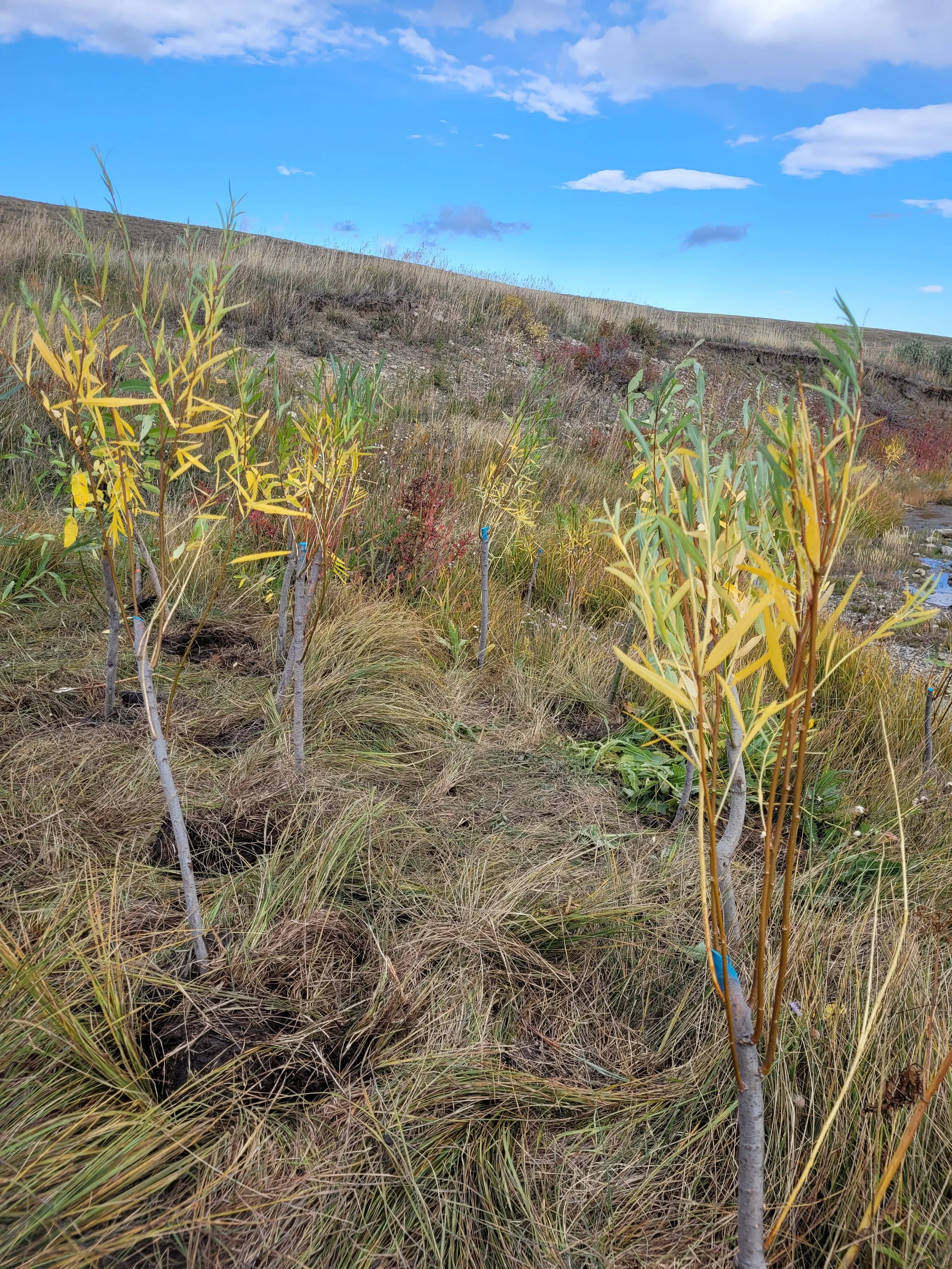
Once these young willows take hold, they will contribute to the services delivered by this ecosystem. Photo: Shannon Hart.
Because the numbers used are averages, the exact value of ecosystem services a particular site may be different. For example, a very recently restored wetland provides a fraction of the robust services of a fully matured ecosystem. The calculator is intended to estimate the value of services from healthy areas where ecosystem functions are well established, whether through natural processes or where restoration has taken hold.
With all this in mind, the numbers calculated by our new tool are conservative, and the value of ecosystem services is likely much higher. As more studies are done on the value of ecosystem services, we will add this new information to the calculator so it is as precise as possible.
The takeaway
The numbers used in the blog about WRRP projects and for the Ecosystem Services Value Calculator are scientifically robust and reliable. They are taken from peer-reviewed academic literature and reflect the average from a range of values. So while a hectare of forest may be priceless, we can, with confidence, assign dollar amounts to the services provided by that forest—services that keep our communities, ecosystems, and economies healthy.
Thank you to the Government of Alberta, RBC Foundation, Alberta Ecotrust, and Cows and Fish for funding this initiative.




Like all OWC’s blogs, this post was written by a real live human, without the use of generative AI.