Banner photo by OWC. Blog by Watershed Stewardship Assistant Rachel Morris.
This blog series is part of OWC’s Connecting People, Solutions, and Innovations project. In these blogs, you’ll hear directly from agricultural producers and managers in southern Alberta who are working to solve challenges in innovative ways.
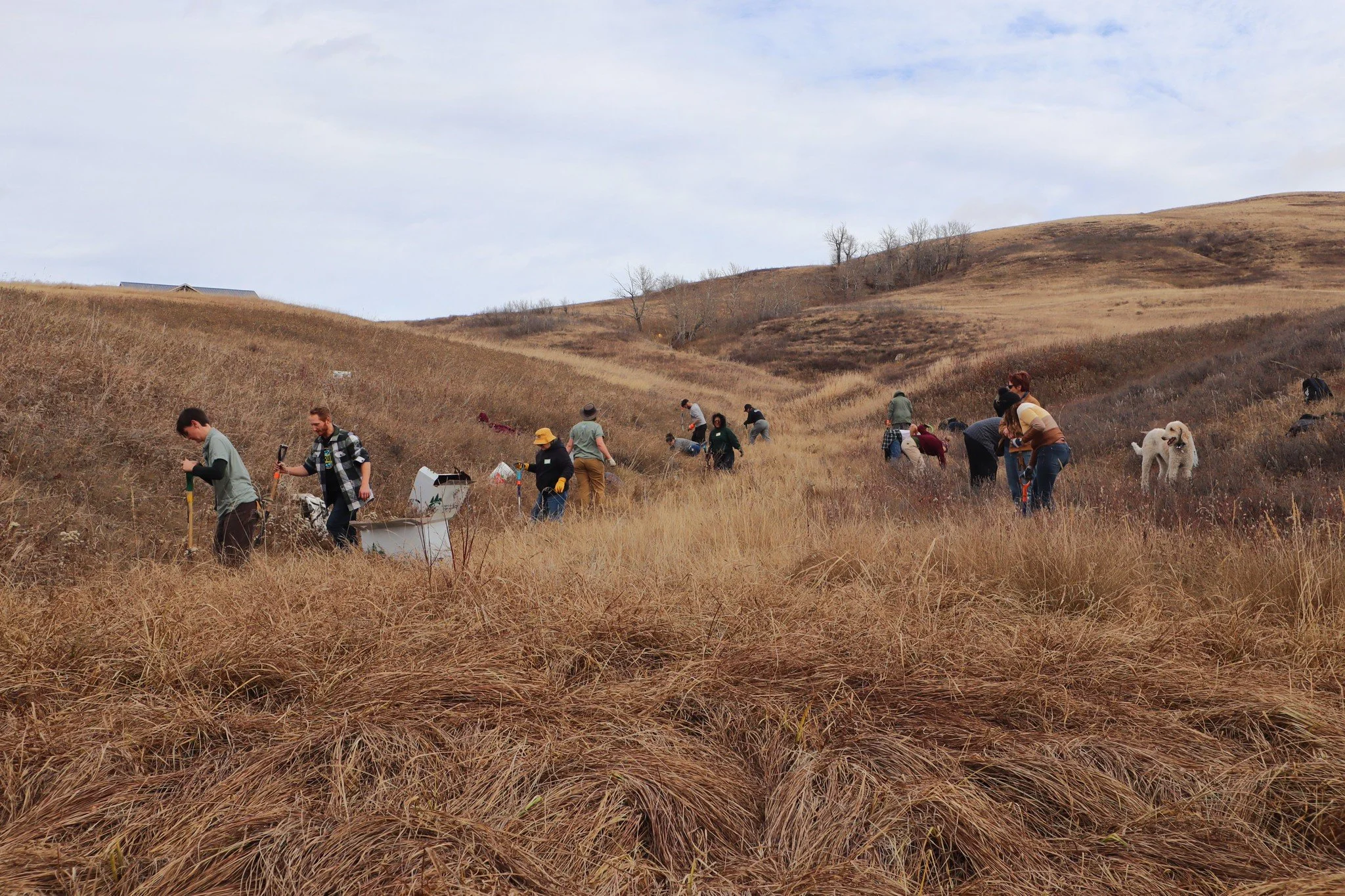
No matter how acclimated I get to southern Alberta’s wind, every once in a while there’s a day when it still catches me off guard — a day so windy you can’t believe the grass is still holding onto the earth. This is the kind of hat-stealing, table-flipping, window-rattling wind that built up on us the day that I, along with other Oldman Watershed Council (OWC) staff and volunteers, planted shrubs at Tamara Stanley’s property in the Porcupine Hills.
We had a lovely day planned: plant native shrubs along a wetland, break for lunch, and hear from a series of speakers, including local agricultural producer Kelly Hall, all while sitting on top of a coulee. I envisioned the sun shining on our faces and a gentle breeze tousling our hair, but sometimes you have to improvise.
We were determined to listen to Kelly, a longtime rancher and land steward in the Porcupine Hills, and the wind was equally determined to snatch the words from her mouth before we could hear them. Our group of keen volunteers, including many college students, took refuge in Tamara’s half-finished house, an in-progress build on the top of the ridge. We set up a rough circle of lawnchairs on the subfloor, and turned to Kelly, silhouetted against a picturesque view of Beaver Valley. Unruffled by the relentless howling in the eaves, her voice was steady as she explained what she does and why. To get the full immersive experience of this interview, be sure to read it somewhere where you, too, can hear the wind.
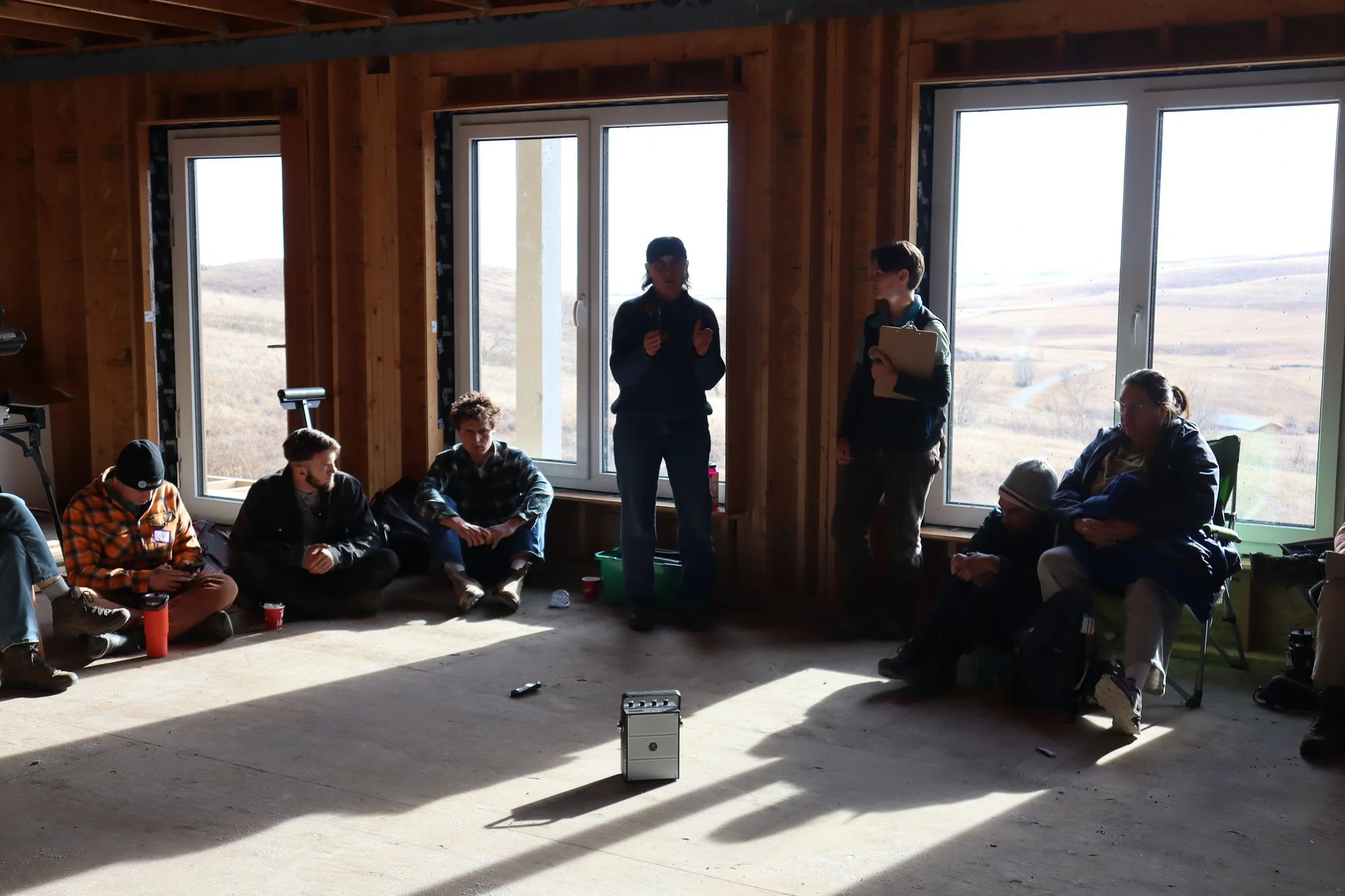
Listening to Kelly Hall… and the relentless wind. Photo: OWC.
This conversation has been edited for length and clarity.
Could you please introduce yourself and what you do?
My name is Kelly Hall. I live on the east side of Highway 2, just south of Parkland, on my husband's family farm. We ranch on the north end of the Porcupine Hills. We have summer pasture there, and we raise grass-fed beef.
And could you tell us a little bit about where we are today?
We are in the Porcupine Hills. We're along Beaver Valley. And this was — you can tell because of its name — very inhabited by beavers, a long time ago. We have the privilege of being in the headwaters of Oxley Creek, which feeds Beaver Valley.
The Porcupine Hills are interesting because, if you go south or west of Claresholm, there's lots of grass. On the north end of the Porcupines, we are very treed. When it comes to fire, we are in a catastrophic zone. We know it isn’t if — it’s when the fire will happen. We do have a lot of woody encroachment in our area, and along the foothills, and the last six years of drought have really expanded that encroachment.
So, you just started touching on our next question about challenges that you're currently facing. Could you tell us a little bit about how those are affecting you on a day-to-day basis?
We've lived through several droughts on both the farm and the ranch. Without water, we don't have anything. We can look after our grass and our animals the best we can, but we need to have water.
These hills are famous for free-flowing thermal springs. Many of the ranchers around us have developed those springs. We did not have a well on our place until 2020. Those free-flowing springs are fed by snowmelt through the aquifer. The last six years have been challenging. We have a lot of neighbours who have actually lost their water — through their springs, their creeks, and even wells drying up. The last six years have been a reminder of how we have to build resilience. That's why we practice regenerative agriculture, always.
What's something new that you're excited about on your operation?
My husband and I have been on a journey for four years in agriculture, taking over the family farm and then buying the ranch. We've recognized, and always focused on, two things. The first is stewardship. We are extremely grateful and honoured to look after the land we've acquired or been passed. We are both fourth-generation ranchers.
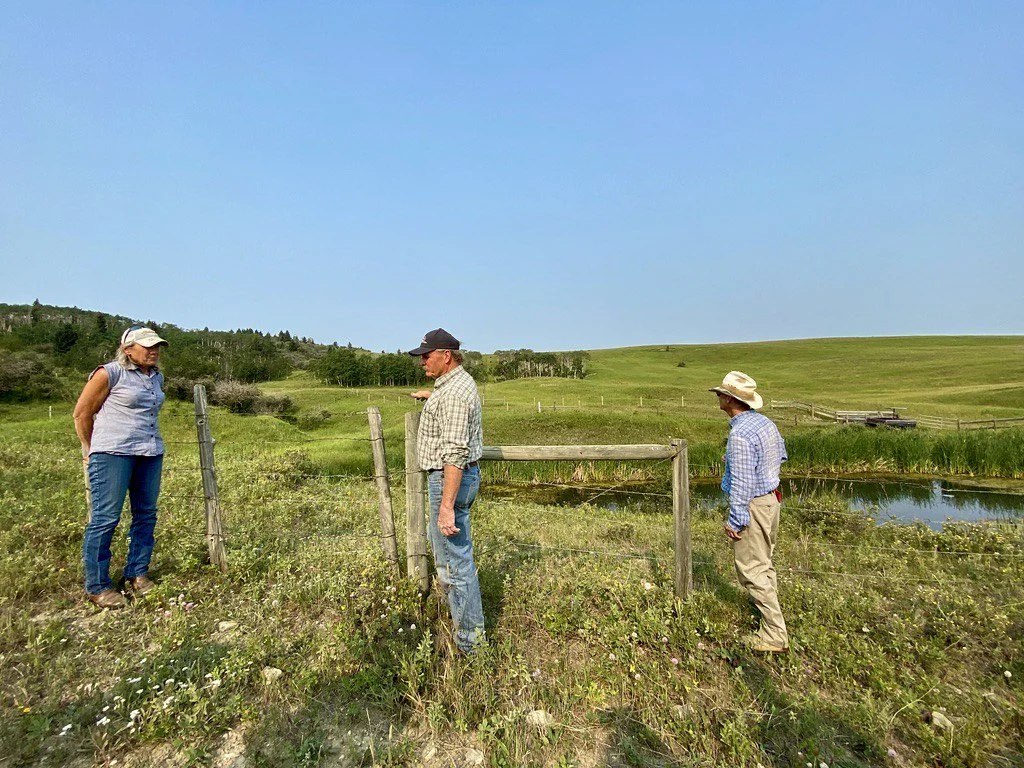
Glen and Kelly Hall talking about off-site watering systems and how they benefit their ranching operation, during a Grazing & Water Management Field Tour in 2021. Photo: OWC.
The other thing we've worked very hard on is building a table of allies. We recognized early that we would have challenges and situations where we needed professionals. We've learned a tremendous amount from our allies, which include OWC, Cows and Fish, and other producer organizations.
Through all of that, we've started our newest journey. Over the last several years, we've created what we call a shared stewardship ownership model. We're heavily into that now. We recognize the importance of educating, sharing knowledge, and building a sustainable stewardship ethic among the next generations to come. We've been bringing home our family and friends and their children and grandchildren. We're working with the next generation, and with what will be the sixth generation, because stewardship capacity needs to grow and will be very important when it comes to them being on the land.
Now, with this shared stewardship model: where did that idea originally come from?
It came up around 2011. Previously, we had worked with a larger farming organization, and we’d bought some land together. That partner decided the partnership would end because of ill health. We had to figure out how to come up with money if we were going to keep the land together. The heart of Timber Ridge has one of those free-flowing springs that runs up to 200 gallons a minute. We only need a small portion of that water; the rest is for our watershed.
We were also determined that land would not turn into subdivisions or golf courses, which was the threat. So we went to the Alberta Conservation Association (ACA) and wrote a business plan proposing that, if they would work with us, we could keep the land base together — and they said yes. So we are co-tenants on the land. This was very unusual in Alberta at that time.
ACA owns land themselves; they own land with elk, pheasants, and ducks; they own land with lots of other organizations. But at this point we were the only individual proprietors. That started the shared stewardship ownership. It has now grown, and we have other people involved with us. We figured out that we didn't have to own the land completely to look after it.
And along those lines, what difference or impact do you think this new model is making for you?
“Agriculture and conservation are on parallel tracks, and we needed to bring them together.”
The first thing that happened is our family learned a lot about our own land. All of a sudden, we had scientists, ecologists, botanists, foresters — you name it. Everybody came, and they did every assessment they could. We learned how many bats we had, how many frogs we had, how much encroachment had occurred, and how well our limber pine were doing.
We learned a lot. Then we realized they also learned a lot, because we all came to an understanding that agriculture and conservation are on parallel tracks, and we needed to bring them together. What keeps the land healthy and regenerative is agricultural practices that are well thought out as part of stewarding the land.
And as you're moving into this new phase, have there been any unexpected consequences, positive or negative, of your new management style or practices?
Probably one negative is money. It costs a lot to buy land, and the regulatory and legal processes required have costs too. The good news is our templates are now in place, and we're excited. Not only have our sons come home, we have friends who have joined us.
More importantly, we recognize that many young people — maybe some in this room — won’t be able to afford land. There are also senior citizens in the agricultural industry who don’t have children. Our goal is to grow our stewardship capacity at home and to extend this template, so we can start to marry those two groups and keep land in good working order and environmentally sound, ready for beavers, ready for fire, ready for whatever comes next.
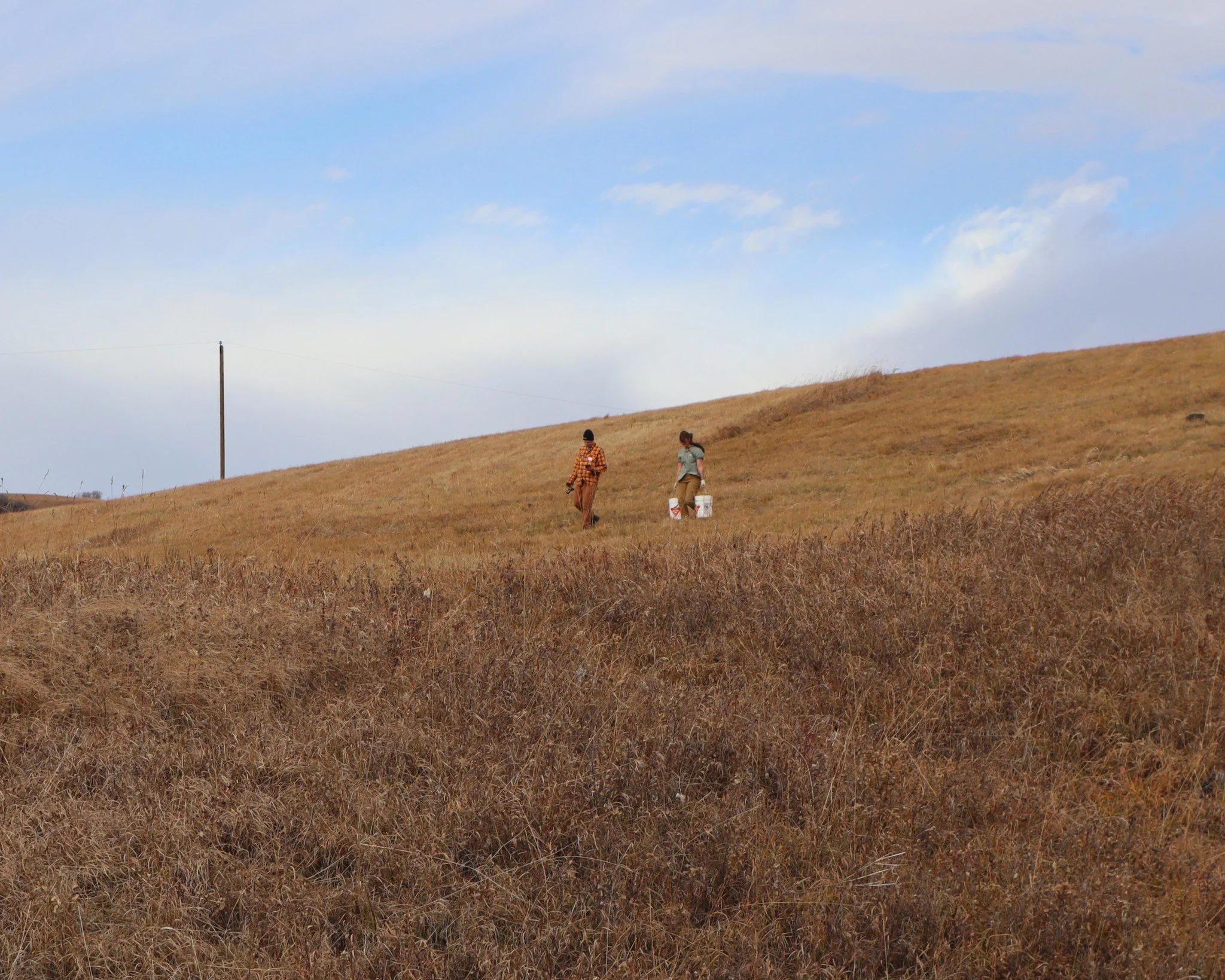
Regenerative Agriculture Lab’s Steward Ownership Initiative (read more further in this blog) is working for long-term stewardship of land. It aims to connect older landowners with young people who are committed to responsible stewardship. Photo: OWC.
Could you tell us how your practices could be more widely adopted in agriculture?
To be honest, we found somebody with money.
It’s not easy, and it’s not hugely profitable to be a cow-calf producer in Alberta. I am one. About five years ago, we had three quarters of land [480 acres or 195 hectares] we had looked after for 25 years. Those quarters took a lot of blood, sweat, tears, passion, and capital infrastructure to look after, and we promised the owners we would look after the land as our own.
When those three pieces of land came up for sale, we had to find another partner. Again, ACA said, “Yes, we’re there,” but that wasn’t enough. So we found a very patient impact investor who has done things for us no bank could, and helped us create this model. Taking that step was big. It created a huge awareness of patience, and of learning from each other. It’s also a whole lot of trust with someone you’ve never met, but get to know, and find out you’re passionate about the same thing. We’re all passionate about stewardship.
If you could think of a single biggest problem we could solve that isn’t financial, what is it and how would it make a really big difference on your operation, if solved?
Something important, which our current government is also trying to promote, is ecological goods and services.
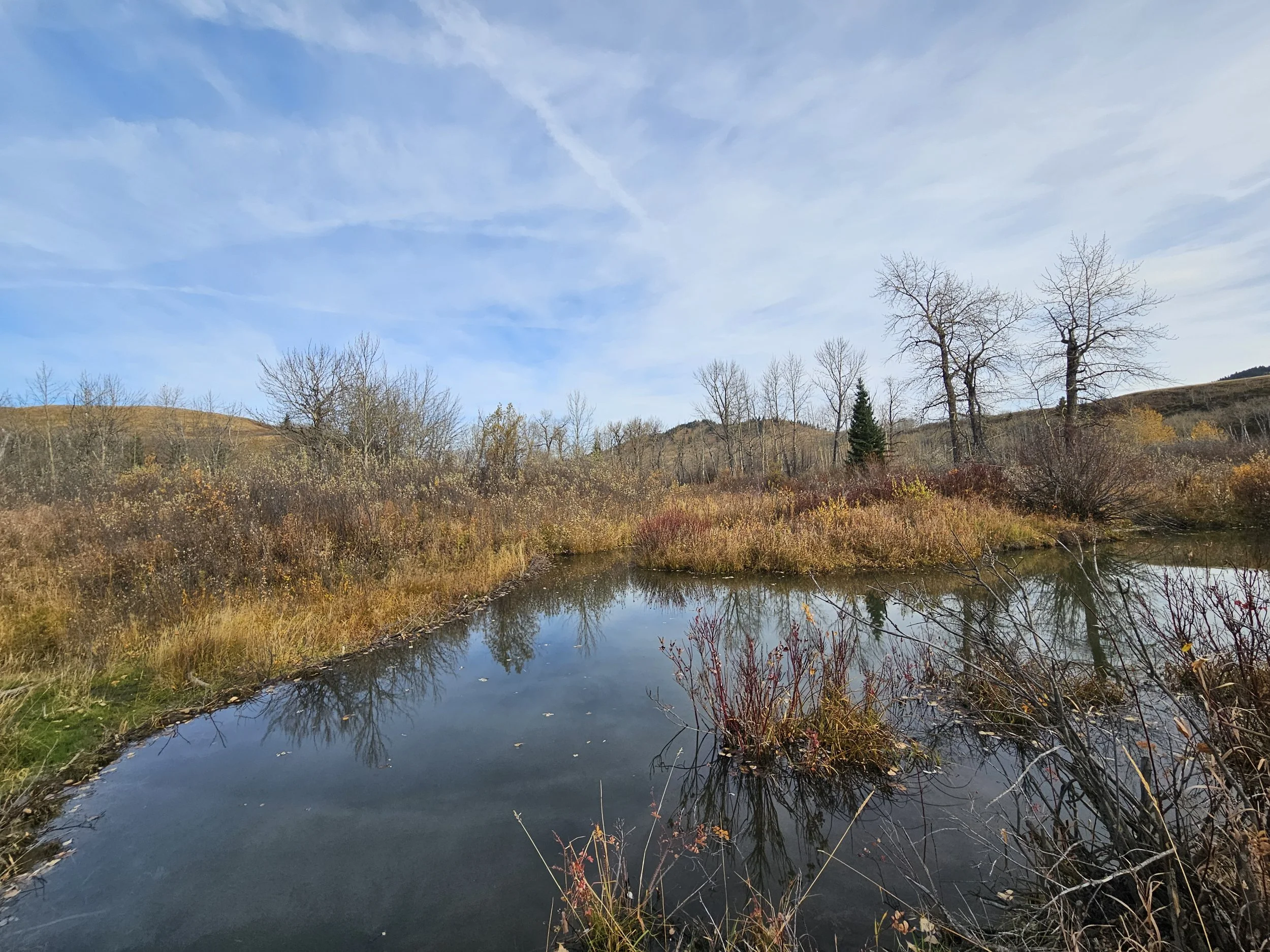
Ecological goods and services, or ecosystem services, are the benefits — such as water and air purification, flood control, and pollination — provided by natural systems. Some countries, like Costa Rica, have implemented ‘payment for ecosystem services’ models, where landowners or managers are reimbursed for the ecosystem services provided by land under their care. In Alberta, the Ecosystem Services Grant Program, piloted in 2025–26, can provide some funding for existing natural assets. Photo: OWC.
We have perpetual easements on part of our land — forever. That is now being negated in Alberta. The conversation about ecological goods and services is difficult, because we can't pay for what we can't measure. Unfortunately, our system is backward: we pay to bring people up to a standard [of good stewardship practices] instead of recognizing early adopters and the good work already happening. If we could solve the ecological goods and services question, it could make a difference to many people, both in agriculture and in environmental fields — because we are doing something for society, and in a big way. We’re doing something for grizzly bears, for limber pine — and on our place, they’re connected. Other countries have done a better job than we have [at recognizing good stewardship].
Speaking of differences — and on a lighter note — what makes you hopeful about the future of agriculture?
This one is easy. My children hadn’t been home for 20 years, and now I have nine kids running around, and dropping food off at my house again. We brought our clan together, and a whole bunch of us were there for weaning [separating calves from cows] yesterday, which hasn’t happened for a long time. We all celebrated when the cheque arrived with Grandpa at the end of the day [for the calves sold].
Thank you, Kelly. I’m sure I can speak for everyone here when I say that was incredibly educational. I learned so much about what it means to fully, comprehensively take care of a piece of land and steward it for generations to come. Is there anything else you’d like to add about what we talked about today?
I had the honour of taking the then-federal environment minister on a ride many years ago. We rode across the Whaleback and across the Livingstone Range. It didn’t look like this 100 years ago, and many people don’t understand that.
We have an issue right now at the ranch, and we’re trying to figure out how to deal with it: aspen encroachment. Aspen are not native to this grassland, and they have rapidly moved in during the last six years of drought. On what we call the east side of the ranch, this [the presence of aspen] was increased by the land management in the 1970s, before we bought it. Aspens have a way of saying, “If you pick me, I’ll come back with a vengeance,” and they did. Now, as part of this stewardship ownership, we’re finding ways to combat that. We are building BDAs [Beaver Dam Analogues; see below] and we will need some aspens when the beavers return [because beavers eat aspen trees].
We’re also considering multi-species grazing, because aspen growth is encroaching on the grassland. That’s happening across North America. Sometimes we don’t understand that progression, but if we pay attention to the little things, that’s important.
bonus content! audience q&a
What is a BDA?
A beaver dam analogue.
We’ve attended several workshops with OWC, Cows and Fish, and Freshwater Conservation Canada. In areas where the beavers have left, we’re trying to build some mini dams to slow the water down. By slowing water, we start to pool and store water, which is what the beavers will need when they arrive again. We built 20 BDAs on Oxley Creek and Nanton Creek. The Blood Tribe has built many. I believe Piikani Nation has also. A few other ranchers are starting to build BDAs to slow water when we do have it, and hopefully we’re building habitat for beavers to return.
What determines when woody species are valuable and when they are not? For example, today we planted woody species, so in this case they’re beneficial. When are they considered encroaching?
Be mindful of what we’re planting. I’ve talked to the Agroforestry and Woodlot Extension Society of Alberta (AWES, who provided the shrubs we planted today), and I know they don’t bring caraganas [an invasive shrub]. Today we planted red-osier dogwood and willows. That’s what grows, restores, and holds the streambanks — especially in a flood. That’s what we need to pay attention to.
A hundred years ago, there were conifers on the tops of the other hills and off the foothills. If we link the trees, bears, and birds, they’re a cycle — that’s how they survive. The protein available through the cones of a limber pine is what grizzly bears love. Aspens, on the other hand, were not here a hundred years ago.
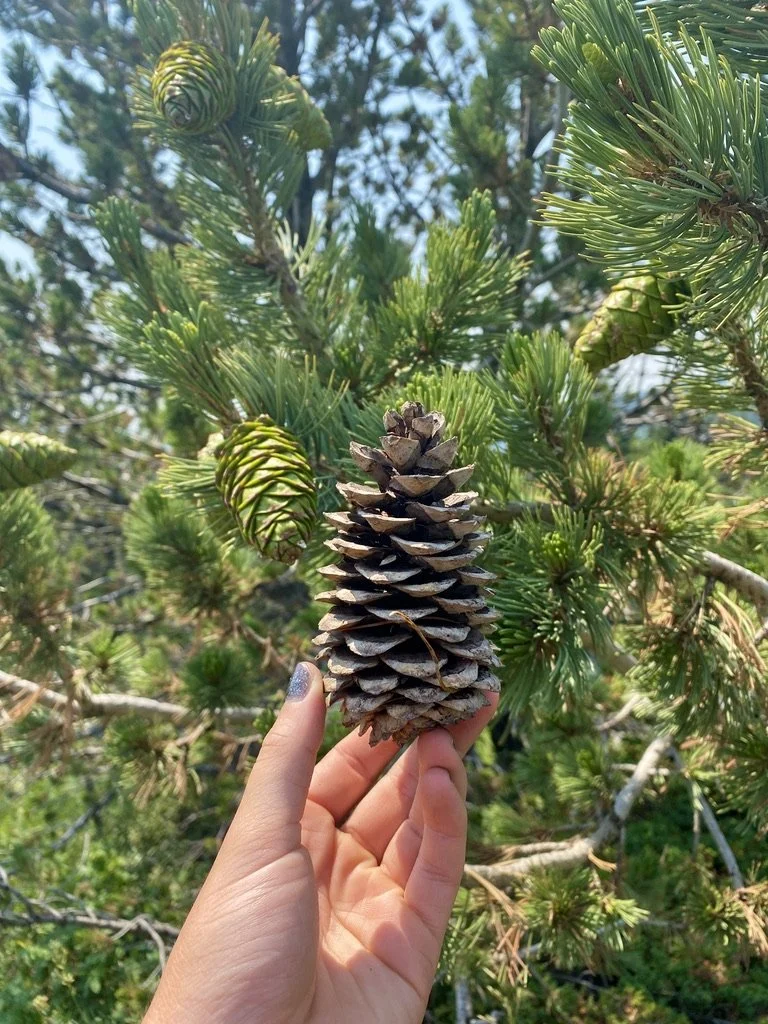
Cones on a limber pine in the Porcupine Hills. Photo: OWC.
Neither was timothy grass. Timothy came in saddlebags and was tossed out; it was great horse feed, but it’s not great cow feed, and it is absolutely not native. We, and many of our neighbours, now do our best to manage it. We’ve come to terms with the fact that it’s here and not going away. We now call it conservation grass. On our place, we have brome and timothy; but we also have fescue, and all the native grasses, as well as many forbs [flowering plants] that are important for people’s medicine and animal medicine.
Do you do any prescribed burning on your property?
My husband and I have been on prescribed burns, though not on our property. As I said before, when it happens we will have a catastrophic burn. We have a very old timber stand on the top of the ranch. If a wind like this is blowing, it could take out the timber stands all the way to Nanton, but the aspens won’t burn because they’re so full of water. It will be interesting. You need to be trained and prepared for what happens, because fire also creates its own climate.
How do you plan to handle that situation on your land with the aspen and the old wood? Do you plan to cut and remove it for firewood or reduce the fuel load?
Because of the elevation and the slope where the old conifers are, we would do a lot of damage trying to remove them. It would be extremely challenging. There is a natural system happening at our ranch. We’ve seen 100-year-old stands of aspen come down, and we’ve watched change happen naturally.
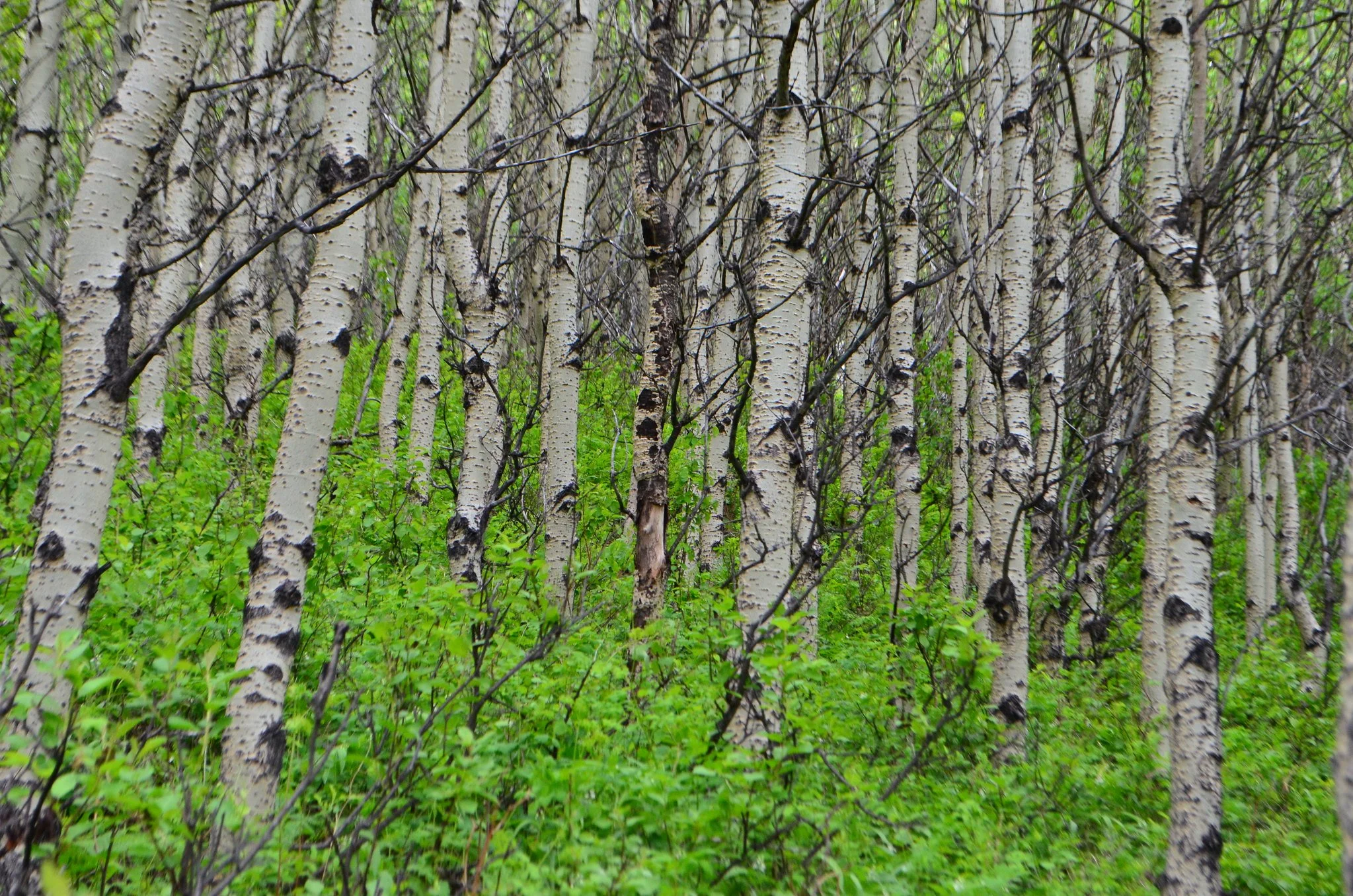
A stand of aspen. Photo: Connie Simmons.
Coming down from windfall?
Coming down from age and drought. The saddest thing I’ve seen over the last five years is that the willows have died because of drought. Even along Oxley Creek and Nanton Creek, we have old willows — some very large — and because the riparian areas were so dry, and with windy days like today, those willows have toppled. They’re done.
We do plant to restore those riparian areas, and we’ve had some success.
The last few years have been tricky, but we’re also looking at multi-species grazing: some goats or sheep to help [with aspen encroachment]. When contained, these grazers eat more wood than a cow does. That’s what we’re hoping to do. And when our beavers return — which they will; we keep saying we’re manifesting this — they’ll also help us, because that’s what beavers do [eat aspen and other poplars].
If you are one of the people you described, who will never be able to actually own land, and would like to learn more about the shared stewardship model, how would you get involved? Who should we reach out to?
We belong to a group called the Regenerative Agriculture Lab. We have five committees in that community, and we talk about shared stewardship as one of them. We’re having a session in Camrose soon to talk about how we’re going to create this thing — bringing people together, people like yourself, and senior citizens who are saying, “I have no children; what am I going to do with this legacy that was my great-grandfather’s?” We’re building a networking system that can do that.
Like all OWC’s blogs, this post was written by a real live human, without the use of generative AI.
Connecting People, Solutions, and Innovations is made possible thanks to funding from the governments of Canada and Alberta under the Sustainable Canadian Agricultural Partnership.