Banner photo by Jon Martin. Blog by Watershed Stewardship Assistant Rachel Morris.
This blog series is part of OWC’s Connecting People, Solutions, and Innovations project. In these blogs, you’ll hear directly from agricultural producers and managers in southern Alberta who are working to solve challenges in innovative ways.
Mt. Sentinel Ranch is nestled in the foothills of the Livingstone range just north of Chain Lakes Provincial Park, off the aptly named “Cowboy trail” of highway 22. I have had the genuine privilege of being at the ranch couple times before, mostly in the snow; thanks to its higher altitude and latitude than most of the Oldman watershed, it can get pretty brisk up here. However, today, Oct. 28, I joke with owner and rancher Sarah Green that I had ordered “one perfect day” and the weather had, for once, delivered. Under a perfect blue sky, the rolling pasture is wound through with a beaver-dam-studded creek. It’s almost too beautiful to believe.
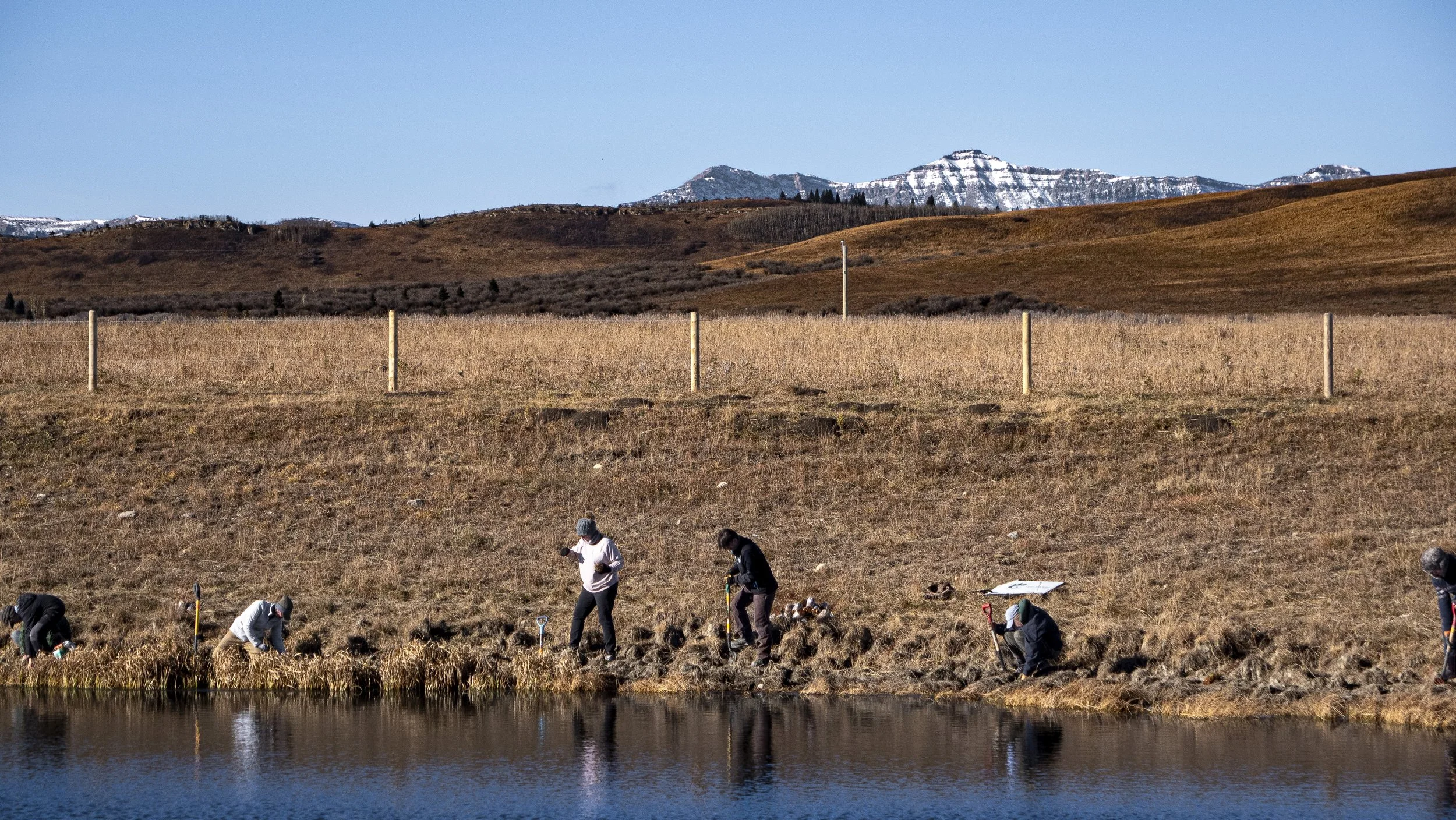
Oldman Watershed Council (OWC) staff, Sarah herself, and 14 intrepid volunteers have spent the morning planting 750 willow plugs as part of one of OWC’s Authentic Watershed Experiences. Our goal was to naturalize the shoreline of a new dugout that Sarah and her husband Harley had installed the previous year. After a quick lunch in the field, we cross the highway and drive down onto the main ranch, the volunteers in a school bus and us in the OWC truck. As we cross the one-lane bridge over Stimson Creek, we’re held up by a traffic jam: four horses, pastured nearby, wandering over to check out the commotion.
Standing on the gravel road just past the bridge, Sarah shields her eyes against the bright sun, facing a circle of keen volunteers as she discusses new innovations implemented here at Mt. Sentinel Ranch.
This conversation has been edited for length and clarity.
To start off, Sarah, could you introduce yourself and tell us a bit about what you do here?
I'm actually the fourth generation to be on this ranch. My great-grandpa came here in 1898, and, funnily enough, he picked this spot because he was very much a recluse — he wanted to be away from people. But now, of course, we have this crazy highway going through here.
My husband and I have been here since 2005; we came home full-time. I was fortunate because my parents were very much innovators in conservation, and they really instilled that in me. I'm very grateful that I had that upbringing to give me a start in our own ranching life.
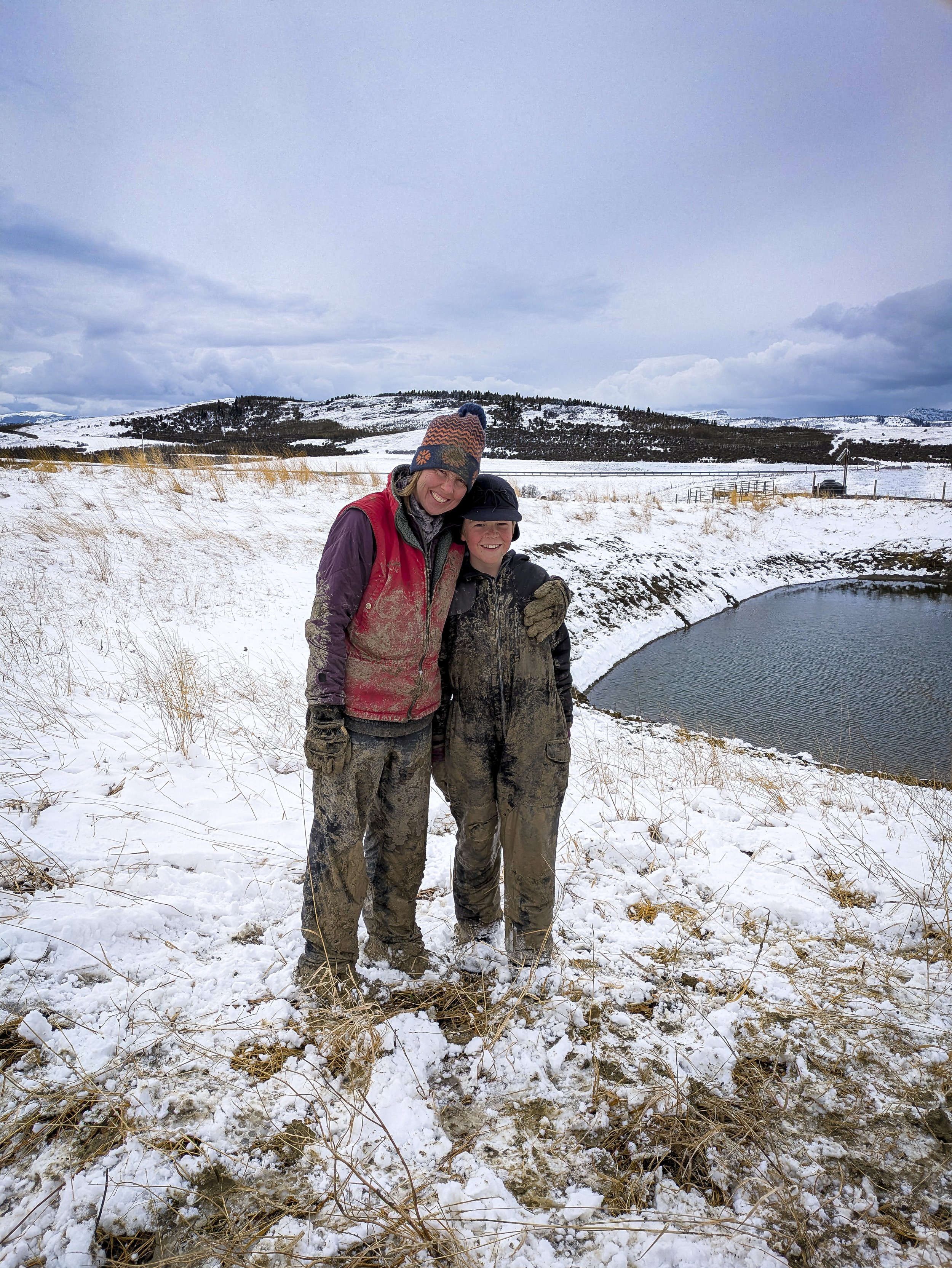
Sarah Green (left). Mt. Sentinel Ranch was established over a century ago. Photo by Kallie Val-Zehan/OWC. Learn about the ranch’s history and stewardship of the land and water here.
What kind of challenges do you currently face?
Some of the challenges have stayed consistent over the generations, and there are some new ones for sure. I'd say one of the biggest challenges for us is more people, more land uses in our area — like the highway — that have come with a bigger population. That creates a whole new dynamic for ranching and for cattle, and for things like encroachment of weed species. And, of course, one challenge we've dealt with my whole life and my dad's whole life is encroachment of brush. We don't have regular fires going through like this land historically had. So that's kind of a constant struggle — minimizing encroachment on our native grasslands by willow and poplar, and trying to navigate the best way to do that. [Editor’s note: willows are crucial in riparian (shoreline) ecosystems, helping to prevent erosion, shade water, and provide habitat. However, when willows and other woody species grow into grassland, they shade and displace grasses, and can reduce the forage value of the pasture.]
One of the challenges that Harley and I have strived to work on is water development, because, as we know, we've all had issues with drought the last few years. We decided that, for us, that was a really key initiative to focus on. So we've focused on creating really sustainable water sources for cattle, so we have more options for how we decide to rotationally graze them through our ranch.
Wonderful. And could you tell us a little bit about something new that you're doing on your operation that's got you really excited?
For me, water development is really exciting because it opens up a whole bunch of new options for how we graze our land. And actually, within the last two weeks, we finished a water project across the highway — a solar project — so we can now have water in that field all year round — my winter solar site. That's very exciting. And then also this work that we did planting willows with OWC is really great too, because it's creating biodiversity and habitat, while also creating some great water that we can use for generations, that's going to be protected, healthy, and maintained. I get really excited about water.
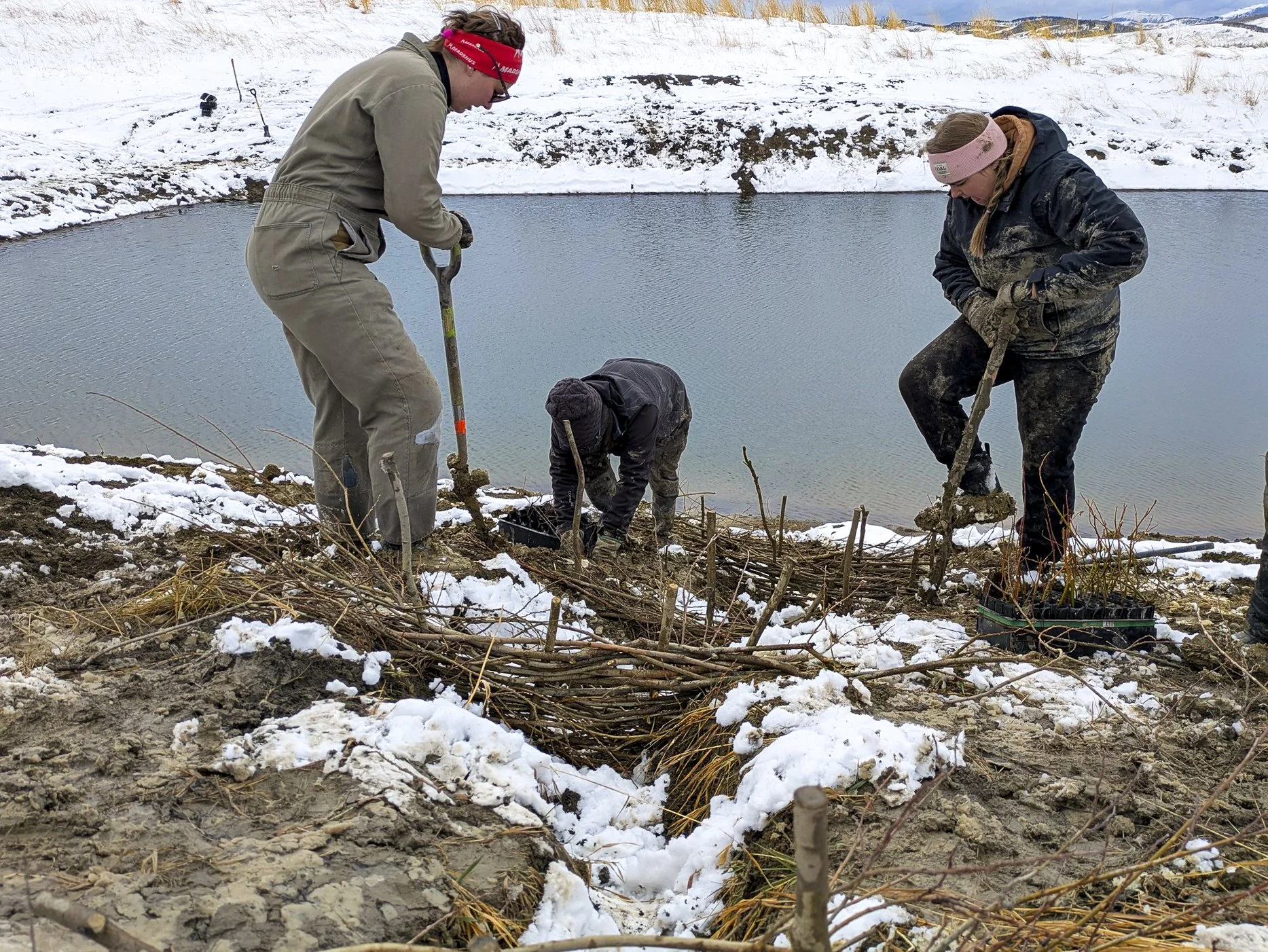
Willow planting at Mt. Sentinel Ranch in April 2025. Willow trees make a big difference for the watershed, and are culturally significant for the Niitsitapi (Blackfoot). Photo by Kallie Val-Zehan/OWC. Learn more in a recent OWC blog post.
I think everyone here today on this Authentic Watershed Experience should also be very excited about water. How did you come up with these ideas around water development and supporting biodiversity around your dugouts and on your operation?
I grew up with a dad who was very engaged in ecosystem health. And I think for me, that was the cornerstone.
Then just being involved and learning from other people: for me, that's where I get that passion, from seeing other people do things, and realizing what that success has done for them. I see the benefits, so I really want to try it. It's changed our operation a lot.
For sure, it's easy to be excited about something as you see it developing positively around you. What difference or impact have these new practices made for you?
In ranching, if you don't have a clean, sustainable water source, you can no longer ranch effectively, and you can no longer utilize your grass communities effectively. For me, water is the cornerstone of creating and maintaining a healthy landscape. Without that healthy landscape, we're not going to have a healthy ranch. It's the cornerstone of everything we do — we need to have really healthy riparian areas. Any kind of water source has to be looked after as well as we possibly can.
“Water is the cornerstone of creating and maintaining a healthy landscape. Without that healthy landscape, we’re not going to have a healthy ranch.”
We support the land, and the land continues to support us. Have there been any unexpected positive or negative consequences because of these changes?
In some ways, it's created the need to learn new things, like how to maintain these solar systems. It's forced us to learn new skills which, at the time, you're kind of like, “Oh man, do I have the brain capacity to keep track of this?” But it's good.
For me, the biggest benefit of these innovations is being able to learn. I love learning new things. That's the biggest thing that’s going to create a better business and a better ecosystem: being open to new ideas, willing to try new things, and being conscious of how those changes are affecting what's going on around us.
Can you think of a scenario where this idea or these concepts could be more widely adopted in agriculture?
What my dad taught me could be related in all sorts of places — being more educated around water, what makes a healthy watering site, what creates a healthy stream. I think understanding riparian health, and what a healthy stream looks like, is still very vague to lots of people. That's a place where there's still huge room for growth. Water ties into it so much nowadays. We all need water, and these foothills that we stand in are a huge base for creating healthy water. That education point is important and can be extrapolated to all parts of society.
Now, a bit of a pivot: if you could snap your fingers and have a problem solved immediately, what problem would make the biggest impact if we could solve it?
For me, it's the encroachment of willow and invasive species like brome, timothy, and bluegrass.
Today, we're seeing a decrease in our prized plant, rough fescue — we look at it with awe because it's such a wonderful plant — because it's having to compete more and more with invasive species. Even in my lifetime, I've seen rough fescue decline, even with good grazing practices, because it has so much competition. If I could snap my fingers, I'd get rid of those invasive species.
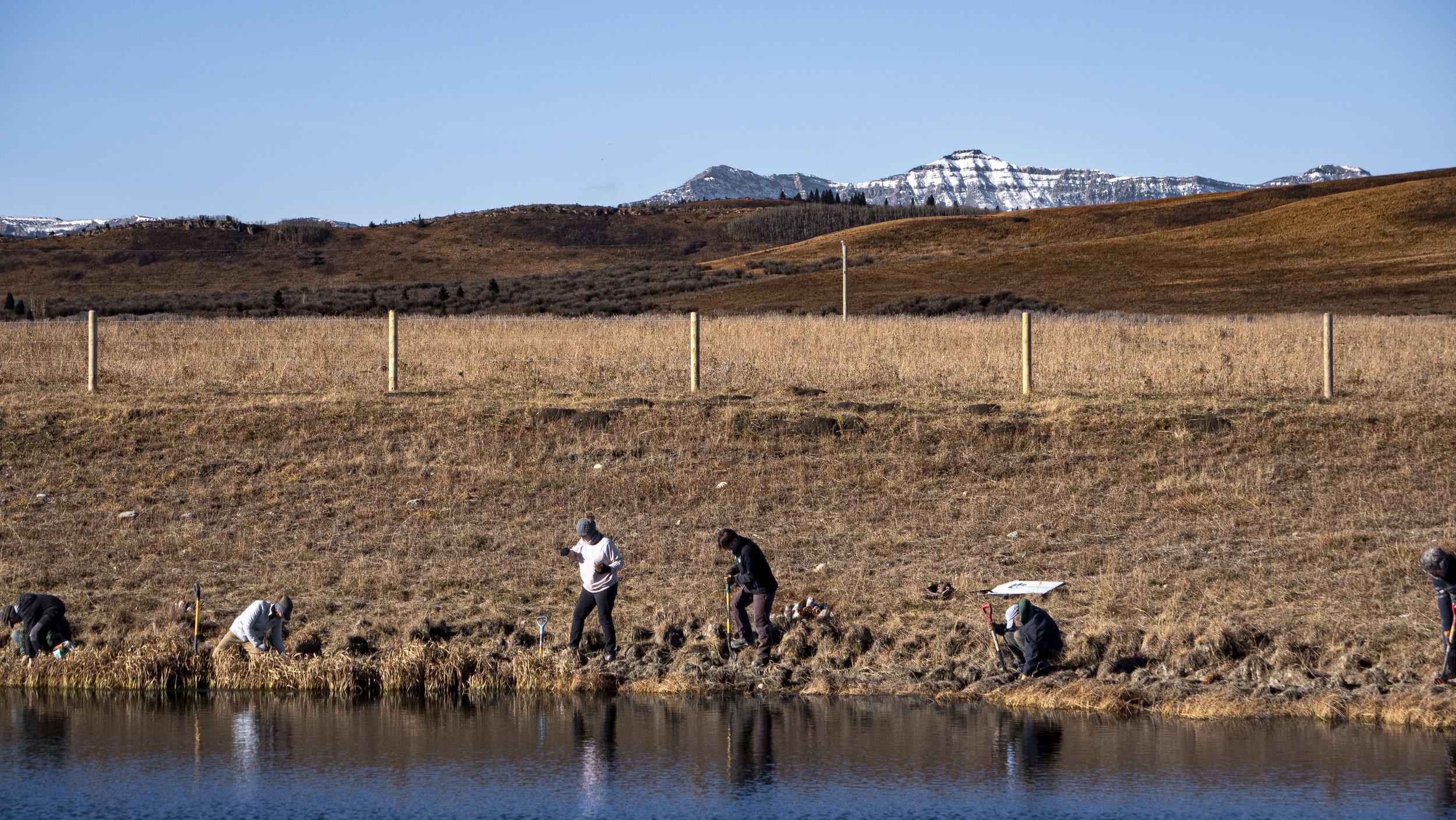
Planting at the ranch, October 2025. Photo by Jon Martin/OWC.
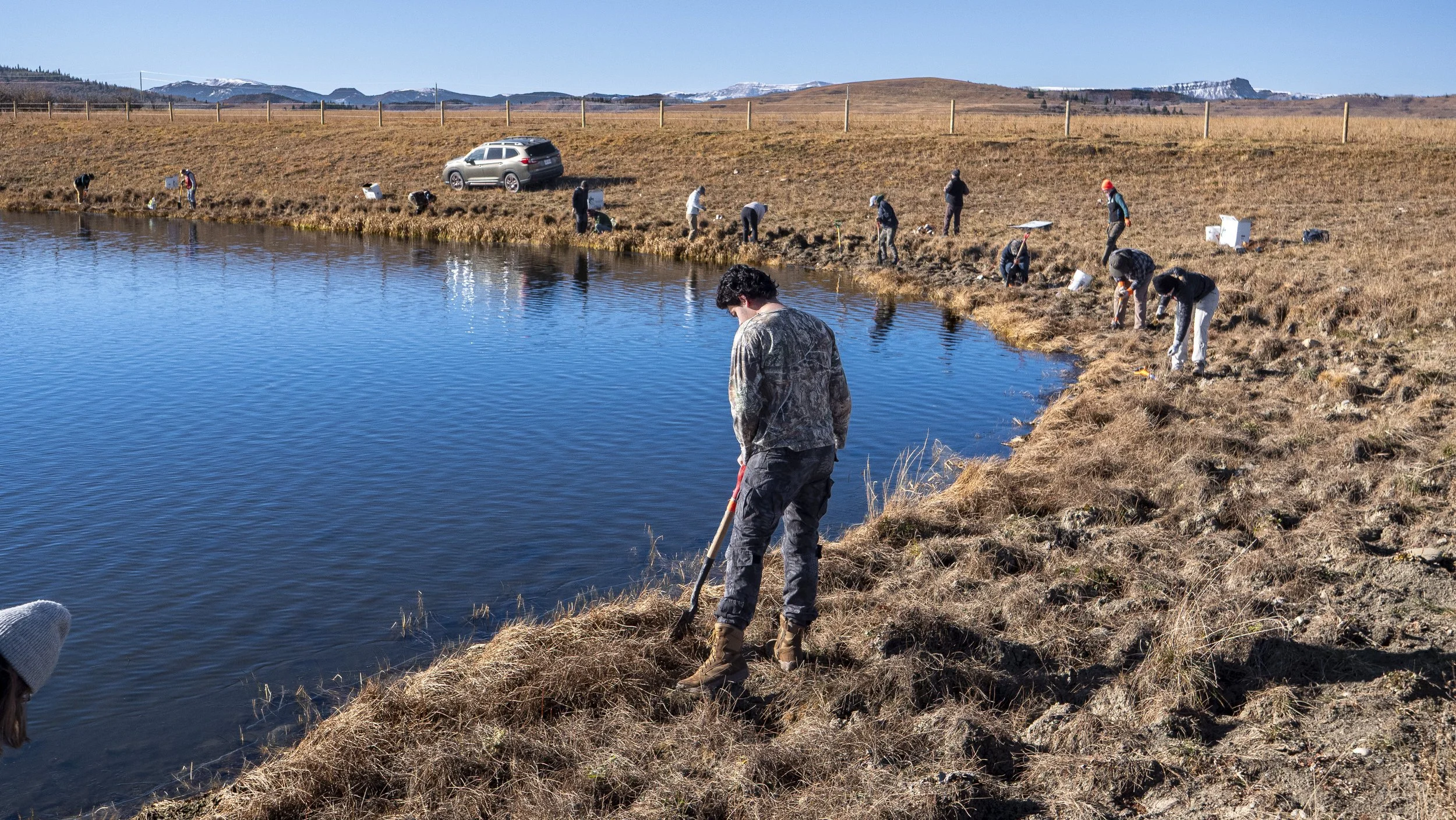
Planting at the ranch, October 2025. Photo by Jon Martin/OWC.
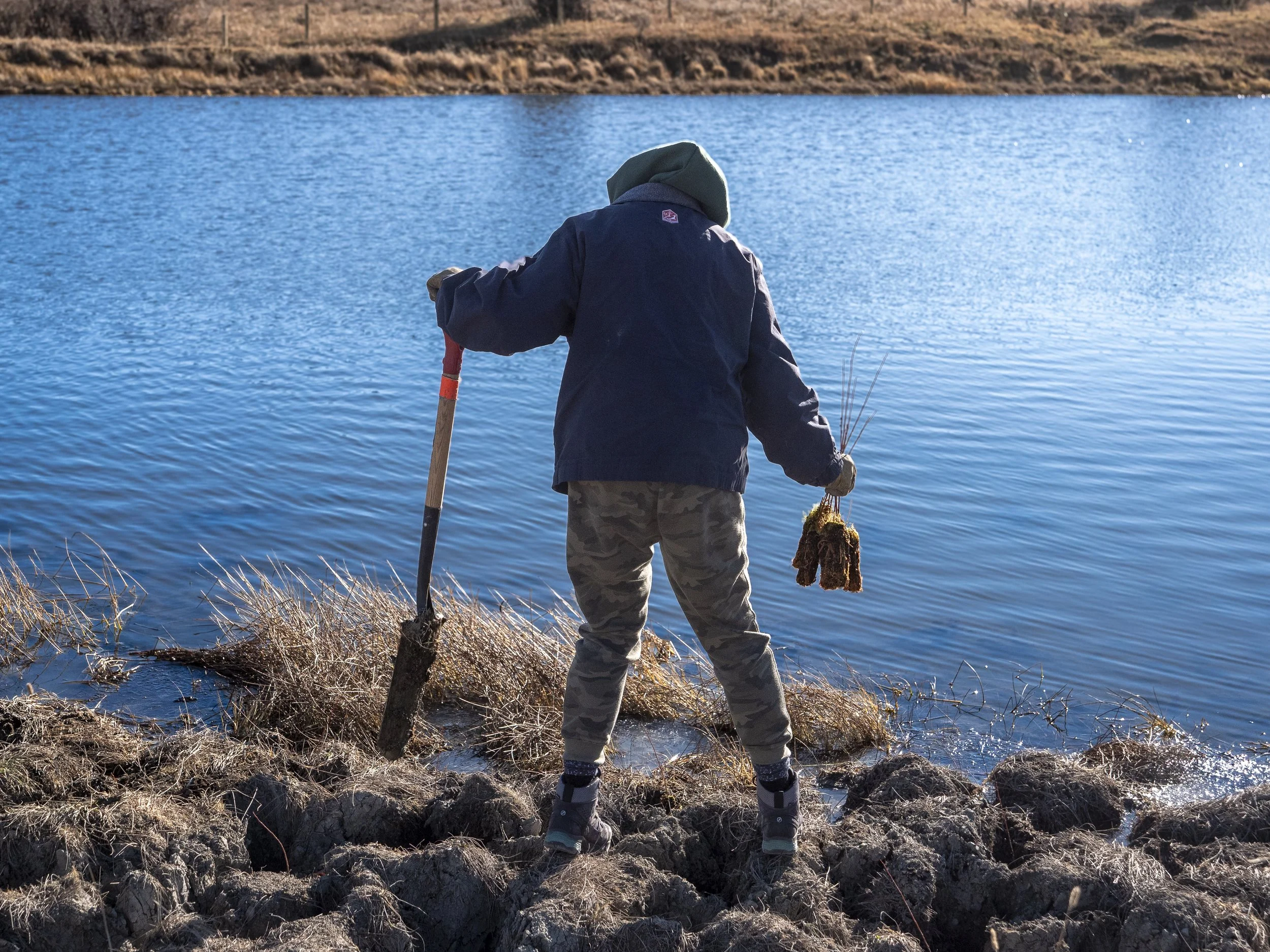
Planting at the ranch, October 2025. Photo by Jon Martin/OWC.
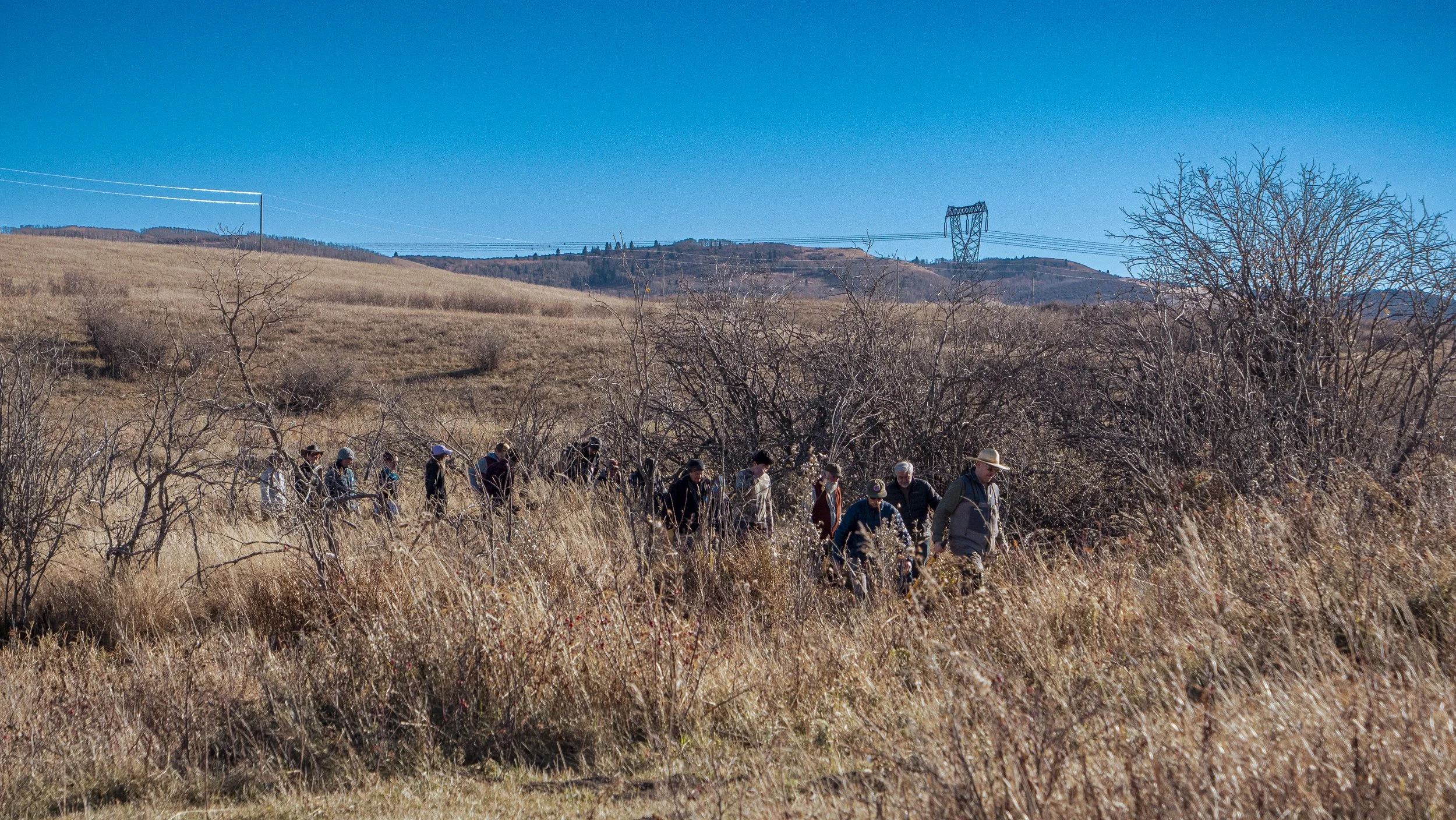
AWE participants tour the property. Rough fescue is a native perennial grass that makes up a major component of fescue grassland ecosystems. It is excellent forage for livestock, especially in the winter: unlike many grasses, the leaves retain protein and nutrient content after the plant is dormant. It is also an important source of forage for wildlife, including mule deer, elk, and bighorn sheep. Photo by Jon Martin/OWC. Learn more about rough fescue here.
I remember my dad told me that when they first settled here, they used to take timothy grass seed in their saddlebags and, if they saw a molehill, they'd spread the seed on it, because they thought they were revegetating open spots. It's funny how one small decision like that can really change an ecosystem.
What makes you hopeful about the future of agriculture?
I think it's organizations like OWC, where people are coming onto the land with a passion for the land. And I think that when ranchers and land managers interact with each other and with different kinds of people, we can learn from each other. We have that common desire to maintain these beautiful landscapes that do so much for us as a province and as a species. I see huge potential because there's more and more emphasis on why these ecosystems are important.
Like all OWC’s blogs, this post was written by a real live human, without the use of generative AI.
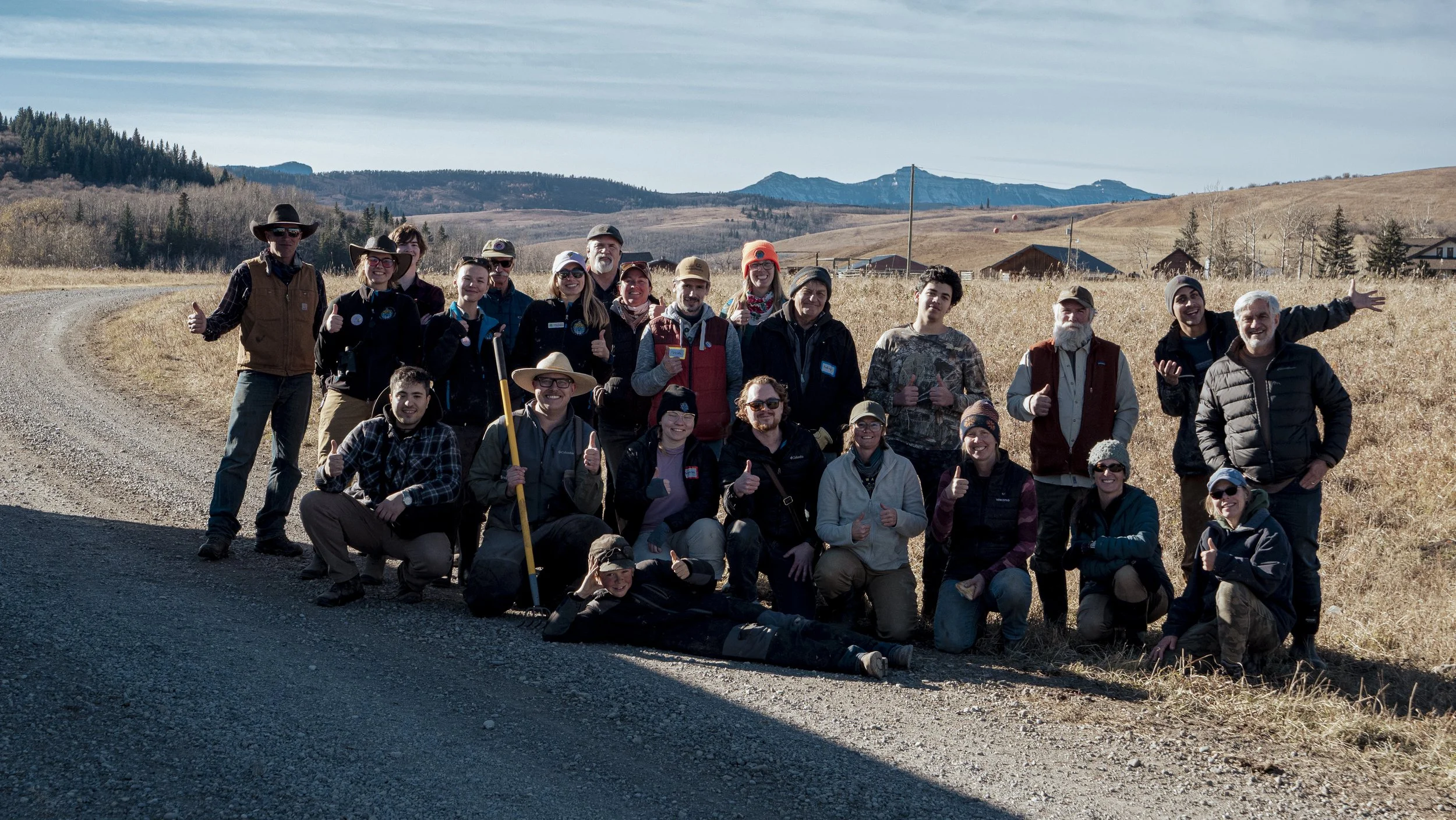
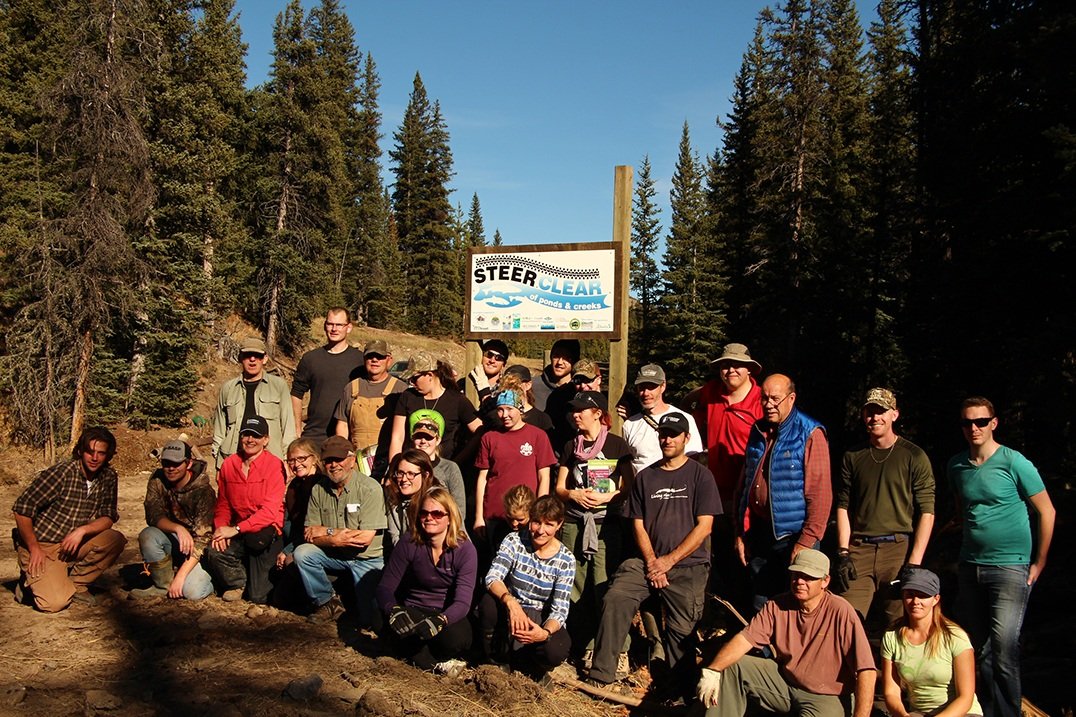
A group shot of the participants, staff, and volunteers at the October 29, 2025 Authentic Watershed Experience. Photo by Jon Martin/OWC.
Connecting People, Solutions, and Innovations is made possible thanks to funding from the governments of Canada and Alberta under the Sustainable Canadian Agricultural Partnership.