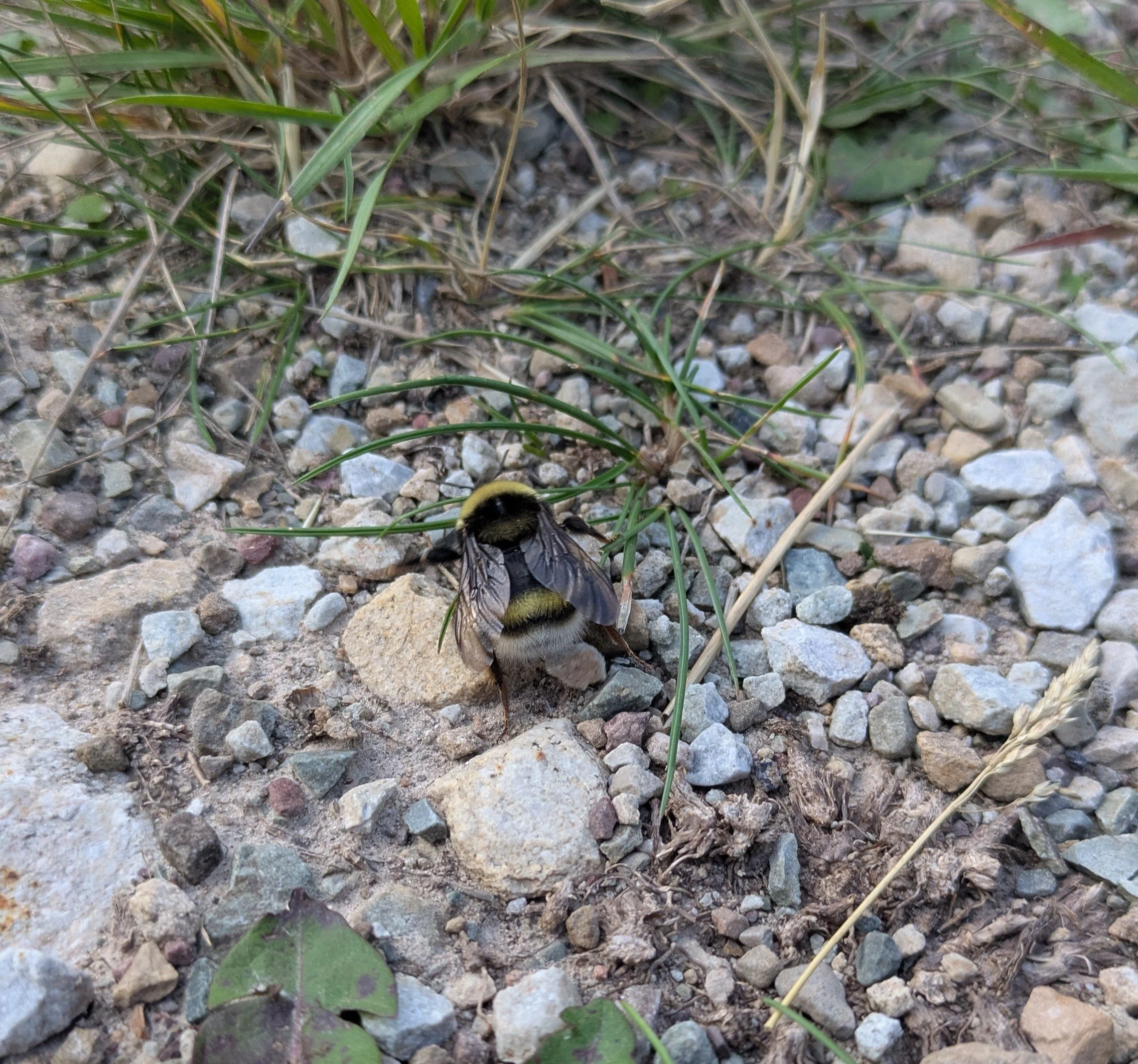
Banner photo: Western bumble bee queen in Castle Provincial Park in 2025. This species is classified as threatened in Canada. Photo: Rachel Morris.
Overview
Bumble bees are native pollinators that are vital to ecosystem function and important for the pollination of certain crops. Of the 46 species of bumble bees in North America, 12 are classified as at-risk. The Oldman Watershed Council (OWC) is working to improve habitat conditions for four at-risk species in the watershed. This project also aims to increase the amount of people observing, identifying, and recording information about bumble bees.
what’s being done
Restoring Habitat
The OWC is working to improve habitat conditions for four target at-risk species: the western bumble bee, Bombus occidentalis, designated “Threatened” in 2014; the yellow-banded bumble bee, Bombus terricola, designated “Special concern” in 2015; the bohemian cuckoo bumble bee, Bombus bohemicus, designated “Endangered” in 2014; and Suckley’s cuckoo bumble bee, Bombus suckleyi, designated “Threatened” in 2019.
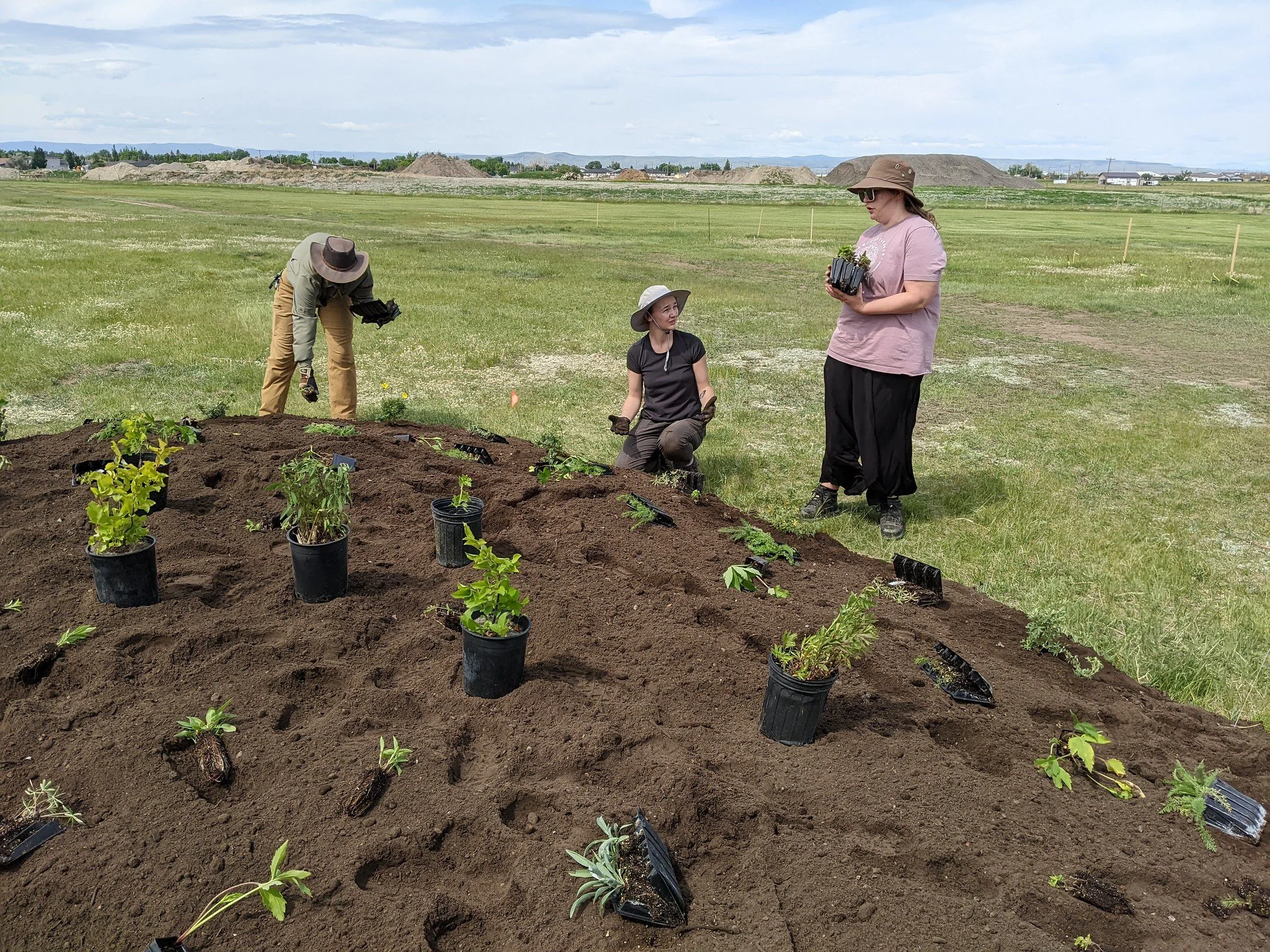
OWC staff planting flowering plants at a new pollinator garden in the Claresholm Bark Park in 2025. Photo: Sofie Forsström.
We are carrying out habitat restoration in targeted areas of the watershed, including the town of Claresholm, which is highlighted as critical habitat for the bohemian cuckoo bumble bee in its federal recovery strategy. Habitat restoration for bumble bees involves planting and supporting native flowering plants with species that bloom in the early season, mid-season, and late season to ensure continuous access to food resources. Providing habitat also includes creating opportunities for bumble bees to overwinter by leaving loose, undisturbed soil nearby for them to burrow into and hibernate.
Observation and Education
This project also aims to increase the amount of people observing and providing information about bumble bees, to improve the likelihood of documenting the presence of our target species-at-risk. Anyone can document an observation of a bumble bee using iNaturalist, a community biodiversity monitoring platform. The OWC carries out hands-on workshops in observing, identifying, and documenting bumble bees. We also share information about bumble bees and other pollinators at events, on our blogs, and on our social media.
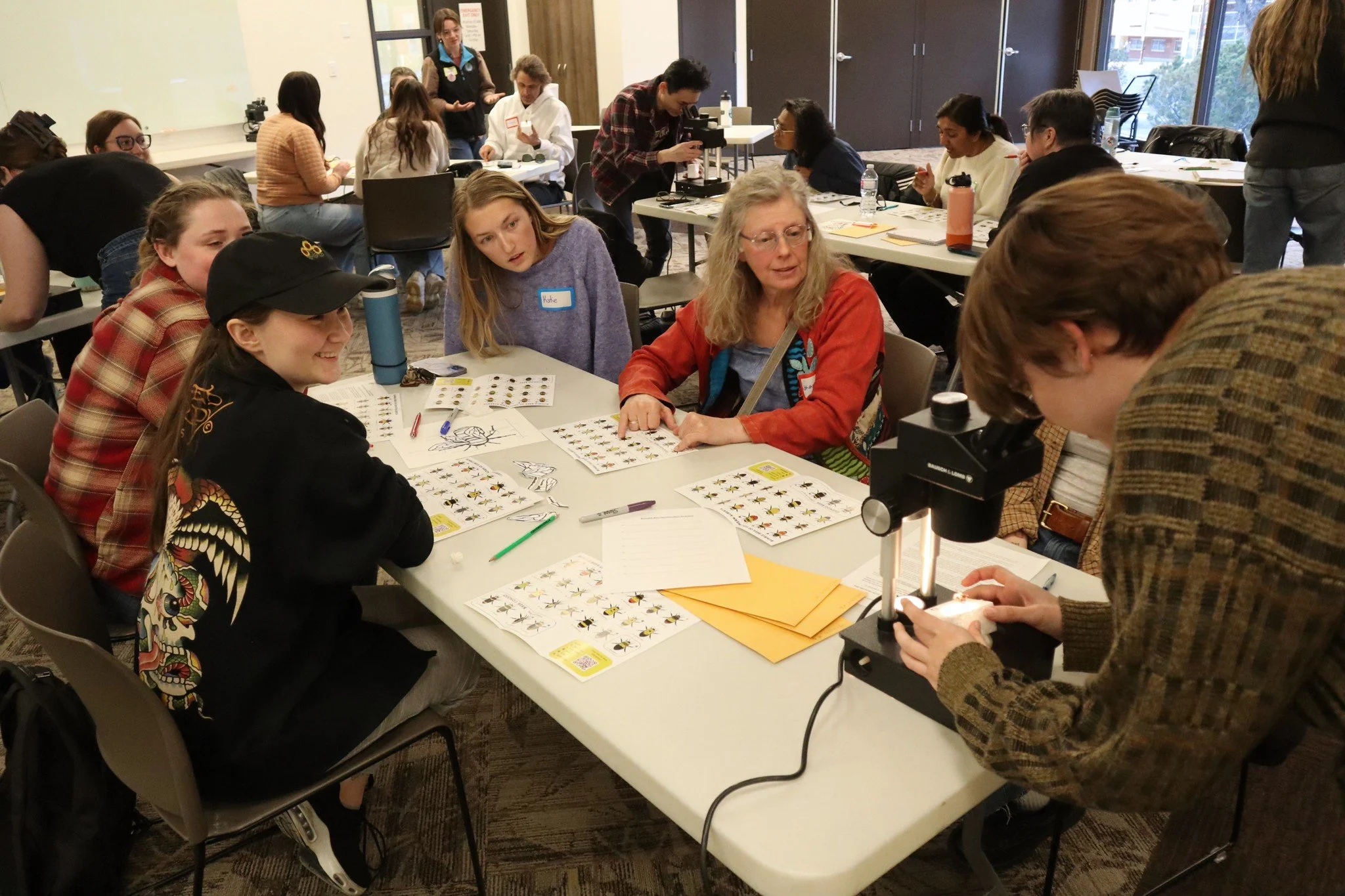
Attendees examine bumble bee specimens under a microscope at an OWC “Bumble beeginners” event, where they are learning to identify bumble bee species. Photo: Sofie Forsström.
Further Reading & Resources
Learn more about bumble bees:
Blog: Bumble Bee FAQ
Learn more about bumble bee habitat and native plants:
Learn more about community monitoring and iNaturalist:
SUPPORTERS, FUNDERS, & PARTNERS
This work is possible thanks to the generous support of our funders: Habitat Stewardship Program for Terrestrial Species at Risk (Government of Canada) and Watershed Restoration and Resiliency Program (Government of Alberta).